
For businesses
Summer tourists in your town: menus, languages and opening hours
Mosey · 22 November 2026 · 11 min read
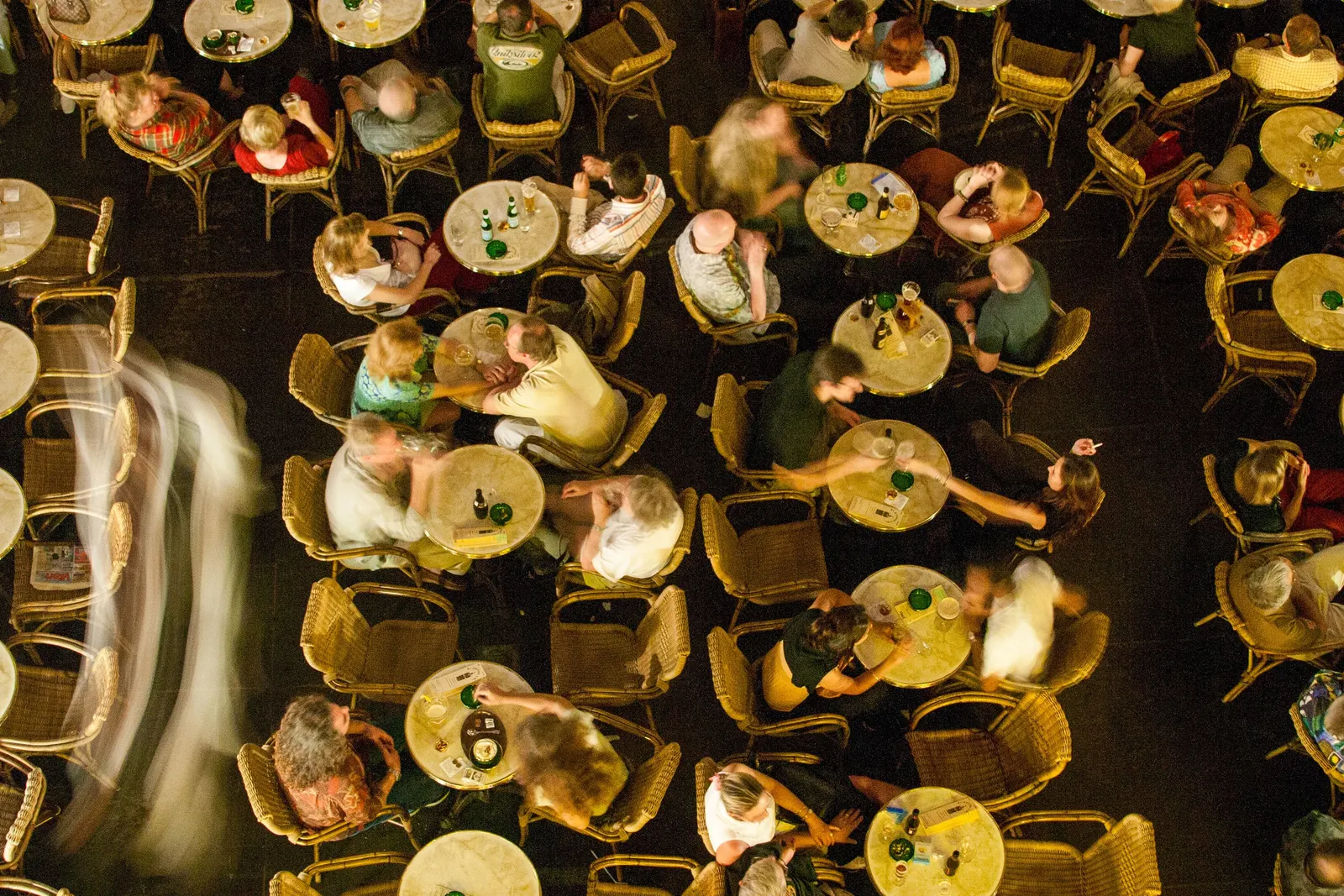
A summer visitor decides where to eat on a phone and on the pavement, in a few minutes, with no history with you. Serve them with a menu in plain words, allergens declared on each dish, hours that are true today and a way in when you are full. Language matters less than clarity: short, concrete wording works for a guest who reads English as a second language.
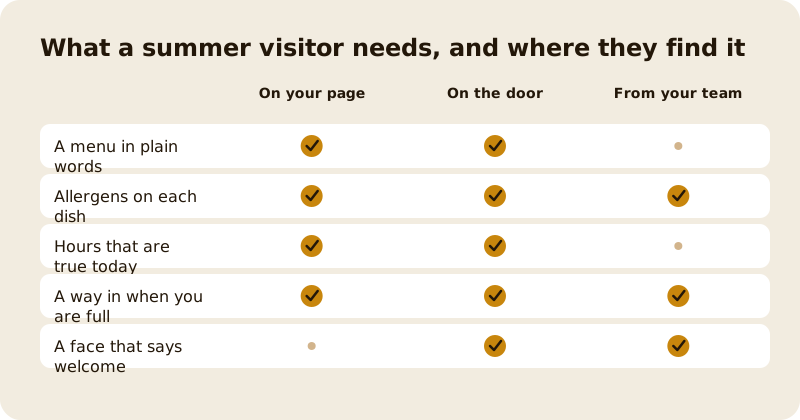
What does a summer visitor need from your restaurant or café?
Four things, in this order: to know you are open, to understand what is on the menu, to know whether it is safe for them to eat, and to know what happens next. Everything else is welcome, and none of it matters if those four fail.
A regular forgives a missing price or a sold-out dish because they know you. A visitor does not. They have a limited evening, often a group with different needs, and a whole town to choose from. If your hours on the door and your hours online disagree, they walk on. If the menu uses a word they do not know, they ask, and if no one has time to explain, they leave.
This guide is the in-season job: what the visitor meets once they are at your door or your page. How they find you is in the guide to why visitors walk past, and what you do when they leave is in the tourist-season cliff guide. Read those beside this one.
How do you write a menu a visitor can read in a minute?
Write every dish so a stranger can picture the plate. The aim is not a longer menu. It is a clearer one.
- Name the main thing first. "Slow-cooked lamb shoulder, colcannon, mint gravy" tells a visitor what arrives. "Our famous Sunday" tells them nothing.
- Explain a local word once, in a few words. If you sell a dish with a local name, add what it is: "boxty, a potato pancake". You keep the name that makes it yours and lose nobody.
- Say how it is cooked. Grilled, fried, baked, raw. Visitors choose by method as much as by ingredient.
- Say how big it is. A starter, a main, a plate to share. A guest who orders for a table of strangers needs to know.
- Put the price next to the dish, with no hunting and no "market price" that leaves them guessing.
- Keep sentences short. Short, literal wording survives a phone translation app. Clever wording does not.
The test is simple. Hand your menu to someone who does not know your town and ask them to explain three dishes back to you. Where they stumble, rewrite.
Typing the menu in is the job that gets put off. Photograph your paper menu and let the scanner read it, as the menu scanning guide shows, then fix the wording dish by dish. A dish with a photograph, a plain description and a price does the explaining for you.
Do you need your menu in other languages?
Not always, and not before the English is clear. Many visitors read English well enough, and a menu with plain words and good photographs often does more than a poor translation does.
Look at who actually comes to you before you spend an hour on any language. Ask your team which languages they hear most at the door. Look at the names on your bookings. Note which questions come up again and again. That is a better guide than a guess, and you will know the answer within a few weeks of the season starting.
Then choose the smallest job that works:
- A few key words. Allergens, vegetarian, vegan, gluten free and children's portions, printed in the languages you hear most. Mark the machine-translated parts as a guide so the guest knows to check.
- A one-page cheat sheet that sits on the table or at the door: ten dish words with a plain description of each.
- A short line on the specials board. Keep it to the dish and its main ingredient.
- Pictures. A photograph crosses a language gap faster than any sentence.
Be honest about the limits. Mosey does not translate your menu for you, so any other language is wording you add yourself, in your dish descriptions or on the printed sheet. Ask a native speaker, a regular or a member of your team to check it before it goes up. A wrong translation of an allergen is worse than none.
Irish-language names can be part of the welcome. A short note on what a dish is called and what it is gives the visitor a story to take home.
How do you handle allergens when the guest and you share no language?
Declare them on every dish, and make the declaration the thing you point to. The Food Safety Authority of Ireland says the rules on allergens apply to packed and non-prepacked (loose) food you provide for customers, and that there are 14 allergens that must be declared by law. Check the current rule with the FSAI.
For a visitor, the written declaration is what bridges the language gap. A guest who cannot explain a nut allergy in English can point to the word on the menu. So:
- Declare the 14 on each dish where your menu or your page shows it.
- Keep a printed allergen sheet at the pass and at the door that matches the menu today, not last season's.
- Train the summer team before the first rush. The guide to training staff on allergens gives a short session you can repeat for every new starter.
- Never say a dish is safe. Say what it contains, what it may contain and what the kitchen can do, and let the guest decide.
On Mosey, you declare allergens on each dish in the menu builder and print an A4 allergen sheet from them, so your page and the sheet say the same thing. A dish with nothing declared shows as not listed, with an invitation to ask, never as safe. See allergen labels and menus and the guide to allergen information for Irish restaurants.
How do you keep your opening hours true all summer?
Wrong hours cost you the most, because a visitor who walks to a closed door does not come back. Summer is when your hours change most, and when they are least likely to be updated.
Check each of these before the season starts, and again in the middle of it:
- Your weekly hours on your page, on the door and on every other listing.
- The kitchen's last order, if it is earlier than closing. Say so on the page.
- Bank holiday weekends. Check the current dates with gov.ie each year and set them in advance, because a long weekend is when visitors are out in numbers and your usual week does not apply.
- A festival, race meeting or match in your town. If one changes your day, change your hours or your last order to match, in writing, a week before.
- One-off closures, such as a private function, a staff day or a delivery problem.
On Mosey, set your weekly hours once, then add special days for anything that differs: closed all day, or different opening periods, with a short note such as "Bank holiday, kitchen closes early". Your special days appear on your page. The map's Open now layer relies on your opening hours, so keep the weekly pattern right too.
Late light in an Irish summer pulls guests out later than your winter pattern expects. If your kitchen is quiet at its usual close and the street is still full, consider a later last order on the busiest nights. Try it for a fortnight and count what it earns before you make it permanent.
What do you do when you are full, and the visitor cannot wait?
Give them a short, honest answer and a reason to stay in town. A visitor turned away with no plan becomes a guest of the next door.
- A queue they can join without an app. On Mosey the walk-in queue is free on every plan. A guest scans a QR code at your door, joins from their phone without an account and can ask for an alert when it is their turn. They can go for a walk and come back. See walk-in queue and waitlist.
- An honest wait. Say a time you can keep, not a hopeful one. A guest told a longer wait than they get stays pleased. The reverse does not.
- A table booked ahead. Visitors with a plan book. Table bookings come with the free plan, and the Starter reservations plan at €79.99 a month adds deposits and a waitlist for a fully booked date (see pricing). See table bookings with deposits.
- Something to take away. A short collection menu, if your kitchen can run it beside service, gives a guest with no wait to spare a way to eat your food. The click and collect guide covers slots and caps.
The guide to managing a queue at the door has the door routine.
How do you get the team ready for visitors?
Brief them on the five questions visitors ask, because the team is your translation service. A new summer starter who cannot answer "what is in this?" costs you a table.
Put these on one sheet, behind the till or in the kitchen:
- What is the dish, in one plain sentence?
- Which dishes contain each of the 14 allergens, and where is the sheet?
- What are our hours today, and when does the kitchen stop?
- Where is the nearest toilet, cash machine, car park or bus stop? Visitors ask.
- What do we say when we are full?
Then pair each new starter with an experienced one for their first shifts. The seasonal hiring guide covers finding people and training them in a week.
If you have team members who speak another language, ask them if they are happy to be the person guests are pointed to, and say thank you in the rota and the pay, not only in words. Do not make it an unpaid extra.
How do you make the summer rush pay without burning out?
Plan the rush by the hour, not the day. A visitor town does not have one busy time. It has a lunch wave, a mid-afternoon lull and an evening wave that arrives later than your regulars do.
A round example, clearly labelled as one: say a café has a rush for two hours at lunch and a dead afternoon. It sells a small, quick menu in the rush, with fewer dishes and faster plates, and moves its slower dishes to the lull. The kitchen cooks the same food, in a better order. Your numbers will differ, but the habit travels.
Three habits keep the summer profitable:
- Shorten the menu for the rush. Fewer dishes, cooked well and fast, beat a long menu cooked under pressure. Keep the dishes that sell and carry the best margin.
- Use the lull on purpose. A Deal Hour is a price rule that applies by itself inside a weekly window and has no charge of its own on Mosey. Offer a coffee and cake for a set price in a slow afternoon window. See restaurant promotions and Deal Hours.
- Let specials expire. A special you give an end time stops showing on Mosey when it ends, so a finished offer never greets a guest who arrives after it has gone.
Look after your own days off in the rota too. An owner who runs every shift in July has no energy in September, when the work of the quiet season starts.
How do you turn a visitor's meal into the next visitor's reason?
Ask for a rating of the dish, and reply to it. A visitor who ate your chowder and rated it by name, with a photograph, is proof the next visitor who searches for it can trust.
On Mosey, diners rate individual dishes and add photographs, so one good plate can be found without anyone knowing your name. Your town appears on its own hub page, and your restaurant or café appears there with nothing to set up. Nobody can pay to hide a rating or to move up Mosey picks. See get found and reply to ratings and the guide to how customers find you on Mosey.
Make the ask a habit, not a push. A small card at the table or a word from the team when a guest says they loved it is enough. Reply to each rating in plain English, in a line or two, and thank the guest by the dish they named.
What should you do before the season starts?
Take one afternoon, a month before the first busy weekend, and work down this list. It is the whole guide on one page.
- Rewrite your ten best-selling dishes in plain words, with how each is cooked and how big it is.
- Declare the 14 allergens on every dish and print a fresh sheet.
- Ask your team which languages they hear most, then add key words for those.
- Set your weekly hours, the kitchen's last order and every bank holiday weekend.
- Add special days for any festival, race meeting or match that changes your day.
- Put up the queue QR code and agree what you say when you are full.
- Brief every summer starter on the five visitor questions.
- Photograph your best three dishes in daylight.
Host on Mosey free, scan your menu, declare your allergens and set your special days before the first busy weekend. The plan for the rest of the year is in the guide to planning around the Irish calendar, and every other guide for Irish food businesses is on the business guides page.
This guide is general information, not legal, tax or financial advice. Rules change and depend on your business and where it is, so check the current rule with the official body named in the guide and take advice from a solicitor or accountant in your area before you act.
Questions
Common questions
How do I attract summer tourists to my restaurant in Ireland?
Be easy to understand from a phone and a doorway. Keep your hours true, write your menu in plain words with prices, photograph your best dishes in daylight and declare allergens on each dish. On Mosey, visitors find you by dish and by town, and a dish they rate helps the next visitor find you.
Should I translate my menu for tourists?
Start with clear English and good photographs, then look at which languages your guests actually use. Add key words for those, such as allergens and vegetarian, or a one-page cheat sheet. Have a native speaker check it. Mosey does not translate your menu, so any other language is wording you add yourself.
Do I have to declare allergens for tourists?
Allergen rules do not depend on who is eating. The FSAI says the 14 allergens must be declared by law for packed and non-prepacked (loose) food. A written declaration helps a guest who shares no language with your team. Check the current rule with the FSAI.
How do I keep my opening hours right in summer?
Check your weekly hours, the kitchen's last order and each bank holiday weekend before the season, and again mid-season. On Mosey you set weekly hours, then add special days that are closed or have different hours, with a short note. Your special days appear on your page.
What should I do when my restaurant is full and a tourist arrives?
Give an honest wait and a way to hold their place. The Mosey walk-in queue is free on every plan: the guest scans a QR code, joins from their phone with no account and can ask for an alert when it is their turn. You can also offer a collection menu, if your kitchen can run one.
How do I prepare staff for the summer visitor rush?
Give every starter a one-page sheet: what each dish is in one sentence, where the allergen sheet is, today's hours and last order, local directions and what to say when you are full. Pair each new starter with an experienced colleague for the first shifts.
How can I fill quiet summer afternoons?
Use the lull on purpose. A Deal Hour on Mosey is a price rule that applies by itself in a weekly window, with no charge of its own beyond the usual rate. Offer a coffee and cake at a set price in the slow window, and keep the busy hours at full price.
Can I do this on Mosey?
Yes. Scan your menu from photographs, declare allergens on each dish, set weekly hours and special days, open a free walk-in queue and add Deal Hours for quiet windows. Host on Mosey is free to start. Mosey does not translate menus, so other languages are wording you add yourself.
More like this
Read next
A hotel restaurant that locals use too
A hotel dining room earns local trade when it acts like a restaurant of its own. Here is why locals stay away, how to set the dining room up on Mosey beside your hotel, and which offers fill it.
An alcohol-free drinks menu that still makes margin
More guests are drinking less, in January and the rest of the year. Here is how to cost, price, name and sell an alcohol-free menu so it earns as well as the wine list, with the Irish VAT and offer rules checked.
A pub that does food: making the kitchen pay
A pub kitchen pays when its gross profit covers its own wages and running costs. Here is how to count it, which services to fill, what the alcohol rules say and how Mosey fits.
Auto-enrolment pension for Irish restaurants and cafés: what you pay and do
Since 1 January 2026 an Irish employer matches the pension contribution of each eligible employee. Here is who counts, what it costs on a wage bill, the payroll steps and what staff can opt out of.
Get started
Host your business on Mosey. It is free to claim.
Free to list, no set-up fee, and Order Ahead is 1.5% commission when you start taking orders.