
For businesses
Why visitors walk past your restaurant, and how to reach them
Mosey · 15 November 2026 · 11 min read
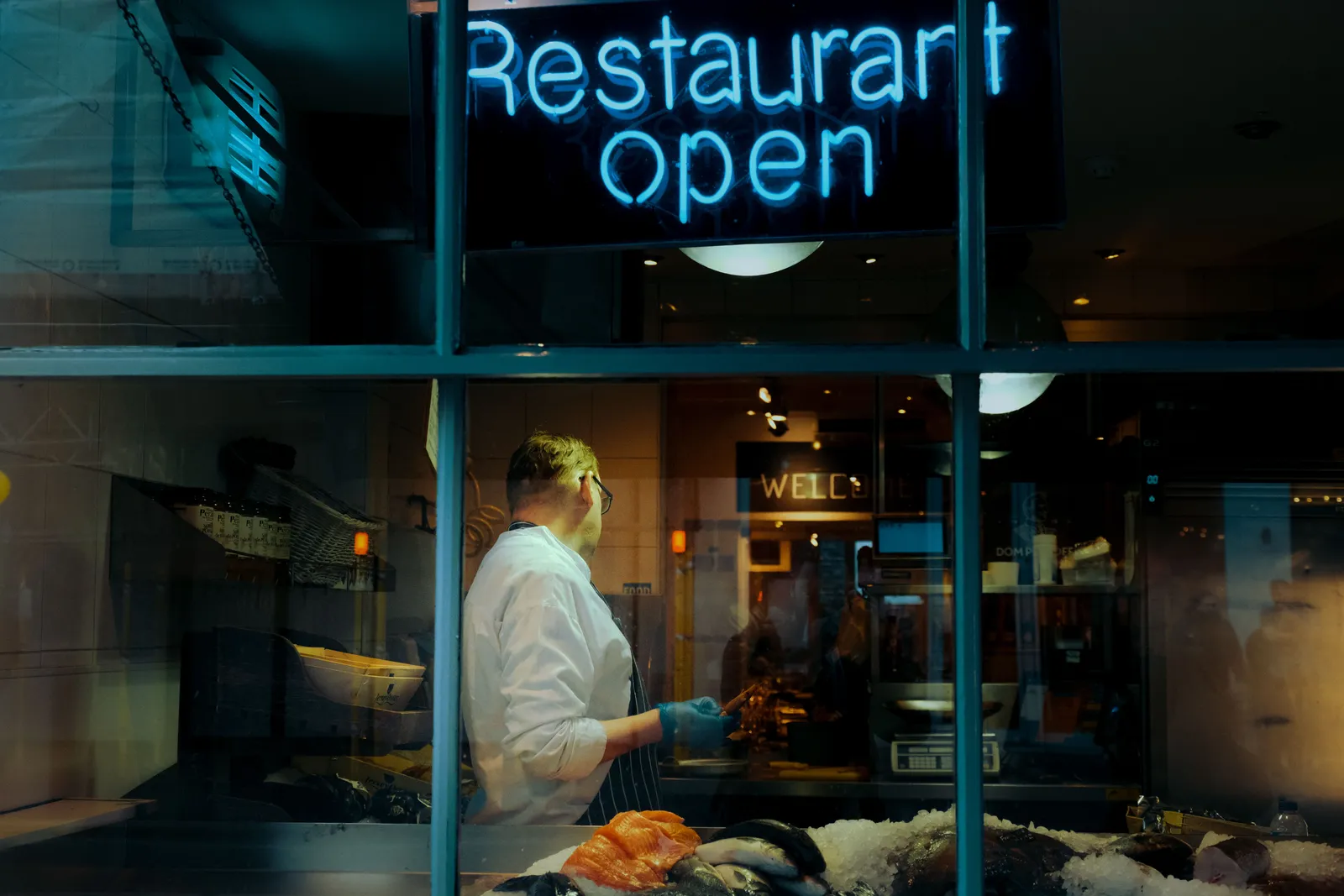
Visitors walk past your restaurant or café because they cannot tell, from the street or from their phone, that it is the one they are looking for. To reach them, make your page answer the questions a stranger asks before a meal: are you open, what do you serve, is it good, can we get in. Then let rated dishes do the recommending.

Why do visitors walk past your restaurant or café?
You know your regulars by name. A visitor knows nothing about you. They have no history with your food, no friend who told them about the lamb and, in a town they have never walked, often no idea which street to try.
So they do what anyone does with a free evening and an unfamiliar town: they take out a phone. If your hours are wrong, your menu is missing or your photographs show an empty room, you lose them in the time it takes to scroll to the next result. Nobody decided against you. They never found enough to decide for you.
This is not a problem of food or service. A restaurant with a warm room and a good kitchen can sit quietly on a busy street, while a weaker one with a clear page fills its tables. The fix is not a louder sign. It is being easy to understand from a phone in someone's hand, before they reach your door.
It is also not the same job as getting locals through the door. A local already knows your name. A visitor needs to be told, in a few seconds, what you cook and why it suits them tonight.
What do visitors search for before they arrive?
Visitors rarely search for your name, because they do not know it. They search for what they want to eat, or the kind of evening they want, in the area they are standing in or heading to.
Think about the questions behind a typical search:
- A dish. Chowder, a roast, a proper fry, something vegetarian, a local cheese board.
- A mood. Somewhere quiet, somewhere lively, somewhere for a celebration, somewhere that suits children.
- A practical limit. Open now, open late, outdoor seating, dog-friendly, easy for a group.
- A health need. Allergens, coeliac, vegetarian, vegan.
- An area. The harbour, the main street, near the station, near the hotel.
On Mosey, people find food by dish, by mood and by neighbourhood, and they rate what they actually ate. That matches how a visitor thinks. They are not hunting for a business, they are hunting for a plate. Your menu does the selling, not a follower count. The guide to how customers find you on Mosey covers each route in turn.
Write down the five things a visitor would type for your restaurant or café. If your page does not answer all five, that is where to start.
How does a dish they rate bring the next visitor?
A star average tells a stranger very little. A rated dish tells them a lot: what it is, what it looked like on the plate, and whether the person who ate it would order it again.
On Mosey, diners rate individual dishes, add a photograph and tag what kind of meal it was, such as a celebration or a family meal. That means your best dish becomes findable on its own. A visitor searching for that dish can reach your page without ever having heard of you, and a single good plate can do what a window sign cannot.
The loop is simple. A visitor eats the dish. They rate it, usually with a photograph. The next visitor, searching for the same dish, sees that rating and a real picture of it on a real table. They come in, and some of them rate it too. The Dishes page shows what is trending and most liked, so a dish that people keep rating keeps being seen.
Two things speed the loop up. First, photograph your dishes in daylight, because a good picture of a plate is the job to do first. Second, ask your regulars to rate the dishes they love by name. Locals rating your best plate is how it reaches the visitor who has never been in. The guide to getting more reviews has the practical ways to ask.
If typing your menu in has been the thing stopping you, photograph your paper menu and let the scanner read it, as the menu scanning guide shows. A dish cannot be found if it is not on the page.
How do visitors find your town and your door on Mosey?
Visitors choose a town before they choose a table, so the town matters as much as your own page.
Mosey organises the map by country, county, city and town, and each one is a hub with its own page. Your restaurant or café appears in your town's hub automatically, with nothing to set up. The hub is built from real activity: the most rated, standout dishes and the favourites of people who live there. The better your ratings, the higher you sit, and nobody can pay to outrank you. Mosey Gold is earned from ratings alone, and a ranked list such as Best in town is built the same way. See how Gold is earned.
Around the hubs there are other ways a visitor builds a plan:
- Travel questions. A person who has been to a town can vote on how good it was for food, and name the best towns and cities they have been to for food. Those answers add up to public lists of towns and cities by country, so your town can appear on lists a visitor reads before they travel.
- The food passport. It stamps the country, the town and the neighbourhood of every place a diner rates. A diner who likes filling it has a reason to rate on holiday.
- County badges. For Ireland, the badges count the counties a diner has rated in, with levels at 5, 10, 16 and 32 counties. A rating in a quiet county is a step towards the next level, so a diner has a small reason to eat beyond the busy towns.
- Lists. Diners keep lists of what they ate, private or public, and share them with friends. A visitor planning a trip can collect rated dishes into a list and pass it to the people travelling with them. People they follow show up on the map as Friends' picks.
You cannot control any of that. What you control is whether the dishes in those lists and hubs are yours: a complete page, a rated dish and a reply to every rating. See how ratings work for diners and what Mosey Travel shows.
What should your page say so a visitor can decide in ten seconds?
A visitor decides quickly and moves on. Your page has to answer the first questions without making them hunt.
Put these in order, and check each on your own phone:
- Hours that are true today, including bank holidays and the off-season.
- A menu with prices, with dishes named plainly and described in one line.
- Photographs in daylight of your best dish, the room and the front of the building, so a visitor recognises you on arrival.
- What kind of evening it is, in your own words: quiet or lively, good for children, good for a group, outdoor seating, dogs welcome.
- Allergens. Declare them on each dish where you can. Mosey lets diners hide dishes that list an allergen, and a dish with nothing declared shows as not listed, never as safe, so a visitor with an allergy knows to ask.
- How to get in. A button to book a table, order ahead, call or get directions.
Keep dish names plain. A visitor who does not know the local name for a dish should still understand what arrives. Write "slow-cooked lamb shoulder with colcannon" and add the supplier in a second line.
Claiming your page on Mosey is free, and filling it in once takes an afternoon. Read the guide to marketing a café on a small budget for how to order the work.
How do you keep the visitor who cannot get a table, or has no time?
Visitors have a narrow window. They are in town for an evening, or driving through at lunch, and they will not wait an hour on a hope. Make every way in as short as you can.
- A table they can book from the page. Bookings are free on the basic plan. The Starter bookings plan, at €79.99 a month, adds deposits for busy nights, so a Saturday is not held for people who do not turn up. The reservations and deposits guide has the set-up.
- A queue at the door, and a waitlist for full nights. The walk-in queue is free on every plan: a visitor joins from a QR code and is told when the table is ready, instead of walking to the next door. The waitlist for a fully booked date comes with the Starter plan, and diners can also ask for an alert if a table frees up.
- Order ahead for collection. A visitor orders and pays on their phone and chooses a pickup slot, with a cap on each slot so your kitchen is not buried. For a family on the road, or a walker who wants lunch to carry, that is the difference between stopping and driving on. Collection orders carry 1.5% commission on the order, and the pricing page lists every rate.
- Group bookings. A coach party or a family of ten is a big table on a quiet day. Group bookings with split deposits let one person organise and everyone pay their own share, which is how you fill a long table with confidence. See the guide to private hire and large group bookings.
None of this means more work at service. It means fewer phone calls, fewer no-shows and a page that has answered the question before the guest asks.
How do you turn one visit into the next visitor's reason?
Every visitor you serve well is the best advert you will get, but only if the evidence is on your page when the next one looks.
Reply to every rating, the good and the bad, in your own name. A visitor reads the worst rating and then your answer. A calm, specific reply tells a stranger you are run by someone who notices, and it costs you ten minutes. A rating with no reply reads as a business that did not see it.
Ask for the rating while the meal is fresh. A card on the table, a word at the till and a line on the bill all work. Ask for the dish, not the star: "If you liked the fish, rate it by name." That is the rating a later visitor will search for. On Mosey, the Reviews page lets you ask your recent customers for a rating once a week with one button, and you see how many were asked, never who.
Never ask staff, friends or family to rate you. It breaks the trust that makes ratings mean anything, and an owner's own ratings do not count towards Gold anyway. Visitors read ratings closely, because they have nothing else to go on.
If one rating is unfair, read the guide to unfair reviews before you reply.
Should you pay to reach visitors?
Most of what is above is free, and the order matters: fix the page, earn ratings, answer them, then spend. Money on reach before your page answers the first questions sends people to a page that loses them.
When you do have something worth announcing, such as a new menu, a summer terrace or an event, Mosey Boost sends a notification to your followers and members who agreed to hear from you, and to nearby customers who agreed to nearby offers. You see how many people each group reaches and the exact price before you pay, and only people who said yes are reached. Nobody can pay for Gold or for a higher position on your town's list, so the money buys an announcement, never a ranking.
The cheapest reach of all is a neighbour. A food trail is a route between several of you, with a stamp at each stop. A visitor who wants a reason to stay a few hours has one, and the trail gets its own page on the Mosey website. Run it with the businesses on your street, as the food trail guide describes and the guide to teaming up with local businesses shows. A ticketed event night, such as a supplier dinner, gives a visitor a fixed date to plan a trip around.
Measure what you try. Change one thing, wait a fortnight and look at your page views and your orders, as the analytics guide explains.
What can you do this week?
Do these in order, and stop when you run out of Tuesday:
- Check your hours on every page that shows them, and fix them tonight.
- Pick the one dish you want a stranger to try, and photograph it in daylight.
- Put your full menu in, with prices and allergens.
- Write the five things a visitor would type to find you, and check your page answers each.
- Reply to every rating from the last month.
- Ask your next ten regulars to rate the dish they ordered, by name.
Then let the page work for you. When you want a page that visitors can find by dish, by mood and by town, with bookings, order ahead and replies in one login, Host on Mosey free and claim your page. More in the guides for food businesses, and the guide to getting more customers in Ireland covers the wider plan.
This guide is general information, not legal, tax or financial advice. Rules change and depend on your business and where it is, so check the current rule with the official body named in the guide and take advice from a solicitor or accountant in your area before you act.
Questions
Common questions
How do I attract tourists to my restaurant in Ireland?
Be easy to understand from a phone. Keep your hours true, put a priced menu and daylight photographs on your page, and encourage ratings of your best dish by name. On Mosey, claiming your page is free and visitors find food by dish, mood and neighbourhood.
How do tourists decide where to eat in a town they do not know?
They search by the dish they want, the kind of evening they want or the area they are in, then check hours, menu, photographs and ratings. A page that answers those questions quickly wins the table over a louder sign.
Do I need a website to get visitors into my café?
A clear page with hours, a priced menu, photographs and a way to book or order answers what a visitor needs. On Mosey, claiming your page is free, and you can fill it in during an afternoon.
Can I pay to rank higher for visitors on Mosey?
No. Mosey Gold and the top spots in a town are earned from ratings alone, and nobody can buy, boost or subscribe to them. Paid reach, such as a Boost notification, announces something. It never changes your ranking.
How does a dish rating help me get new customers?
Diners on Mosey rate individual dishes with a photograph, so a visitor searching for that dish can find your page without knowing your name. Ask regulars to rate your best plate by name, and reply to every rating.
What should a menu say for visitors who do not know local dishes?
Name each dish plainly and add one line on what arrives, in simple words. Declare allergens on each dish. On Mosey, a dish with no allergens declared shows as not listed, never as safe, so the visitor knows to ask.
How can I get visitors who cannot get a table to come back?
Give them a way to wait or come back. On Mosey, the walk-in queue is free on every plan, and the waitlist for a fully booked date comes with the Starter bookings plan. Diners can ask for an alert when a table frees up, or order ahead for collection instead.
What does it cost to be found by visitors on Mosey?
Listing your business, claiming your page, collecting ratings, replying to them and appearing on your town page are free. Fees only apply when you take money through Mosey, such as an order or a deposit, or choose a paid plan, such as Starter bookings. The pricing page shows each rate.
More like this
Read next
A hotel restaurant that locals use too
A hotel dining room earns local trade when it acts like a restaurant of its own. Here is why locals stay away, how to set the dining room up on Mosey beside your hotel, and which offers fill it.
An alcohol-free drinks menu that still makes margin
More guests are drinking less, in January and the rest of the year. Here is how to cost, price, name and sell an alcohol-free menu so it earns as well as the wine list, with the Irish VAT and offer rules checked.
A pub that does food: making the kitchen pay
A pub kitchen pays when its gross profit covers its own wages and running costs. Here is how to count it, which services to fill, what the alcohol rules say and how Mosey fits.
Auto-enrolment pension for Irish restaurants and cafés: what you pay and do
Since 1 January 2026 an Irish employer matches the pension contribution of each eligible employee. Here is who counts, what it costs on a wage bill, the payroll steps and what staff can opt out of.
Get started
Host your business on Mosey. It is free to claim.
Free to list, no set-up fee, and Order Ahead is 1.5% commission when you start taking orders.