
For businesses
Plan the restaurant year around the Irish calendar: busy weeks and quiet ones
Mosey · 23 October 2026 · 5 min read

An Irish food business has a rhythm. The bank holiday weekends, the spring family occasions, the summer visitors and the December rush all pull in more guests than a normal week, and the weeks between can be quiet. Plan each stretch before it arrives: what to stock, who to roster, what to sell early, and what to do with the dead weeks. A calendar written in January is worth more than a rescue in June.
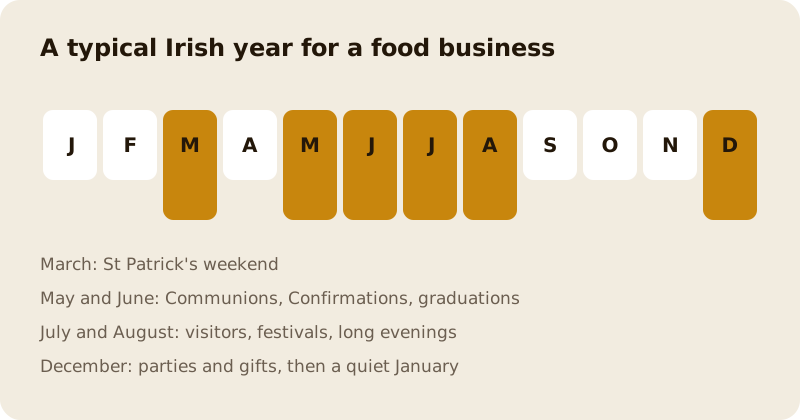
What are the fixed dates to plan around?
Ireland has ten public holidays: New Year's Day, St Brigid's Day in early February, St Patrick's Day on 17 March, Easter Monday, and the first Mondays of May, June and August, the last Monday of October, Christmas Day and St Stephen's Day. The long weekends they create are some of your busiest and some of the quietest for local trade, depending on where you are. A seaside cafe thrives on them; an office-district lunch spot closes. Know which you are.
Add the dates that matter locally: your town's festival, the county match days, the school terms and mid-terms, the Leaving Certificate results, the student term and the dates when offices go quiet. Put them on one calendar and share it with your team.
What does each part of the year ask of you?
January and February. The slowest stretch. Spend the quiet on training, deep cleaning, menu changes and the books. Use a gift voucher from December as a reason to bring people back, and a Deal Hour on a quiet weekday. Valentine's Day is a night to sell early as set sittings.
March to April. St Patrick's weekend, then Easter. Mother's Day falls in Lent and is a lunch occasion for three generations at one table. Open bookings a month ahead and sell a set lunch.
May and June. The family season: Communions, Confirmations, graduations and christenings. These groups book with whoever answers first, want a private area and a fixed price per head, and order a children's menu. Have a group menu and your terms ready; the private hire guide shows how.
July and August. Visitors, festivals and long light evenings. Outdoor seating earns its keep. Staff are harder to find and keep: sort your summer rota and hiring in March. Expect high turnover of tables and a higher demand for quick service.
September and October. Students return and offices fill again. A good time for loyalty, regular orders and a new menu. Halloween is a family and a party night.
November and December. The Christmas party season starts in November. Sell the festive set menu early, take deposits on large tables, and run vouchers for January. Prepare for the last weekend before Christmas, which is often your biggest.
Where does your business sit in the calendar?
The same calendar means different things in different places. A seaside town in Kerry, a Dublin office district, a university town and a rural pub each have a different peak and a different dead week. Write down, for your own place, the five best weeks and the five worst weeks of last year by sales. Mark why: weather, an event, a holiday, a school term. If you have no history yet, ask the business next door, which has most likely learned it the hard way.
Pay attention to the shoulders. The weeks just before a peak need prep, hiring and ordering, and the weeks just after need recovery: a day off for the team, a stock-take, and the invoices. Teams that plan only the peak burn out in the shoulder.
How do you stock and staff for it?
Work backwards from the date. For a busy week, place the order in time, confirm delivery days around bank holidays, and rota your best people for the big nights. Ask staff early for their holiday requests so that you are never short on a peak weekend. For quiet weeks, cut hours and bring training forward; ask a flexible team to use their leave.
Keep a simple record each year: the sales on each key date, what sold out, what you wasted and what you wished you had. Next year's plan starts from this year's notes.
How do you promote around the calendar?
Sell the occasion before it arrives, as a fixed thing. A set menu, a price per head and a deposit works better than a vague "we're open". Use Mosey's tools where they fit: event tickets for a ticketed night, an Early Bird offer to fill an early sitting, and Deal Hours to shape a slow window. The guide to boosting Christmas and Valentine's bookings goes through the two biggest.
What does a yearly planning meeting cover?
Once a year, in January, sit down with your head chef, your manager and whoever does the books for one hour. Go through the calendar month by month and for each ask five questions: what is on, what will we sell, who is on the rota, what do we need to order early, and what will we do if it rains. Write the answers on one page and pin it in the office. Review it at the end of each quarter. It is the cheapest piece of management you can do.
How do the seasons connect to cash?
Every peak has a quiet to pay for. The money you earn in July keeps you through February, so do not spend the summer. A 13-week forecast shows the thin weeks, and the cash flow guide shows how to build one.
For help staffing the peaks, read the rota guide and the hiring overview. The pricing page lists the cost of each tool you might use.
Questions
Common questions
What are the public holidays in Ireland?
New Year's Day, St Brigid's Day in early February, St Patrick's Day, Easter Monday, the first Mondays of May, June and August, the last Monday of October, Christmas Day and St Stephen's Day.
When should I start selling Christmas bookings?
Earlier than feels natural. Decide your festive set menu in late summer and have your booking terms ready by early autumn. The people who organise parties book the places that already have a price and a way to say yes.
How do I survive January?
Use the quiet for training, cleaning and menu changes, bring people back with December voucher sales, and put a Deal Hour or Early Bird offer on your quietest days. Plan the cash for it in your forecast.
Which spring occasions are worth planning for?
Mother's Day, Communions, Confirmations and graduations. These are group occasions that want a private area and a fixed price per head, and they book with whoever answers first.
How do I plan staffing for summer?
Sort the summer rota and hiring in March or April, ask staff for holiday requests early, and keep a list of reliable extra hands. Summer turnover is higher, so train earlier than you think you need to.
More like this
Read next
How to run a supper club or tasting night that sells out
A supper club is a fixed menu, a fixed number of seats and a fixed night, sold as tickets paid in advance. Here is how to cost it, sell it and make it a habit.
How to add catering to your restaurant or café
Office lunches, platters and parties, quoted properly, with a deposit up front, the balance before the day and a prep sheet for the kitchen.
How to make a quiet Monday or Tuesday pay
First decide whether the quiet day should open at all. If it should, shrink it to the hours that trade and give it a reason to come that only exists on that day.
How to get more ratings and reviews for your restaurant, honestly
Ask, at the right moment, every customer, and make it easy. Never offer anything in return. A steady stream of honest ratings is worth more than any burst you could buy.
Get started
Claim your business free
Free to list, no set-up fee, and Order Ahead is 1.5% commission when you start taking orders.