
For businesses
Six Nations and big match days: how to fill the room at your pub or restaurant
Mosey · 22 November 2026 · 11 min read
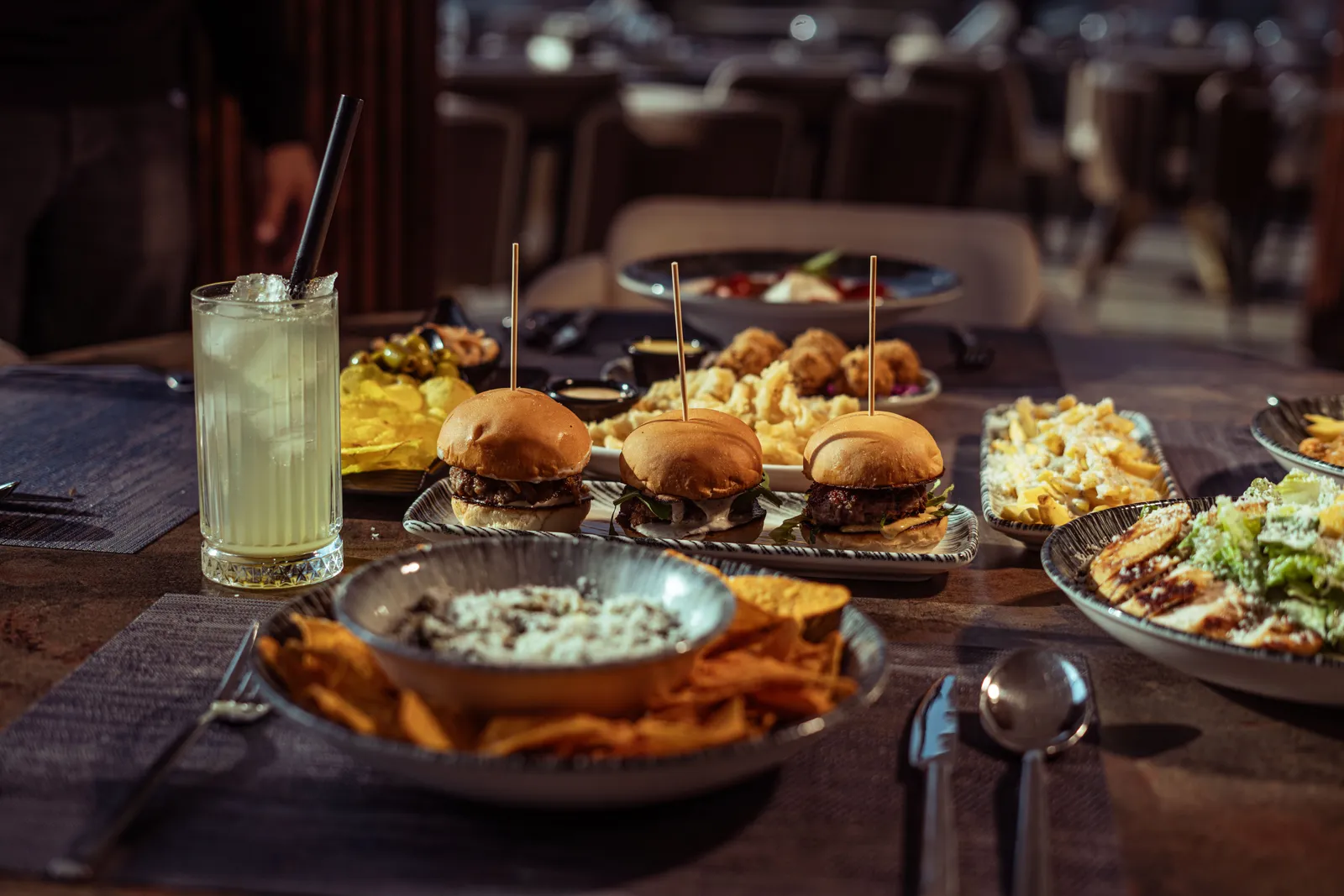
To fill the room on a big match day, decide who the day is for, then sell the seats before it starts. Take group bookings with a food order, hold a share of the room for walk-ins, put a short menu on the pass and keep every offer on food. The drink follows the crowd. The food is where you decide whether the day pays.
Why does a big match leave you busy but not better off?
Because the crowd arrives together, drinks first and eats little. A match gives you something a normal Saturday never does: a date, a start time and a crowd you can predict. What it does not give you is a good mix. Many pubs fill by the time the game starts with people who sit for the whole match, order rounds and leave when it ends. The kitchen gets one rush at half time, and the tables turn once.
Here is a round example, clearly an example. Say your room seats sixty. An ordinary Saturday afternoon fills it in two sittings, and most tables order a meal. A match day seats all sixty at once, but half of them never order a plate. The room is full, the till is busy, and the kitchen has made a fraction of what it could.
The fix is not a bigger crowd. It is a better one. Sell some of those sixty seats to groups who come to eat, and you earn from the same chairs twice: a food order and the drink that goes with it. This guide is about how to do that without turning away your regulars.
Who is the match for: a food crowd, a drinks crowd or the family?
Pick one main crowd, then give the others a corner. A room that tries to serve everyone the same way serves nobody well. Three groups turn up on a match day, and they want different things.
- The drinks crowd. They want a standing spot with a view, quick service at the bar and no wait. They order little food, and what they do order has to come out in a hurry.
- The food crowd. Friends or colleagues who want a table, a proper plate and a decent view. They will book, and they will pay for the seat if the food is good.
- The family. Parents and children who like the game but not the noise. They want a table away from the screen and food that arrives before the children lose patience.
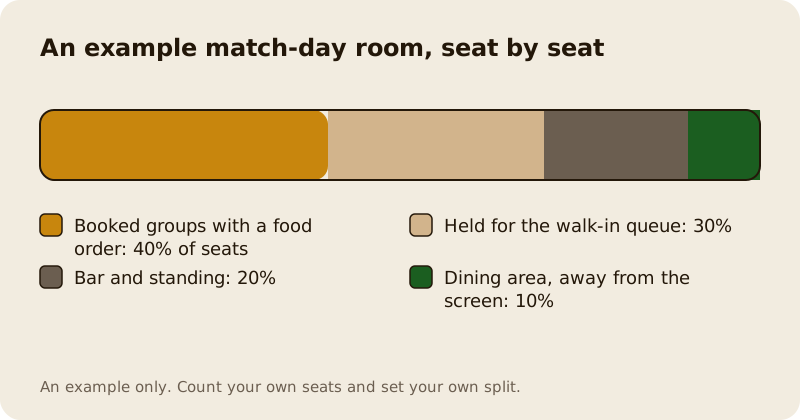
Walk your room and mark it up before the day. Give the standing and bar area to the drinks crowd, tables with a view to booked groups and a calmer section to families. The illustration above shows one example split. Your own will depend on how many seats you have, how many screens and how your room is shaped.
If you are a restaurant rather than a pub, you may have no screen at all. Then the match is a different opportunity: the people who stayed home to watch want a table before or after, a takeaway for the couch or a table in a quiet room while the pub next door is packed. Say so plainly on your page, and take bookings around the game, not during it.
What does a match do to your kitchen, hour by hour?
It stacks the orders into two or three short waves. Plan for the waves, not for the average. Expect a trickle as the crowd settles, a rush around the start, a big wave at half time and a smaller one at the end.
Work out what the half-time wave looks like in plates. If thirty people order at once and your pass can send out ten plates in ten minutes, the last guest waits half an hour and the first review mentions it. You have three levers.
- Shrink the menu. A match-day menu of six dishes you can plate in two minutes beats a full menu that backs up.
- Move the orders earlier. Let groups choose their food before they arrive, so the kitchen starts on a list instead of a queue.
- Spread the wave. Offer a platter at the start of the game and a second round at half time, so the kitchen is never asked for everything at once.
Should you take bookings for a match, and for which tables?
Yes, for groups, and only for some tables. Bookings are how you sell seats before the day, and a booking with a food order is worth more than a walk-in who sits for ninety minutes over one drink.
Take bookings for tables of four to ten with the best view of the screen, and ask for a deposit so a table does not sit empty because someone's plans changed. A deposit is the same tool that protects any busy Friday, and the guide to writing a cancellation and deposit policy shows how to word it so guests accept it.
Do not book the whole room. Hold a share back for the walk-in queue, because the regulars who turn up on the day are your Tuesday trade too, and a pub that turns them away for one big game pays for it later. Your own share depends on how many regulars you expect.
Set rules before you open the bookings:
- A party size range. Decide the smallest and largest group you will take for a view table.
- A deposit per head. Tie it to the food, so it covers part of what the group will eat.
- A release time. Say when an unclaimed table goes back to the queue, and put it in the confirmation.
A group that wants the back room or a whole section is a private hire enquiry, and it needs a quote. The guide to pricing private hire covers the maths.
How do you price a match day when you cannot discount the drink?
Put your offers on food, never on drink. S.I. No. 4 of 2020 says a person shall not sell or supply an alcohol product at a reduced price or free of charge to any person on the purchase of any other product or service. So build the deal around the burger or the platter, and keep the pint at its usual price.
The same regulations say that a reduced price includes bonus points, loyalty card points or any similar benefit earned from buying alcohol, so keep points and stamps on the food. Ask a solicitor before you advertise any offer that touches drink.
That leaves a lot of room on the food side, and it is where the money is.
- A match-day platter at a fixed price for the table, built from dishes your kitchen can make in volume.
- A booked-table menu, one price per head, chosen ahead.
- A pre-game bite for the group that arrives early and wants something on the table before kick-off.
Price the platter from its cost, not from the room's excitement. A match day is not a reason to leave your margin at the door. Work out the cost of a platter, add your usual margin, and round to a figure that is easy to say aloud. The guide to private hire has a floor-price method you can reuse.
Keep the match menu short: dishes cooked in batches, shareable, easy to eat with one hand, with a vegetarian and a gluten-free choice. Put it on your Mosey page and call it the match menu. Allergens matter more on a busy day, so check each dish against your allergen matrix before the day and brief the floor. The guide to making and keeping an allergen matrix shows how. Never describe a dish as free of an allergen unless your own process proves it.
How do you handle walk-ins and the queue?
Give them a real queue, not a crowd by the door. A walk-in who is told "ten minutes" and then waits thirty leaves, and the people behind them hear it. A queue that is written down is a promise you can keep.
The walk-in queue on Mosey is free on every plan and works without bookings, so a pub that never took a booking can use it. A guest joins from the app or a QR code at your door, or you add them yourself, and you call them when a table frees up. A freed table goes to the next party that fits it, not to the person who joined first, so a table for two does not sit empty while a group of six waits.
If you are on the Starter reservations plan at €79.99 a month (see pricing), you also get a waitlist for fully booked dates and booking deposits. A cancelled table can be offered again, and the guide to filling last-minute cancellations shows how.
How do you tell people, and when?
Tell your regulars first, then the groups, then the public. A room that is sold before the day is a calmer room.
- Your followers and regulars, as soon as you know your plan. They are the people most likely to book a table for four.
- Local groups: the rugby club, a workplace, a group of friends who book every game. A short message with the booking link is enough.
- Your page and your window, so a passer-by sees that you are showing the match and what the food offer is.
- A reminder to booked tables, a day or two before, so no-shows are rare.
On Mosey, diners find a place by the dish, by their mood and by neighbourhood. Put the match menu on your page with a clear photo, so a guest looking for somewhere to eat on a match day can find yours. Boost sends a promotion or event to followers, members and nearby guests who have agreed to hear from you, and Mosey checks that yes on every send.
One plain line on rights: whether you may show a match to paying customers depends on your broadcaster's terms, so check them with your TV supplier before you advertise a screening.
How do you staff and prep a match day?
Rota to the waves, not to the whole day. Staff light before the start, heavy for the half-time rush and light again for the wind-down. Add one pair of hands on the pass, since the rush is a kitchen problem before it is a bar problem.
Use this checklist the day before:
- Numbers. Count the booked covers and the platters ordered ahead.
- Prep. Batch the sauces, portion the sides and stage the trays.
- Stock. Order extra of the three dishes you expect to sell most, and nothing else.
- Floor. Mark the zones, put up the reserved signs and place the menus.
- Door. Brief the person on the door on the queue and the release rule.
- Allergens. Check the matrix and brief the floor.
- Cash and cards. Test the card machines and the till before the crowd arrives.
How do you turn one big game into regulars?
Make the match the first visit, not the only one. A crowd that came for the game and enjoyed the food has no reason to come back unless you give them one.
A few things work without touching drink prices:
- A stamp on food. Loyalty is free on every plan, and a stamp for a main meal or a platter gives a match-day guest a reason to return on a quiet weekday. In Ireland, Mosey keeps loyalty rewards and member perks off items you mark as alcohol, so mark every drink on your menu.
- A quiet-hour food deal. A Deal Hour is a price rule that runs inside a weekly window you choose, with no code to leak. Use one on a slow weekday lunch or early evening, so the match-day guest has a reason to try you when the room is calm. In Ireland it keeps off items marked as alcohol.
- A rating prompt. Ask the group to rate what they ate. A rating that names a dish is what brings the next group.
Then plan the next match. The big games repeat through the season, and so do the groups that booked them. Look at who booked and who did not turn up, and invite the first group back. The guide to planning the restaurant year around Irish seasons shows how to set these dates against the rest of your calendar.
How does Mosey help a pub or restaurant on a match day?
Mosey does not run your screen, your bar or your rights. It fills the tables and keeps the food side organised.
- Bookings with a food order. Guests book a table in the app, and on the Starter reservations plan you can take a deposit. On the Host plan at €169.99 a month, guests can choose their dishes after they book, and the kitchen's prep sheet adds up what was ordered ahead. A choice is a preference for the kitchen, not a payment, so the guest pays on the day. See table bookings with deposits and pre-ordering food with a booking.
- A walk-in queue on every plan, so the room runs from a list. See the walk-in queue and waitlist.
- Group requests and quotes for a section or the back room, with a deposit link and a group allergy list. Mosey takes 4.5% plus VAT of a gathering deposit, and quoting is free. See group bookings and private hire.
- Deal Hours and Boost for the quiet days around the game. See promotions and Deal Hours.
The guide to pre-ordering for groups covers the set-up step by step, and the software for pubs that serve food shows how the till and bookings fit together. When you are ready, Host on Mosey free, add your match menu and open a handful of group tables before the next fixture. Every guide for Irish food businesses is on the business guides page.
This guide is general information, not legal, tax or financial advice. Rules change and depend on your business and where it is, so check the current rule with the official body named in the guide and take advice from a solicitor or accountant in your area before you act.
Questions
Common questions
How can a pub fill its room on a Six Nations day?
Sell some seats before the day. Take group bookings with a food order, hold a share of the room for walk-ins, run a short match-day menu and tell your regulars first. Keep every offer on food: S.I. No. 4 of 2020 bars alcohol free or at a reduced price on the purchase of another product or service.
Can I offer a free pint with food on a match day?
Keep the offer on the food. S.I. No. 4 of 2020 says a person shall not sell or supply alcohol at a reduced price or free of charge on the purchase of any other product or service. Ask a solicitor before you advertise any offer that touches drink.
Should I take bookings or keep the room for walk-ins?
Do both. Book tables of four to ten for the best view, with a deposit, and hold a share of the room for the queue. Your regulars are your Tuesday trade, so a pub that turns them all away for one game pays for it later.
What should a match-day menu include?
A short list of dishes you can cook in batches and plate quickly, shareable and easy to eat with one hand, with a vegetarian and a gluten-free choice. Check each dish against your allergen matrix before the day and brief the floor.
How do I stop the kitchen being overwhelmed at half time?
Shrink the menu, let groups choose food before they arrive so the kitchen starts on a list, and offer a platter at the start and a second round later so orders do not all land at once. Rota extra hands on the pass.
Can I use loyalty points or a members club on drink in Ireland?
No. S.I. No. 4 of 2020 counts points or similar benefits earned by buying alcohol, or used to get it cheaper or free, as a reduced price. Base your stamps on food. On Mosey in Ireland, loyalty rewards and member perks never come off items you mark as alcohol.
How do I take a deposit for a match-day table on Mosey?
Booking deposits come with the paid Starter reservations plan. Set a deposit per head, say when a table is released and tell guests in the confirmation. Reservation deposits carry no Mosey fee, only Stripe's card fee at cost, and the money goes to your own Stripe account.
Does Mosey help me show the match or sell drink?
No. Mosey does not run your screen, sell alcohol or hold your licence. It helps you fill tables with bookings, a free walk-in queue, group quotes, food offers and a menu page, and in Ireland it keeps discounts and perks off alcohol.
More like this
Read next
A hotel restaurant that locals use too
A hotel dining room earns local trade when it acts like a restaurant of its own. Here is why locals stay away, how to set the dining room up on Mosey beside your hotel, and which offers fill it.
An alcohol-free drinks menu that still makes margin
More guests are drinking less, in January and the rest of the year. Here is how to cost, price, name and sell an alcohol-free menu so it earns as well as the wine list, with the Irish VAT and offer rules checked.
A pub that does food: making the kitchen pay
A pub kitchen pays when its gross profit covers its own wages and running costs. Here is how to count it, which services to fill, what the alcohol rules say and how Mosey fits.
Auto-enrolment pension for Irish restaurants and cafés: what you pay and do
Since 1 January 2026 an Irish employer matches the pension contribution of each eligible employee. Here is who counts, what it costs on a wage bill, the payroll steps and what staff can opt out of.
Get started
Host your business on Mosey. It is free to claim.
Free to list, no set-up fee, and Order Ahead is 1.5% commission when you start taking orders.