
For businesses
How to trade at food markets and festivals in Ireland
Mosey · 15 November 2026 · 7 min read
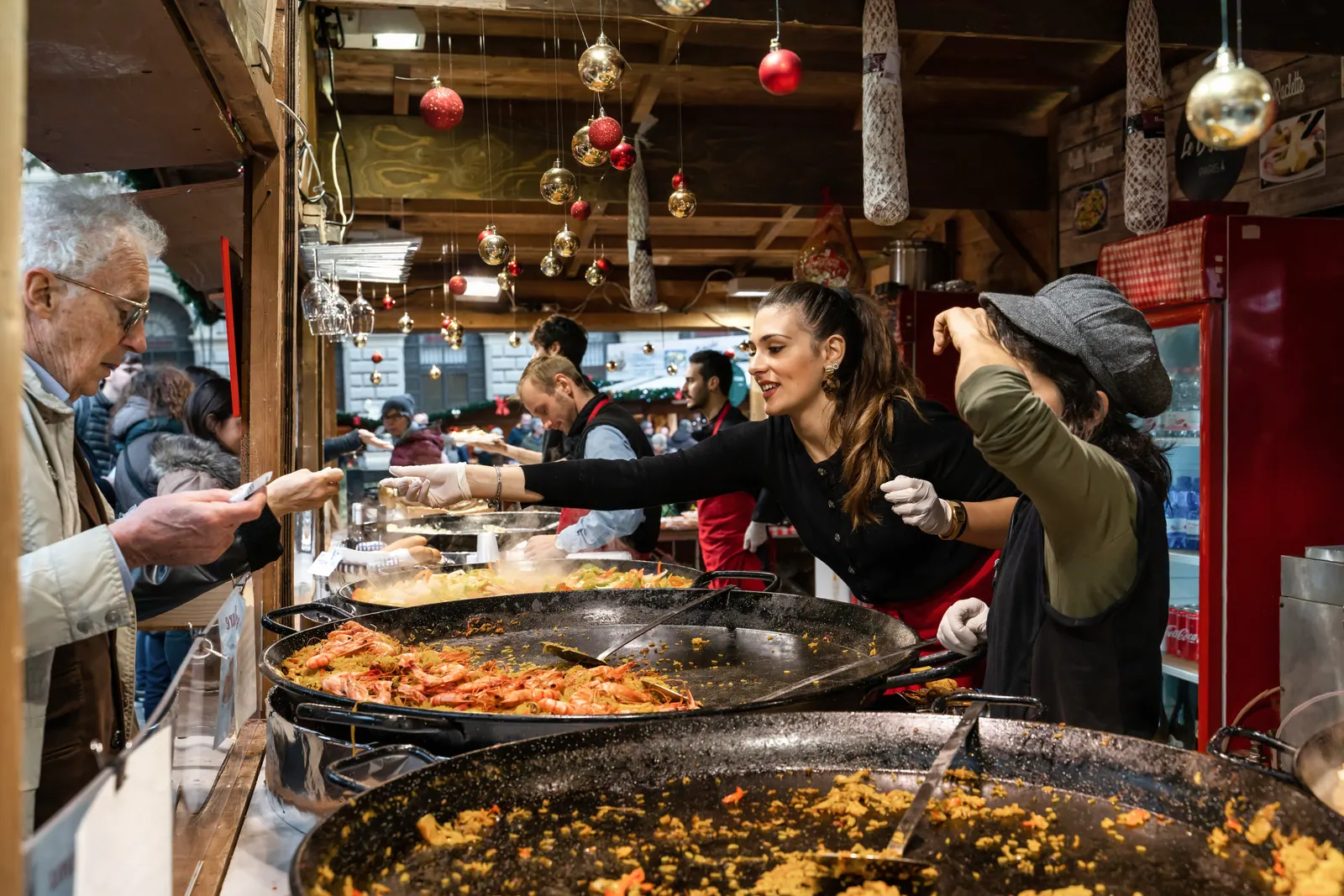
To trade at food markets and festivals in Ireland, apply to the market manager or festival organiser with a clear menu and photos, have your food business registration, insurance and any local trading permit in place, price a short menu so the day covers the pitch, the stock and the people, and give customers a way to find you next week. A stall is a shop for a day. It pays when the menu is tight, the queue moves and the people who loved your food today can find you again.
How do you get a pitch at a food market or festival?
Most markets and festivals choose their vendors. They want a mix, so the stall that does something nobody else there does has the best chance.
- Find the right person. A weekly market has a manager; a festival has an organiser, often with an application form that opens months before the event.
- Show the food. Send a short menu, good photos of the dishes and the stall, and a line on what makes you different from the vendors already there.
- Show you are ready. Have your registration, insurance and allergen information to hand, because they will ask.
- Start small. A quieter weekday market or a smaller festival lets you learn the set-up before a big weekend.
- Be reliable. Markets keep vendors who turn up every week, on time, with a clean stall.
What permits does a market stall need?
A stall that sells food is a food business, so it needs to be registered, and a stall trading from a van or a trailer has its own food safety checks. Check the current rule with the FSAI or your HSE environmental health officer. The registration and HACCP guide covers the plan and the records.
Trading on a street or in a public place can also need a trading licence or permit from the local authority, and the rules differ from council to council. A market or festival that runs on private ground often handles this for its vendors. Ask the organiser, and check the current rule with your local authority.
Then the practical list: public liability insurance (most organisers ask to see it), written allergen information on the stall, hand-washing on site, and a plan for water and waste. The allergen guide explains what you must show.
How do you make a market day pay?
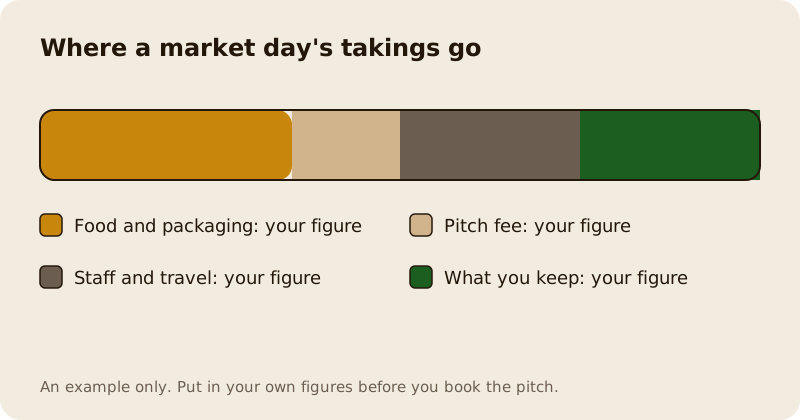
Before you book a pitch, write down what the day costs: the pitch fee, food and packaging, the people working, fuel and travel, and anything you hire. Then work out how many portions you need to sell to cover it, and whether the market's footfall can give you that many. The picture above shows the shape of that sum, with your own figures to go in.
Then make every hour count:
- Keep the menu short. Three or four items, each one fast to serve. A long menu slows the queue and the queue is your till.
- Prep at base. Do as much as the rules allow in your registered kitchen, so the stall only cooks and serves.
- Price in round numbers so change and card payments are quick.
- Sell something to take home. A sauce, a spice mix or a bake adds to each sale. The merchandise guide has ideas.
- Count what sold. After each market, note what sold out and what you threw away, and adjust next week's prep. Sold out by two o'clock is a reason to make more, not a reason to celebrate early.
What should a market stall set-up include?
A stall is judged from ten metres away. People decide whether to queue before they read a word of the menu, so make it easy for them.
- A clear menu board with prices, readable from the front of the queue.
- Your allergen information on the stall in writing, where people can see it without asking.
- Shelter and weights. A gazebo with proper weights on every leg; Irish weather does not care about your opening time.
- Light for an evening market or a winter afternoon.
- Hand-washing and bins set up before the first customer.
- A card reader and a float, charged and counted the night before.
- A sample or a smell. Something on the grill that people can see and smell sells more than any sign.
Write a packing list and tick it every week. The one thing you forget is always the thing you need.
How do you let customers know where you are trading?
Your best customers do not know where you are on Thursday. A post on social media is gone by lunch, and a search for food nearby shows businesses with doors.
On Mosey you can host as a food truck or pop-up instead of a fixed address. You give your home town, then post appearances with where and when you are trading and, if you like, the menu you will serve there. You can start an appearance on the spot when you set up. Your pin shows on the map and in near-you results only while you are trading, so nobody is sent to an empty pitch. Followers who turned on updates are told when you post, and upcoming dates appear in the events feed. Posting appearances and telling followers cost nothing.
Customers can find you, follow you, see your menu and pay with Mosey Pay when they reach you. Card payments through Mosey Pay cost 0.5%, capped at €149 a month, with the card fee passed on at cost. The pop-ups, food trucks and markets guide covers the listing in full.
What happens when the market itself is on Mosey?
Food markets and halls can have their own page on Mosey, with their vendors and their market days. When a market adds you as a vendor and you accept, its page shows you, and your days at that market show on your own page as appearances, so followers of either can find you. A rating someone gives you at the market counts on your own page, so the stars you earn there follow you everywhere you trade. If you are thinking of running a market or festival yourself, read how to run a food market or festival with online tickets.
Food halls and markets and food festivals show what a diner sees.
How do you bring market customers back?
A market customer who loved your food today has no reason to remember your name next week unless you give them one. Put a sign on the stall asking people to follow you on Mosey to see where you are trading next. Ask happy customers to rate the dish they ate; ratings are how new people choose a stall. The reviews guide shows how to reply when they do.
If you trade at a festival, tell people at the stall where your next market is. If you run evening events, the pop-up restaurant guide shows how to sell seats for a night of your own.
What should you check after your first market?
Look at three numbers: what you took, what it cost, and how many portions you threw away. Note the weather and anything else on in the town that day, too, because a wet Saturday or a match on the television can halve a market and say nothing about your food. If the day did not cover its costs, the answer is usually one of three things: the wrong market for your food, a menu too long to serve fast, or a price too low for the effort. Fix one at a time, and give a new market three or four weeks before you judge it.
Where should you start?
Pick one market where your food would stand out, check your registration, insurance and trading permit, and apply with a short menu and photos. Visit the market as a customer first: see who trades there, where the queues form and what time the crowd thins out. Host on Mosey free as a food truck or pop-up on an Irish-built and Irish-run app, post your market days, and let your followers find you each week.
If you trade inside a food hall, the food hall vendors guide covers that set-up. More in the guides for food businesses.
This guide is general information, not legal, tax or financial advice. Rules change and depend on your business and where it is, so check the current rule with the official body named in the guide and take advice from a solicitor or accountant in your area before you act.
Questions
Common questions
How do I get a stall at a food market in Ireland?
Contact the market manager or festival organiser with a short menu, good photos and a line on what makes you different. Have your registration, insurance and allergen information ready, because they will ask for them.
Do I need a licence to trade at a market in Ireland?
A food stall must be a registered food business, and trading in a public place can need a permit from the local authority. Check with the organiser, the FSAI or the HSE, and your local authority.
How can customers find my stall each week?
On Mosey, host as a food truck or pop-up and post appearances with where and when you trade. Your pin shows only while you are trading, and followers who turned on updates are told when you post.
Can I take card payments at a market stall with Mosey?
Customers who find you on Mosey can pay with Mosey Pay when they reach you. Mosey Pay carries a small published commission capped each month, and the card fee is passed on at cost.
Can customers order ahead from my market stall on Mosey?
Not yet. For a food truck or pop-up, customers can find you, follow you, see your menu and pay with Mosey Pay when they reach the stall, but they cannot order ahead.
Do ratings at a market count for my business?
Yes. When a market lists you as a vendor on Mosey, a rating someone gives you there is yours, so the stars you earn at the market show on your own page wherever you trade.
More like this
Read next
A hotel restaurant that locals use too
A hotel dining room earns local trade when it acts like a restaurant of its own. Here is why locals stay away, how to set the dining room up on Mosey beside your hotel, and which offers fill it.
An alcohol-free drinks menu that still makes margin
More guests are drinking less, in January and the rest of the year. Here is how to cost, price, name and sell an alcohol-free menu so it earns as well as the wine list, with the Irish VAT and offer rules checked.
A pub that does food: making the kitchen pay
A pub kitchen pays when its gross profit covers its own wages and running costs. Here is how to count it, which services to fill, what the alcohol rules say and how Mosey fits.
Auto-enrolment pension for Irish restaurants and cafés: what you pay and do
Since 1 January 2026 an Irish employer matches the pension contribution of each eligible employee. Here is who counts, what it costs on a wage bill, the payroll steps and what staff can opt out of.
Get started
Host your business on Mosey. It is free to claim.
Free to list, no set-up fee, and Order Ahead is 1.5% commission when you start taking orders.