
For businesses
Pop-ups, trucks and markets: be findable where you actually are
Mosey · 22 September 2026 · 5 min read
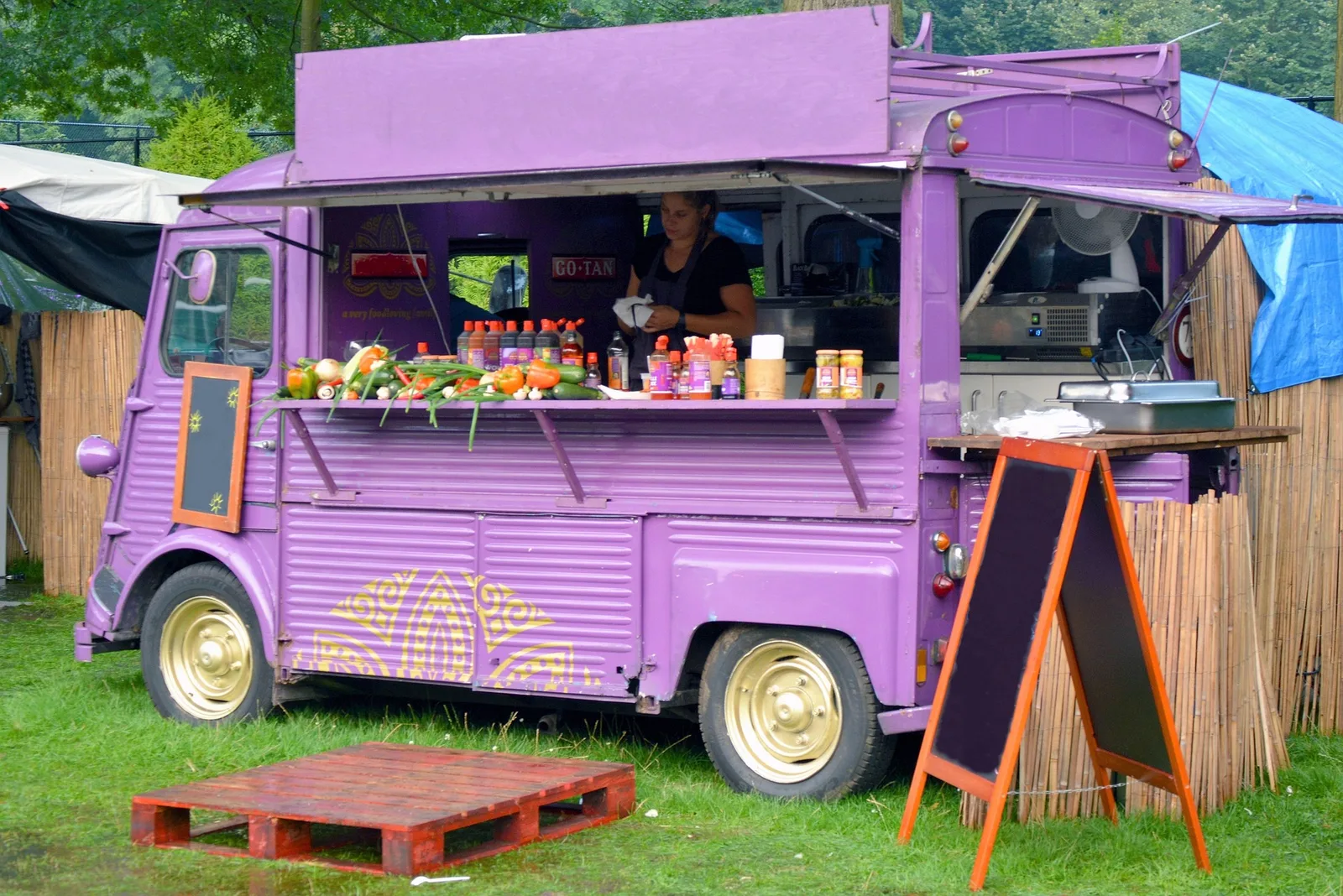
Every listing system in hospitality assumes a front door. Food trucks, market stalls, residencies and pop-ups do not have one, and the usual workaround (listing the address of a lock-up in an industrial estate) is worse than useless, because it sends people to a place you have never served food.
Is Mosey for food trucks, market stalls and pop-ups?
Food trucks and vans. Market and farmers' market stalls. Pop-up residencies in other people's rooms. Coffee carts. Anybody whose answer to "where are you?" is a schedule rather than an address.
Appearances, not an address
You list where you will be and when: a market on Saturday morning, a festival next weekend, a monthly pitch outside a brewery.
Your map pin comes from those appearances. Somebody looking for lunch near them finds you while you are actually there, rather than at a unit you rent for storage. When the appearance ends, you stop appearing there, because you are not there.
Appearances also surface in the events feed, which is the other half of how people find this kind of trading: not "what is near me" but "what is on".
What stays when you move
The listing, the menu, the photographs and the ratings belong to the business rather than to a pitch.
That sounds obvious and it is the thing that usually breaks. A trader who builds up forty ratings at a market and then moves to a different one should not start from zero, and a customer who liked you in Cork should be able to find out that you are in Galway next weekend. The pitch changes; the business does not.
Taking money without a shop
Two things matter at a market, and both are about not having infrastructure.
Card payments through a phone. Mosey Pay takes an in-store card payment at 0.5%, capped at €149 a month, without a terminal. At a market that is not merely cheaper than a card machine; it is one fewer device to charge, one fewer thing to lose, and one fewer piece of hardware that fails when the signal is poor.
Order ahead, at 1.5%. For a festival or a busy market this is the one that changes your day. A queue has a maximum length beyond which people walk away; order-ahead serves the people who would have walked. You are no longer limited by how many people will stand in front of you at once.
Loyalty is worth more to a trader than to a restaurant
This is counter-intuitive and worth stating.
A neighbourhood restaurant's regulars live nearby, and a stamp card in a wallet works fine. A trader's regulars are scattered across pitches, markets and events. They are loyal to you, not to a location, and there is no door for them to walk past.
Something that follows the customer rather than the pitch is therefore doing more work. It is free on every tier, and a visit is recorded whenever somebody pays through Mosey, so there is nothing to stamp while you are trying to serve.
How to update your market or pop-up schedule
Markets get cancelled. Weather happens. A pitch falls through.
Change the appearance. This is the one piece of upkeep the format genuinely needs, because a listing that says you are somewhere you are not is worse than having no listing at all: it sends somebody to an empty pitch and they do not try again.
The reverse is the opportunity: an appearance added on a Thursday for a Saturday you have just picked up is visible to everybody nearby by the time it matters.
The listing is the part most traders skip
A food truck with no menu on its listing is the most common version of this, and it is the most expensive.
Somebody deciding where to get lunch at a market is standing between four stalls. What settles it is knowing what you sell and what it costs, and a listing that says "street food" answers neither. Photograph the board once and the scan will read it, prices included.
The other one worth doing is photographs of the food rather than of the van. The van is what they will see when they arrive; the food is what makes them walk over.
How much does Mosey cost for a food truck?
- Listing, menu, photographs, ratings: free
- Loyalty: free on every tier
- Mosey Pay: 0.5% on an in-store card payment, capped at €149 a month
- Order ahead: 1.5%
- Tips: 0%, paid to you in full
No monthly fee, no charge for being listed, nothing if you do not trade.
How does Mosey work for a coffee van at markets?
A coffee van doing three markets a week and the odd festival.
Being listed costs nothing and puts it on the map at each market for the hours it is there. Card payments through a phone at 0.5% replace a terminal rental. On a busy Saturday, order-ahead at 1.5% serves perhaps twenty people who would otherwise have looked at the queue and gone elsewhere. At €4 a coffee, that is €80 of trade that did not exist, for €1.20 of commission.
The loyalty programme costs nothing and is the only thing in the van that remembers a customer from one market to the next.
Related guides for food trucks and pop-ups
- Claim your place on Mosey: the first step, free
- Take payments in store with Mosey Pay: 0.5%, no terminal
- Order ahead: serving past the length of the queue
- Run a loyalty programme: the customer who follows you
- What Mosey costs: every rate on one page
Questions
Common questions
Does it cost anything to be listed?
No. Claiming a listing and keeping it up to date is free, as it is for any venue, and a loyalty programme is free too.
How does a listing work without a fixed address?
You list appearances: where you will be and when. The map pin comes from that rather than from a permanent address, so you appear where you actually are.
What happens between appearances?
Your listing, menu and ratings stay put: they belong to the business, not to a pitch. People can still find you, see what you sell and see when you are next out.
Can I take payments without a card machine?
Yes. Mosey Pay takes an in-store card payment at 0.5% through a phone, capped at €149 a month, which matters at a market where a terminal and a signal are both uncertain.
Can I take orders ahead?
Yes, at 1.5%. For a market or a festival, order-ahead is the difference between serving the queue and serving the queue plus the people who did not want to stand in it.
Can I run loyalty from a truck?
Yes, and it suits a trader particularly well: your customers are spread across pitches and events rather than living near one door, so something that follows them is worth more than a card in a wallet.
Do I show up in searches for the town I am in that day?
That is the point of listing appearances. Somebody looking for lunch nearby finds you while you are there rather than at the address of your lock-up.
What if my schedule changes?
Change the appearance. Weather and cancelled markets are a normal part of the trade, and a listing that says you are somewhere you are not is worse than no listing.
More like this
Read next
How to run a supper club or tasting night that sells out
A supper club is a fixed menu, a fixed number of seats and a fixed night, sold as tickets paid in advance. Here is how to cost it, sell it and make it a habit.
How to add catering to your restaurant or café
Office lunches, platters and parties, quoted properly, with a deposit up front, the balance before the day and a prep sheet for the kitchen.
How to make a quiet Monday or Tuesday pay
First decide whether the quiet day should open at all. If it should, shrink it to the hours that trade and give it a reason to come that only exists on that day.
How to get more ratings and reviews for your restaurant, honestly
Ask, at the right moment, every customer, and make it easy. Never offer anything in return. A steady stream of honest ratings is worth more than any burst you could buy.
Get started
Claim your business free
Free to list, no set-up fee, and Order Ahead is 1.5% commission when you start taking orders.