
For businesses
How to run a food market or festival with online tickets and trader pages
Mosey · 15 November 2026 · 11 min read
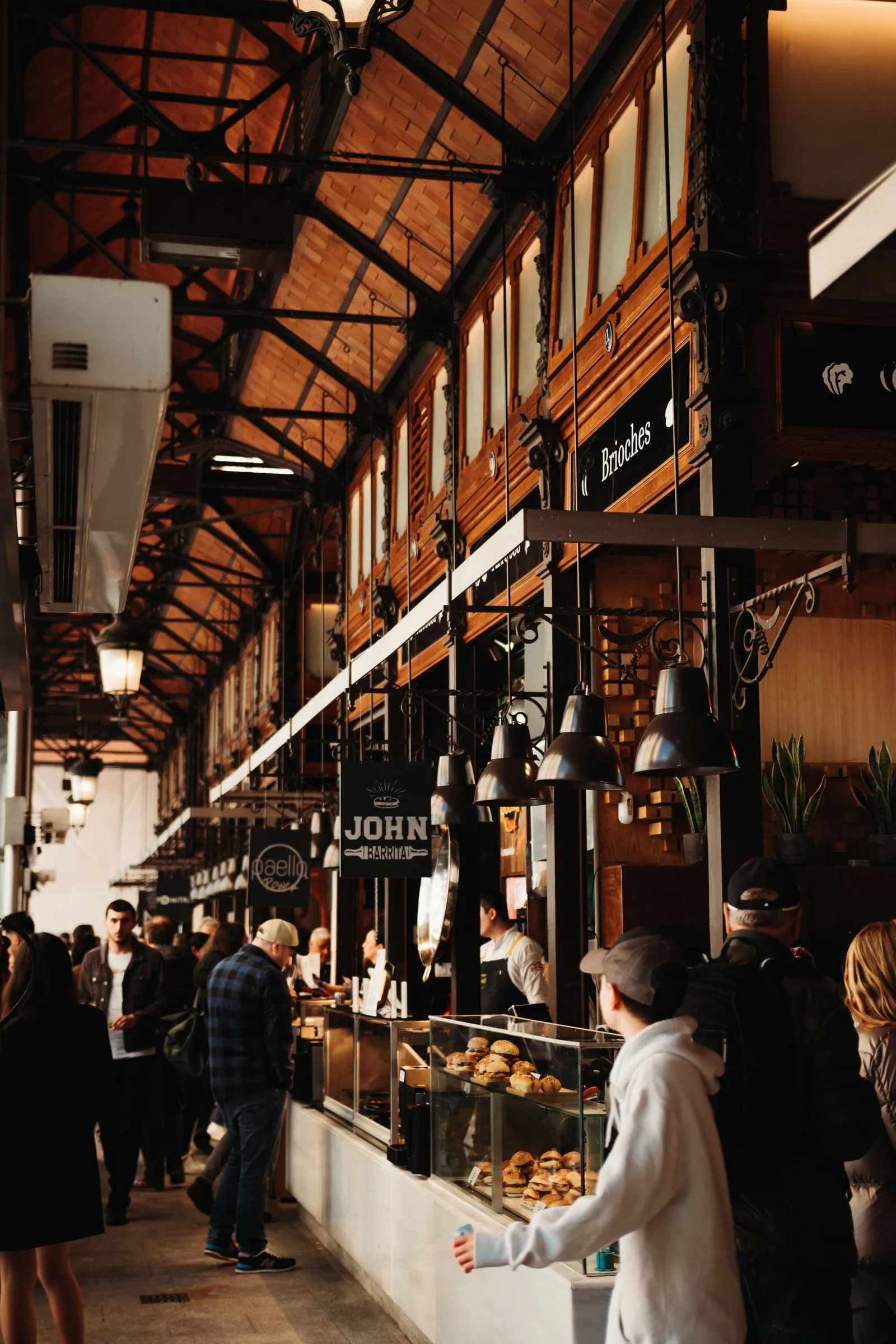
To run a food market or festival in Ireland, choose a mix of traders, tell people exactly when and where you are on, and make the day easy to join. For a festival that sells tickets, sell them online with a capacity, a limit per buyer and a scan at the door, paid into your own account, then give visitors a way to hear about the next edition.

What does running a food market or festival really involve?
You are selling a day out, and the traders are the product. A visitor does not buy from you. They buy from the stall with the queue, in a place that feels looked after. Your job is the mix of food, the dates, the layout and the confidence that it will be on when they turn up.
That is a lot of small jobs, and most of it happens by message. Which traders are in this week? Did the new one confirm? Where does the ticket money go, and who can refund it?
Two things make it manageable: one place that holds the traders, the days, the site plan and the tickets, and a short list of rules for yourself, covering who you say yes to, what you publish and when, and what you do when it rains.
This guide covers a weekly or monthly market and a ticketed festival, because the work overlaps. If you trade at a market rather than run one, the guide to trading at food markets and festivals is written for you.
How do you choose and keep the right traders?
Visitors forgive a wet day. They do not forgive six stalls selling the same thing, so choose for variety first.
Write your rules down before the first application:
- A mix. A cap on any one kind of food, so two good burger stalls do not crowd out the only cake stall.
- Basics in order. What a trader shows you before they trade: food business registration, insurance and allergen information. Ask your local authority what applies to your site.
- A trial day. A new trader does one date before it gets a season.
- A clear no. A short reply that says why saves you a second email.
- Reliability. Turn up every time, on time, with a clean stall, or lose the pitch.
On Mosey, a market or hall has its own listing, and each trader is an ordinary listing of its own: a restaurant, a truck or a pop-up. A taco truck at three markets has one page, one set of followers and one rating history. You never edit a trader's page or menu, and you never need to. The trader owns it.
You add a trader by searching for its listing. If nobody has claimed that listing yet, it shows on your page at once, so your line-up is complete on day one. If the trader is already on Mosey, it shows once it accepts. If a trader is not on Mosey at all, you can create a basic listing for it, or let Mosey send it one invitation email on your behalf. The email says you asked, carries a one-click "no thanks", and is never sent again to anyone who has said no. There is a daily limit on these, so do it in batches.
For a long list, the organiser site takes a spreadsheet of up to 150 rows. It checks each row against existing listings, never creates a duplicate without your say, and does not keep the file.
How do you tell people when and where you are on?
The most common reason for an empty market is that people were not sure it was on. A date that is wrong once is remembered for a season.
A market keeps its days as rules and exceptions:
- The rule. Every Saturday, nine to two, from April to October.
- A closed day. Bank holiday, flooded car park, private hire.
- An extra day. A Christmas market, with its own hours.
Times are in your market's own time zone, a day that has finished cannot be marked, and a date that is not a market day cannot be marked either, so the page cannot disagree with itself.
Each trader then confirms its own days. That matters for two reasons. The list of who is trading today is the trader's word, not your guess. And a trader's days at your market also appear on its own page as appearances, so its followers see where it is, and its pin shows on the map while it is trading. Your team can see who is trading, but cannot mark a trader in or out for it.
Add a site plan and the practical notes visitors ask about: parking, toilets, dogs, step-free access.
Ratings follow the trader. A diner who rates a dish at your market rates the trader, and the rating counts once, on the trader's own page, never twice. A dish needs two different people to rate it before it shows a score. That keeps your page honest.
Then run a short checklist every market day. This is the one to copy:
- Four days before: confirm every trader's attendance. Chase the silent ones.
- Three days before: check the weather and decide your wet plan: covered pitches, moved stalls, or called off.
- The day before: post one clear update: where, from when, who is trading.
- On the day, an hour early: walk the site against the plan. Gates, power, bins, hand-washing, first aid, signs.
- During: one named person is the contact for traders, and one for visitors.
- After: note footfall, weather, what sold out and which stalls had a queue.
Keep the notes. After six markets you know what a wet Saturday does to your numbers.
Can you sell tickets for a food festival online?
Yes, for a food festival. A weekly food market or a food hall does not sell tickets on Mosey. A hall or market never takes money or bookings through Mosey, and that is deliberate: your traders sell their own food and keep their own takings. There are two exceptions, and only two. A food festival can sell tickets, and a hall, market or festival can lead a paid food trail or a neighbourhood pass for its own traders. Both are covered below.
A festival on Mosey has editions, usually one a year. Each edition has a day or several, with start and end times, and its own list of traders. A trader that came last year is invited again from the earlier list and must accept again. Each trader writes its own dishes for the edition, with prices and allergens, so visitors can plan what to eat. A dish with no allergens declared shows as not listed, never as safe. You see whether each trader's menu is done or missing, and you can nudge a trader once per edition.
An edition goes public only when you publish it, and the page shows a date only from a published edition. Publishing needs a description, a place on the map, at least one day, and at least five traders on the line-up. The system lists every gap at once, so you are never guessing what is missing.
Then the tickets. For each edition you set one ticket: a price, a capacity, an optional limit per buyer and an on-sale switch. A seat is held while a buyer pays, so you cannot oversell the last tickets. Once tickets are sold:
- Dates cannot move. People have planned around them.
- A multi-day ticket admits once per festival day. Someone who comes on both days is scanned in on both.
- Your door team scans. Team members work the door with the scanner, and see names and seats, never email addresses.
- Door tickets are cash, and comps are free. You record a door sale and a comp ticket yourself. There is no card at the door through Mosey.
- You handle refunds. You can cancel a ticket, refund part of one, or approve a holder's request in full or in part. To call off an edition after sales, you cancel the ticket event, and every confirmed ticket is refunded.
Where does the ticket money go, and what does it cost?
Into your own Stripe account, never through Mosey's. Mosey holds none of the money. The organiser (the company or association that runs the festival) is approved by Mosey, and an owner on its team sets up a payout account in the organiser's name. That account is a company account, so a sole trader cannot hold it, and a festival cannot sell until the account is active and an approved organiser holds the festival. The festival's claimed listing owner is never the payee.
The fee is the published event ticket rate: 4% commission on the ticket price, plus VAT on that fee, taken from the ticket, with the card fee passed on at cost. The visitor pays the ticket plus a flat booking fee of €1.29, VAT included. There is no subscription. The pricing page lists every rate, and the event tickets feature shows what each ticket screen does.
Pitch fees are between you and your traders, and Mosey does not collect them.
How do you work out if a ticketed festival pays?
Do the sum before you open sales. An example only, with round numbers to replace with your own: a two-day festival, 800 tickets sold at 12 euro each, so 9,600 euro in ticket income.
Costs in the example: 3,000 for the site, 2,000 for toilets, power and waste, 1,500 for stewards and insurance, 500 for marketing. That is 7,000 before ticket commission, card costs and anything unexpected.
The break-even is the costs divided by what one ticket really brings in. Before fees that is about 585 tickets, and a little more once the commission and card costs are taken out. Anything past that is margin.
Cap at what the site holds, not at what you hope to sell, and price once: a price that moves after the first sales teaches people to wait.
For more on pricing and capacity, the guide to working out if a ticketed food event pays goes line by line, and turning events into a calendar that pays ahead shows how to plan a year of them.
Can a market or festival lead a paid food trail?
Yes, and it is the second exception. A hall, market or festival can lead a paid food trail for its own traders: visitors buy one ticket and collect a stamp at each stall. The money goes to the lead's own account. A hall or market is paid to its claimed owner's account, a festival to its organiser's. Each trader's share is agreed up front, and you pay it yourself, outside Mosey, from a monthly statement. Mosey holds none of the money.
The commission on a trail ticket is 8%, paid by the lead. The guide to selling a paid food trail covers the shares and the statement, and the food trail guide the set-up. A trail is set up from the trail screens in your business dashboard.
Every festival edition can also carry a free passport with a badge. Visitors collect stamps at the stalls, and the phone has to be at the festival site on a festival day. A paid festival passport is not available.
How do you bring visitors back for the next edition?
Ask for three small things, in this order:
- Follow the festival. Put a sign at the gate and one on the programme.
- Rate a dish. A rating is how the next visitor chooses a stall.
- Tap "Next edition: remind me". A visitor who taps it is asking you for one message, and nothing else.
When you publish the next edition, everyone who asked gets one notification, sent in batches so a big list is not sent all at once. The day after, people who were actually there, through a scan, a stamp or a rating, can get a thank-you, if they have said yes to hear from you. Following alone is never treated as a yes.
Announcements to your followers and the sponsor report for a festival's sponsors are built, but they are not switched on in Ireland yet, so do not plan around them. Plan around the free things above, and talk to us if you want the others when they open.
What can you measure without tracking people?
Counts, not names. Your organiser team sees followers gained, ratings and their average, and the dishes and traders rated by at least two people. A festival edition compares with the last one. A market compares a month with the month before and the same month a year ago.
Page views are counted as a plain tally for each day. No person, address or device is stored with it. Counting starts when recording began, so a day before that is shown as not recorded, never as a zero. Search engines and other bots are not counted. Where a view came from is not recorded at all.
Use them for one decision at a time. Did views rise the week you posted the line-up? Which trader is rated highest, and could it have a second pitch?
What can you do this month?
- Write down your trader rules and a wet-day plan.
- List your traders, or search for them on Mosey and add them.
- Publish your market days, or build your next festival edition and its day plan.
- For a festival, set the price, capacity and per-buyer limit, and have an owner set up the payout account early.
- Put a "follow us, rate a dish, remind me" sign at the gate.
- Write down what the day cost and what it brought in.
When your listing, your traders and your dates are in one place, Host on Mosey free and claim your market, hall or festival. The guide to pop-ups, food trucks and markets shows what your traders get, and more is in the guides for food businesses.
This guide is general information, not legal, tax or financial advice. Rules change and depend on your business and where it is, so check the current rule with the official body named in the guide and take advice from a solicitor or accountant in your area before you act.
Questions
Common questions
How do I start a food market in Ireland?
Choose a site and a day, a mix of traders and your rules for who trades. Check what permits your site needs with your local authority. On Mosey you list the market, add traders and publish market days so people know when you are on.
Can I sell tickets to a food festival online?
Yes. A food festival on Mosey sets a ticket price, a capacity and an optional limit per buyer for each edition, and your door team scans tickets on the day. Ticket money goes to your own account. A weekly market or food hall does not sell tickets.
Where does the money from festival tickets go?
To the organiser's own Stripe account, which an owner on your team sets up as a company account. Mosey holds none of it. The published commission on a festival ticket is 4% of the ticket price, and the visitor pays a flat booking fee of €1.29.
Can a market take bookings or payments on Mosey?
No. A market or hall never takes money or bookings through Mosey, and its traders sell their own food. The two exceptions are festival tickets, paid to the organiser's account, and a paid food trail or neighbourhood pass the host leads for its own traders.
How do traders show on my market page?
Each trader is its own listing. You add it by search, and it shows at once if nobody has claimed it, or after it accepts if it is already on Mosey. Traders confirm their own market days, which also show on their pages.
Can I tell people when the next edition is on?
Visitors can tap "Next edition: remind me" on your festival, and when you publish the next edition each of them gets one notification. People who were at the festival can also get a thank-you, if they have said yes to hear from you.
Can I see how many people looked at my market page?
Yes. Page views are counted as a daily tally with no person stored. Days before recording began show as not recorded, not as zero. You also see followers, ratings and top dishes as counts, never names.
Can I do this on Mosey for free?
Listing your market, adding traders, publishing market days and building a festival edition is free. A fee applies only when money moves through Mosey: the ticket commission on festival tickets, or the commission on a trail you lead. The pricing page lists each rate.
More like this
Read next
A hotel restaurant that locals use too
A hotel dining room earns local trade when it acts like a restaurant of its own. Here is why locals stay away, how to set the dining room up on Mosey beside your hotel, and which offers fill it.
An alcohol-free drinks menu that still makes margin
More guests are drinking less, in January and the rest of the year. Here is how to cost, price, name and sell an alcohol-free menu so it earns as well as the wine list, with the Irish VAT and offer rules checked.
A pub that does food: making the kitchen pay
A pub kitchen pays when its gross profit covers its own wages and running costs. Here is how to count it, which services to fill, what the alcohol rules say and how Mosey fits.
Auto-enrolment pension for Irish restaurants and cafés: what you pay and do
Since 1 January 2026 an Irish employer matches the pension contribution of each eligible employee. Here is who counts, what it costs on a wage bill, the payroll steps and what staff can opt out of.
Get started
Host your business on Mosey. It is free to claim.
Free to list, no set-up fee, and Order Ahead is 1.5% commission when you start taking orders.