
For businesses
How to run a busy coffee van or kiosk in Ireland
Mosey · 22 November 2026 · 11 min read
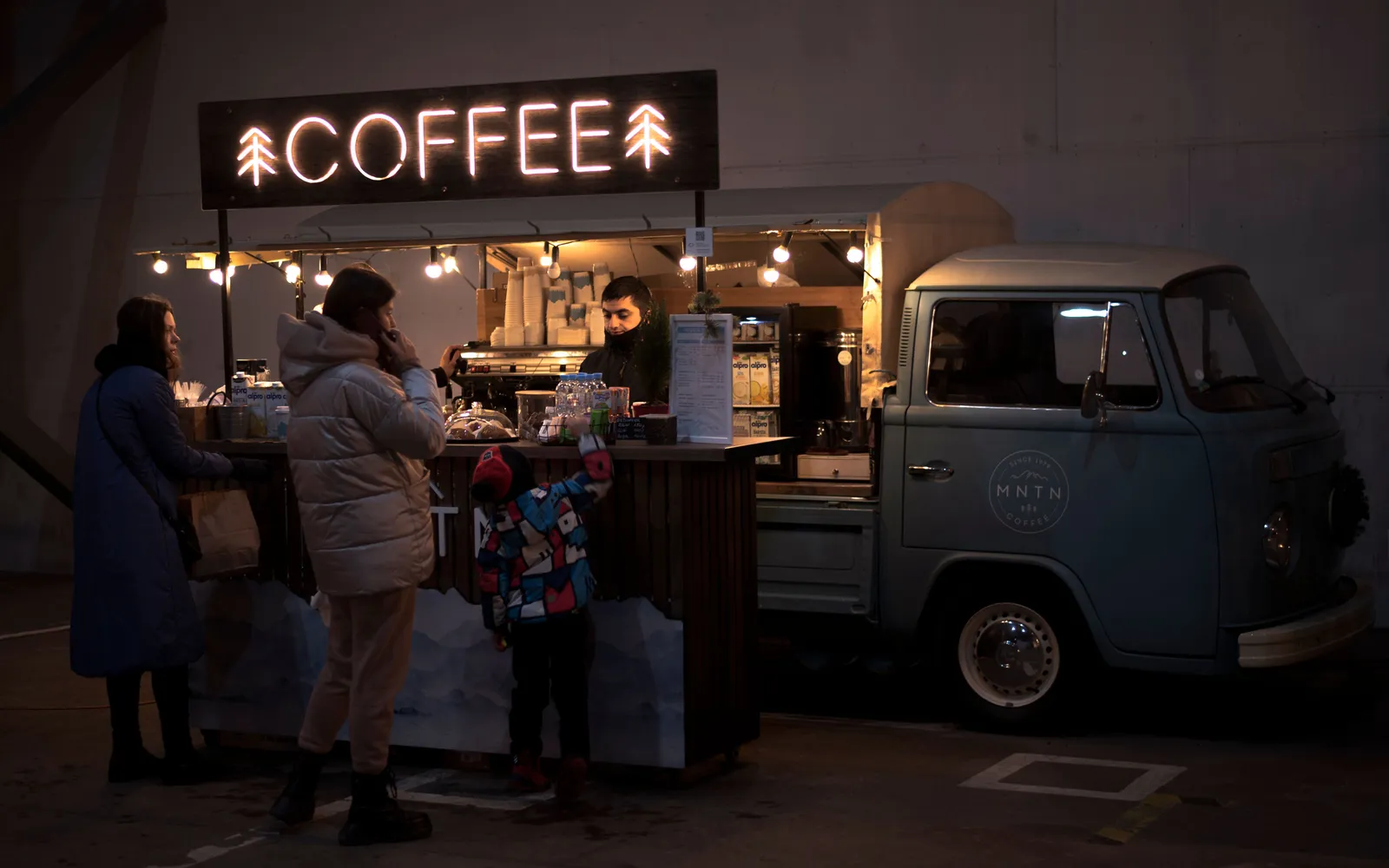
To run a busy coffee van or kiosk in Ireland, get a casual trading licence from your local authority and register your food business with the HSE before the first cup. Then build the day around the rush: a short menu, fast payment, a pitch people can find and a reason for regulars to return. Check the current rule with your council and the HSE first.

What do you need before you open a coffee van or kiosk in Ireland?
Two official steps, and each has one body to ask.
- A street trading licence. The law calls it a casual trading licence. The Casual Trading Act 1995 says casual trading means selling goods at a place, including a public road, that the public can reach as of right, and it sets out when a licence is needed. The body is your local authority, the city or county council. The Act says an application goes to the council at least 30 days before the first day you want to trade, so apply early. Each council sets its own trading areas and fees, so ask yours which licence your pitch needs.
- Food business registration. The Food Safety Authority of Ireland says it is a legal requirement to notify your food business, and that you must register before you start operating. The HSE typically inspects mobile food businesses and food stalls, and you can notify on the HSE website. The body is the HSE environmental health service.
One council publishes that its food vendors must show proof of HSE registration and hold insurance, including public liability. That is a good question for any council you apply to, and a good reason to do the food registration first. The guide to registering a food business covers the paperwork and the records an inspector reads.
A kiosk on a fixed site is a different case. If it sits on private land or inside a building, the landlord's terms and the planning position matter as much as a licence. Ask the council which rules apply to your site before you sign.
How do you choose a pitch that earns?
A pitch earns when many people walk past with a reason to stop. Judge it on foot before you judge it on a map.
Stand at the spot at the time your rush would be and watch for ten minutes at a time across a few days. Count who stops, who walks past with a coffee from somewhere else and who looks at the queue and leaves. You are looking for a flow of people that already wants a hot drink: a station platform, an office cluster, a school gate, a park entrance, a college, a building site, a market that draws a crowd.
Four questions settle most pitches:
- Who walks past in the first and last hour of their day? Commuters and parents are the steadiest trade.
- Is there a reason to wait? A spot where people already queue for a bus or a train gives you a captive minute.
- Is there shelter and room? A queue that blocks a path loses the pitch's goodwill, and a council can revoke a licence if a condition is broken.
- Is there a competitor on the corner? Sometimes a neighbour proves the demand. Sometimes it splits it. Taste their coffee before you decide.
Do not fall in love with one pitch. A van can work two or three, and a kiosk can lean on a single anchor such as an office entrance. Test each for a fortnight before you commit to it.
How many cups an hour can your hatch really make?
The speed of the hatch sets the ceiling on your takings. A rush lasts a fixed time, and every cup you cannot make in that time walks away.
Worked example (illustrative round numbers, not a promise). One barista works the hatch alone. Taking the order, taking payment, pulling the shot, steaming the milk and handing over takes about two and a half minutes per drink. That is about 24 drinks an hour. A rush of an hour and a half gives a ceiling of about 36 drinks. At an average spend of four euro, that is about 144 euro for the rush. If a second pair of hands takes orders and payment while the first makes drinks, the cycle drops to about a minute and a half, which is about 40 drinks an hour and 60 in the same rush. The extra person costs a wage for a short shift and adds about 24 drinks, worth about 96 euro. Time your own cycle with a stopwatch in a real rush, then do the sum with your own numbers.
Where the time goes, in the order it usually leaks:
- Taking the order. A menu board people can read while they queue means they arrive at the hatch already decided.
- Taking payment. Fumbling for change or a slow reader costs more than a slow machine.
- Milk. Steaming is often the longest single job. A short milk menu is faster than a long one.
- Hand-over. Shout a name or a number. A queue of people guessing which cup is theirs slows the next order.
Two people at the rush and one at the quiet is worth testing. A second person for the busiest hour can add more cups than a second grinder.
Which menu works through a hatch?
A short one. A café can sell forty things because there is a counter, a kitchen and a table. A hatch has a window and an arm's reach.
Build the menu in layers:
- The core. Espresso, americano, flat white, latte, cappuccino, a hot chocolate and tea. These are the drinks you make without thinking.
- Two sizes, not four. Every extra size is another cup to stock and another question at the window.
- A short list of changes. A plant milk, an extra shot, a syrup or two. Each one needs a place within reach.
- A small food range. Pastries and a toastie sell with a coffee and need no kitchen if you buy them in or keep them simple. Whatever you make, keep the work in the hands of one person.
Allergens matter at a hatch as much as in a restaurant. The FSAI says food businesses must declare the 14 allergens in writing for food that is not prepacked, and the person at the window has seconds to answer a question. Keep a written sheet of what each item contains and may contain, and never say a drink or a bake is free of an allergen unless you can show it. Mosey's menu builder holds the allergens you declare for each item, and a dish with no declaration says so rather than implying it is safe. See the allergen labels feature page.
How do you take payment fast at a hatch?
Offer more than one way, and make the fastest one the default.
A card reader of your own covers most customers. Keep cash too: a small float and a tin make change in seconds. Mosey does not supply a card reader, so a van keeps its own way to take a card.
Mosey Pay adds a third way for guests who use the Mosey app. They save a card once; you type the amount with their permanent code, or show a QR on your phone or tablet for them to scan, and they confirm on their phone. There is no terminal to carry. The fee is 0.5% plus VAT on the bill, capped at €149 a month, with Stripe's card fee passed on at cost, and tips carry no Mosey fee. The guest needs the app and a saved card, and you need a connected Stripe account, with the money going to your own account. See the Mosey Pay feature page and pricing.
Use the quiet hours to practise. A new payment habit is slowest in the first week, and the worst time to learn it is a queue of twenty.
How do you tell regulars where you are today?
A moving business loses regulars to confusion, not to a rival. If someone cannot find you on Thursday, they buy elsewhere, and a story on social media is gone by lunch.
Mosey has a business type for a food truck or pop-up, with no fixed address, and a few tools built for it. In the dashboard, open Appearances:
- Here today. Name the spot, by address, by your phone's position once, or by a pin, and say when you finish. The spot ends by itself at that time, and nothing tracks your phone afterwards. The person on the hatch can tap it, as it needs the manage orders permission.
- Plan the week. Add your coming stops in one go, up to 14, up to two weeks ahead, so followers see your next stop on your page. Planning is a listing change, so it needs the manage settings permission.
- Not out today. One tap clears today's stops when the weather turns or the van will not start, so nobody walks to an empty pitch.
- A menu on the stop. Pin a menu to an appearance so people see what you serve there.
Your map pin shows only while a stop is live. Between stops it is hidden, so a search never sends anyone to yesterday's pitch. Followers who said yes to your offers are told when you are out, once a day, and a planned stop is announced on its morning. See the pop-up and food truck listings page and the guide to pop-ups, food trucks and markets.
Two limits to know. Order Ahead is not open to a food truck listing yet, so customers find you, follow you, see your menu and pay with Mosey Pay when they reach you. And a kiosk with a fixed address can host as an ordinary business with an address instead, which is the right choice if it never moves: that listing can take Order Ahead once you switch on collection and connect Stripe.
How do you turn passing trade into regulars?
A van's best customer is the person who passes every day. The aim is to make that habit a little stronger than the cheaper option.
A stamp card. Loyalty on Mosey is free on every plan, with no commission, and it needs no Stripe account, so it works when a customer pays on your own reader or in cash. At the hatch a tap on a Mosey tag or a six-digit code opens their card on your Counter screen so you can add the visit. A tap is a request and you confirm it, which keeps the card honest. Reward visits rather than spend, and make the first reward reachable within a few weeks of daily coffees. See the stamp card guide and the loyalty feature page.
A coffee pass. A paid monthly pass turns a habit into income. Start from the coffee pass template in Memberships, set a free item such as one coffee a day, and run the margin check before you publish. Members pay through your own Stripe account, and Mosey takes 8% of the subscription fee with no monthly fee. A free item is redeemed at the counter with a code. Cap the perk, and use the margin check as the test of whether the sums work. The coffee club guide goes through the set-up, and the memberships feature page shows the template.
In Ireland, Mosey keeps member discounts, loyalty rewards and promotions off items you mark as alcohol, which does not affect a coffee van.
What do you do on a wet Tuesday, and at an event?
Plan for the weak days before they arrive, because a van's overheads do not move with the weather.
- Check the forecast against your pitches. A park pitch dies in the rain. A station or an office doorway holds up. Keep a covered second pitch for wet weeks and post it in your planned stops.
- Say you are not out when you are not out. Tapping Not out today costs a customer one moment. An empty pitch costs a regular's trust.
- Use events and markets to fill slow days. A market, a match or a festival can be a full day's trade. Ask the council that covers the area what trading at an event needs, and ask early.
- Cut the menu for slow days. A short list wastes less milk.
- Look at your week. If the same weekday is weak for a month, move the van or change the hours.
A day with no stop is a day with no income. The aim is a week of stops you can rely on, plus two or three backups you have already checked.
How does Mosey help a coffee van or kiosk?
Mosey does not issue your licence, register your food business or supply your card reader. It helps the van be found, paid and chosen again.
- Found where you are. A food truck or pop-up listing with no fixed address, a pin only while you trade, and followers told when you are out. Posting stops and telling followers cost nothing, and your rating stays with you wherever you park.
- Paid without a terminal. Mosey Pay for guests with the app, alongside your own card reader and cash.
- Chosen again. A free stamp card and a coffee pass for the regulars.
If you have a van and want a page that follows it around, Host on Mosey free as a food truck or pop-up, post your first stop and tap Here today at your next pitch. Pricing is on the pricing page, and every guide for Irish food businesses is on the business guides page.
This guide is general information, not legal, tax or financial advice. Rules change and depend on your business and where it is, so check the current rule with the official body named in the guide and take advice from a solicitor or accountant in your area before you act.
Questions
Common questions
Do I need a licence to sell coffee from a van in Ireland?
Usually, yes, where you sell on a public road or another place the public can reach. The Casual Trading Act 1995 requires a casual trading licence from your local authority, and an application goes in at least 30 days before you first trade. Check the current rule with your council.
Do I have to register a coffee van as a food business?
Yes. Notifying your food business is a legal requirement, and that includes a van or stall. The FSAI says the HSE typically inspects mobile food businesses, and you can notify on the HSE website. Check the current rule with the HSE.
How do I find a good pitch for a coffee van?
Watch the spot on foot at your rush times across several days. Look for a steady flow of people who already want a hot drink, such as commuters, a school gate, a college or a market, and somewhere safe to queue. Test a pitch for a fortnight before committing.
How many coffees an hour can one person make at a hatch?
It varies, so time it. In an illustrative example, one person doing orders, payment and drinks takes about two and a half minutes a drink, around 24 an hour. A second person on orders and payment can bring the cycle nearer a minute and a half.
Can customers order ahead from my coffee van on Mosey?
Not yet. A food truck listing lets customers find you, follow you, see your menu and pay with Mosey Pay when they reach you. A kiosk with a fixed address can host as an ordinary business with an address instead, and that listing can take Order Ahead once collection is on and Stripe is connected.
How do I tell customers where my van is today?
In your Mosey dashboard, open Appearances and tap Here today with an address and an end time. The pin shows only while the stop is live, and followers who said yes to your offers are told once a day. Plan the week ahead, and tap Not out today if you cannot trade.
Can I run a coffee pass or stamp card from a van?
Yes. Loyalty is free on every plan, and a coffee pass starts from a membership template with a margin check before it goes live. Members pay through your own Stripe account, and a free coffee is redeemed at the counter with a code. Mosey takes 8% of the membership fee.
Does Mosey supply a card reader for my van?
No. Keep your own card reader and a cash float. Mosey Pay lets guests with the app and a saved card pay from their phone, at 0.5% plus VAT on the bill, capped at €149 a month, with Stripe's card fee passed on at cost and the money going to your own Stripe account.
More like this
Read next
A hotel restaurant that locals use too
A hotel dining room earns local trade when it acts like a restaurant of its own. Here is why locals stay away, how to set the dining room up on Mosey beside your hotel, and which offers fill it.
An alcohol-free drinks menu that still makes margin
More guests are drinking less, in January and the rest of the year. Here is how to cost, price, name and sell an alcohol-free menu so it earns as well as the wine list, with the Irish VAT and offer rules checked.
A pub that does food: making the kitchen pay
A pub kitchen pays when its gross profit covers its own wages and running costs. Here is how to count it, which services to fill, what the alcohol rules say and how Mosey fits.
Auto-enrolment pension for Irish restaurants and cafés: what you pay and do
Since 1 January 2026 an Irish employer matches the pension contribution of each eligible employee. Here is who counts, what it costs on a wage bill, the payroll steps and what staff can opt out of.
Get started
Host your business on Mosey. It is free to claim.
Free to list, no set-up fee, and Order Ahead is 1.5% commission when you start taking orders.