
For businesses
How to sell your sauces and bakes to local shops
Mosey · 15 November 2026 · 7 min read
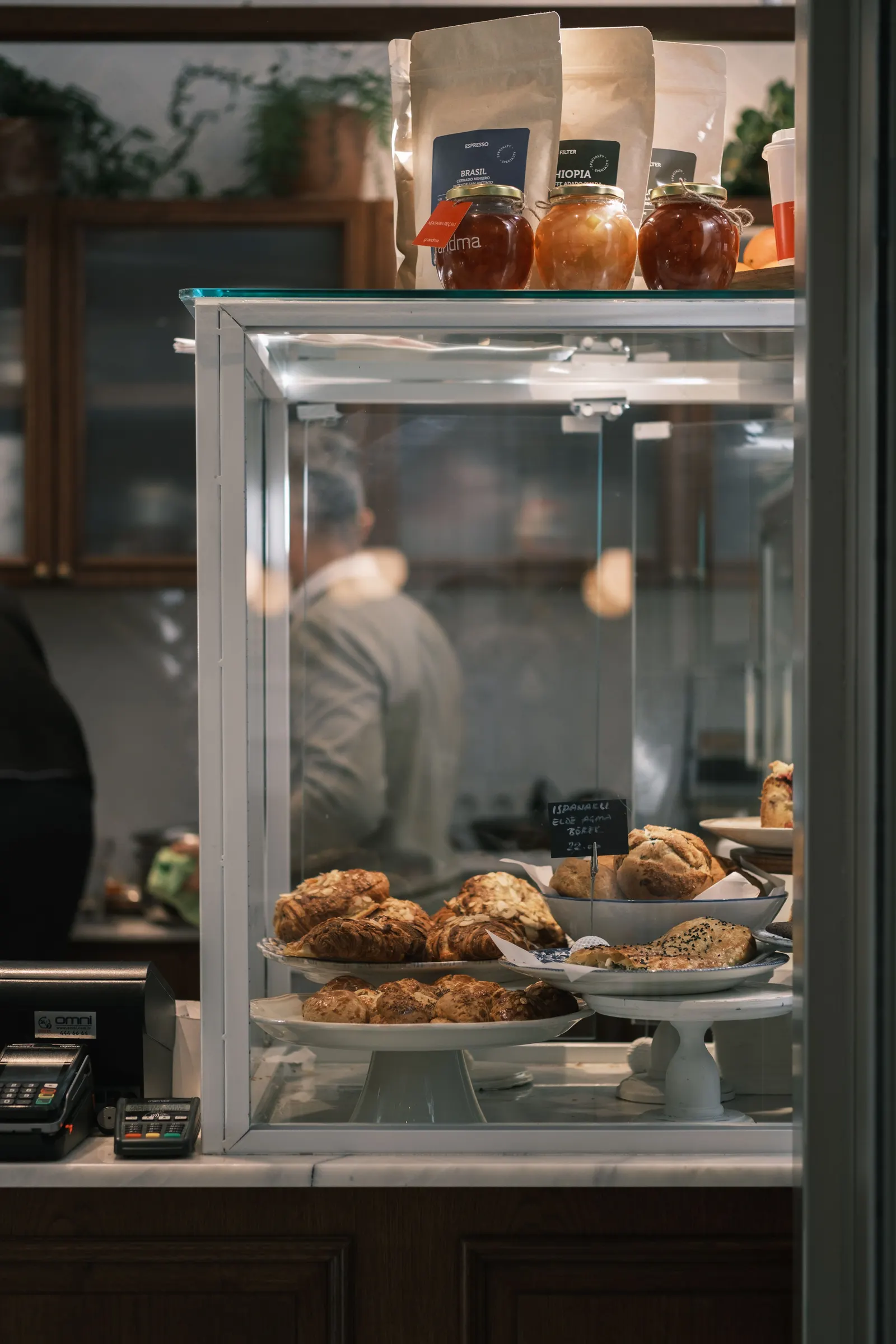
To sell your sauces and bakes to local shops, pick a product that already sells well at your own counter, make sure it keeps and travels, get the labelling right for food sold by someone else, price it so both you and the shop make a margin, and start with one or two shops near you that already sell local food. Wholesale is a different trade from your counter. It pays when the product is steady, the batch is efficient and the paperwork is right before the first jar leaves.
Which of your products could sit on a shop shelf?
The product a shop wants is the one with a story and a steady sale. Look at what sells at your own counter week after week, and what customers already ask to take home: the hot sauce, the chutney, the granola, the brown bread, the brownies.
Then test it against a shelf:
- Does it keep? A product that has to be eaten the same day suits only a shop that takes daily deliveries.
- Does it travel? Jars and well-packed bakes survive a delivery van; a cream cake does not.
- Can you make it in batches? A shop order needs the same product every time, made efficiently.
- Is it yours? Shops look for something they cannot buy from a wholesaler.
If you have not sold it from your own counter yet, start there. The café retail guide shows how to test a take-home line before you take it further.
What changes when you label food for sale elsewhere?
This is the biggest change, and it is where most new suppliers get caught.
Food you pack yourself and sell from your own counter is treated differently from food packed in advance and sold through someone else's shop. Food sold through another business is generally prepacked food, and prepacked food needs a fuller label than the one on a jar at your till, with the ingredients, the allergens emphasised, a date mark and more. Check the current rule with the FSAI before you design a label, and ask which parts apply to your product.
Your food business registration and your food safety plan also need to cover making food for other businesses. Tell your HSE environmental health officer what you plan to do, and check the current rule with them. The registration and HACCP guide covers the plan, and the allergen guide explains how allergen rules apply.
How does Mosey help with allergen labels?
On Mosey you declare each product's allergens once in the menu builder, and the dashboard prints labels for food you pack yourself, with the ingredients and the 14 allergens in bold, and an A4 allergen sheet for your counter. Each change to a declaration is saved with who made it and when.
Those labels are made for food you pack and sell yourself. A label for a shop shelf usually needs more, so use your Mosey declaration as the source of truth for the allergens, and check the full shop label with the FSAI.
How do you price for a shop's margin?
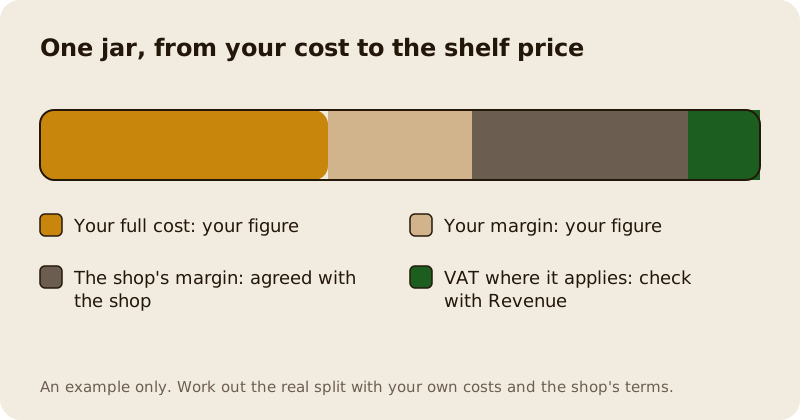
A shop has to make money on your product too, so the price you charge the shop is well below the price on the shelf. Work backwards:
- Your full cost. Ingredients, packaging, label, your time, delivery and the ones that break or go out of date.
- Your margin. What you need to make it worth doing.
- The shop's margin. Ask the shop what they need. It varies by shop and by product, so agree it before you set a price.
- VAT, where it applies. Food and non-food items are taxed differently, and so are some foods. Check the current rate with Revenue.
If the shelf price that results is more than a customer will pay, the product is not ready for wholesale yet: make it cheaper to produce, make it in bigger batches, or keep it at your own counter where you keep the whole margin. The food cost guide and the menu price calculator help with the cost side.
How do you scale a recipe from the pass to a batch?
A sauce made by the litre for service and a sauce made by the hundred jars for shops are not the same job. Scaling changes the recipe, the time and the risk.
- Write the recipe by weight. Cups and handfuls do not scale. Weigh every ingredient and note the yield.
- Scale in steps. Double it, check the taste and texture, then double again. Seasoning and thickening rarely scale in a straight line.
- Fix your process. Write down the cooking time, the temperature, how it is filled and how it is cooled, so it is made the same way every time, by anyone.
- Record every batch. The date, the quantity, the ingredient lot numbers where you have them and who made it. If a shop or an inspector asks, you can answer.
- Make it on a quiet day. A batch day that clashes with service puts both at risk.
Your food safety plan has to cover the batch process too, so tell your environmental health officer what you are making and how.
How do you approach a local shop?
Start with one or two independent shops near you that already sell local food: a deli, a farm shop, a greengrocer, a café with a shelf. Go in person, at a quiet time, with a sample and a price list.
- Bring the product, not a pitch. Let them taste it.
- Bring the facts. The price to the shop, the suggested shelf price, the shelf life, the minimum order and how often you can deliver.
- Offer a trial. A small first order, and you check back in two weeks.
- Be clear about returns. Agree what happens to stock that does not sell before its date.
- Invoice properly. Agree payment terms and stick to them.
How do you keep selling direct while you supply shops?
Your own counter is still where you make the most on each jar. Keep the product there, and let your regulars order it for collection.
On Mosey, your sauces and bakes can sit on your menu as Order Ahead items. Customers order and pay in the app and collect at a time that suits them, and a daily stock count stops the item being offered once it runs out. Mosey takes 1.5% commission on a collection order and the money goes to your own Stripe account. Order Ahead shows what a customer sees.
A product people find in a shop can bring them to your door. Put your name and town on the label and a line inviting them in. The shop shelf becomes a small advert for your counter, and the counter keeps the regulars who would otherwise buy the jar from someone else. Over time, a few steady shop accounts and a busy collection shelf can carry a share of your kitchen's quiet hours.
What goes wrong when restaurants start supplying shops?
- Labels done last. A batch with the wrong label cannot be sold. Do the label first.
- Price set too low. Once a shop has a price, raising it is hard. Cost it fully before the first order.
- Too many shops too soon. Your kitchen still has a service to run. Grow one shop at a time.
- No written terms. Agree the price, the payment date and what happens to unsold stock in an email both sides keep.
- No stock plan. A shop that runs out because you were busy may not reorder.
If you plan to sell at markets too, the market trading guide covers stalls and permits.
Where should you start?
Choose one product that sells steadily at your counter, check the label and your registration with the FSAI and your environmental health officer, cost it from the shelf price back, and take a sample to one shop near you. Host on Mosey free, declare your allergens once, and let regulars order your products for collection while the shops find their feet.
More in the guides for food businesses.
This guide is general information, not legal, tax or financial advice. Rules change and depend on your business and where it is, so check the current rule with the official body named in the guide and take advice from a solicitor or accountant in your area before you act.
Questions
Common questions
Can a restaurant sell its sauces to local shops in Ireland?
Yes, but food sold through another business is generally prepacked food, with fuller labelling rules than food you sell from your own counter. Check the label and your registration with the FSAI and your environmental health officer first.
What does a label for a shop need?
More than a label at your own till: the ingredients with the allergens emphasised, a date mark and other details the rules set for prepacked food. Check the current rule with the FSAI before you print.
Can Mosey print labels for my sauces?
Mosey prints labels for food you pack and sell yourself, with the ingredients and the 14 allergens in bold, from your declarations. A shop label usually needs more, so check the full label with the FSAI.
How do I price my products for a shop?
Work backwards from the shelf price: your full cost, your margin, the shop's margin and VAT where it applies. Ask the shop what margin it needs, and check the current VAT rate with Revenue.
Can customers still buy my sauces direct on Mosey?
Yes. Add them to your menu as Order Ahead items, and customers order and pay in the app and collect at a time that suits them. A daily stock count stops the item being offered when it runs out.
More like this
Read next
A hotel restaurant that locals use too
A hotel dining room earns local trade when it acts like a restaurant of its own. Here is why locals stay away, how to set the dining room up on Mosey beside your hotel, and which offers fill it.
An alcohol-free drinks menu that still makes margin
More guests are drinking less, in January and the rest of the year. Here is how to cost, price, name and sell an alcohol-free menu so it earns as well as the wine list, with the Irish VAT and offer rules checked.
A pub that does food: making the kitchen pay
A pub kitchen pays when its gross profit covers its own wages and running costs. Here is how to count it, which services to fill, what the alcohol rules say and how Mosey fits.
Auto-enrolment pension for Irish restaurants and cafés: what you pay and do
Since 1 January 2026 an Irish employer matches the pension contribution of each eligible employee. Here is who counts, what it costs on a wage bill, the payroll steps and what staff can opt out of.
Get started
Host your business on Mosey. It is free to claim.
Free to list, no set-up fee, and Order Ahead is 1.5% commission when you start taking orders.