
For businesses
How to sell retail products in your café
Mosey · 15 November 2026 · 7 min read
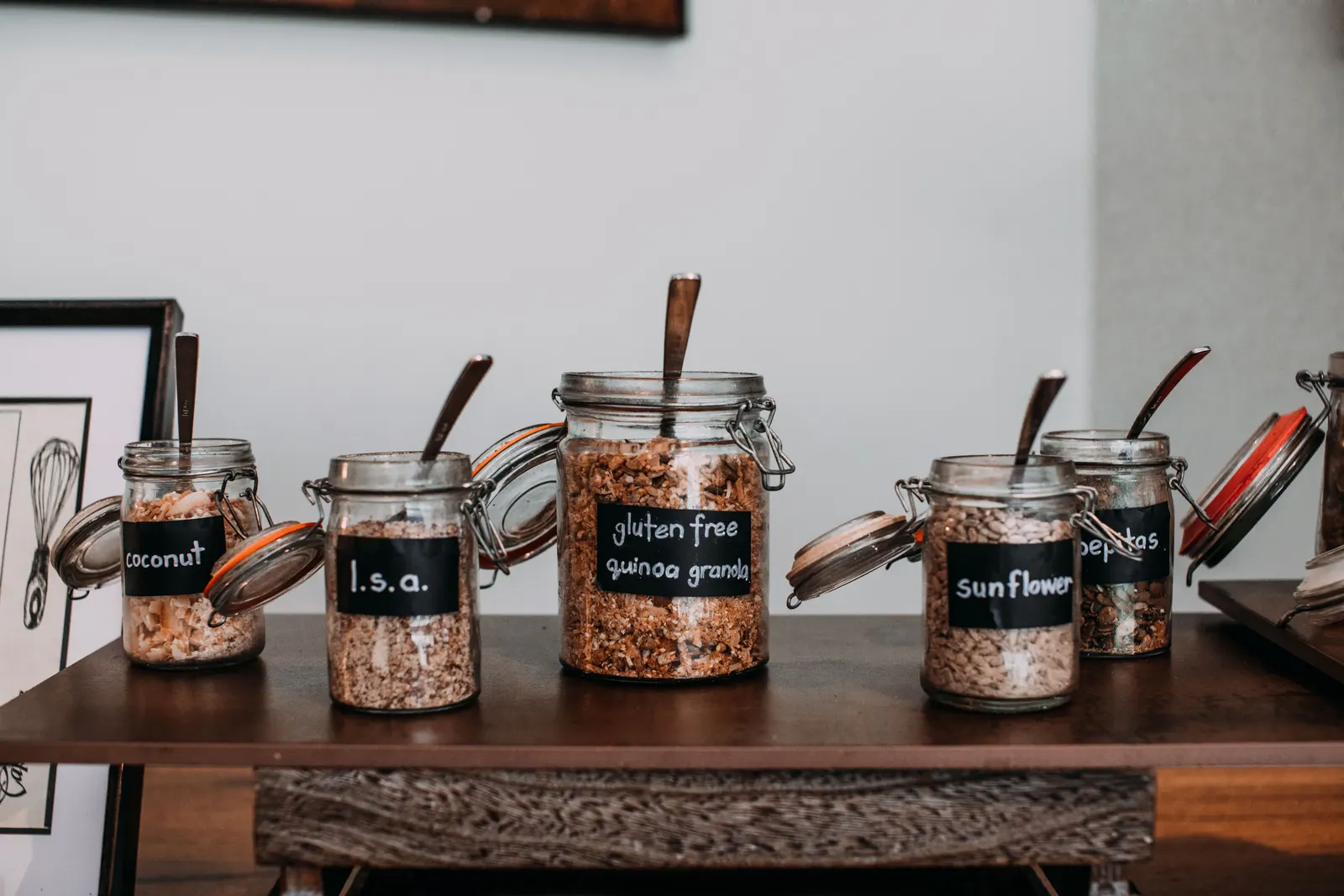
To sell retail products in your café, stock a short range of things people already ask to take home, price each one from its full cost to you, put it where the queue can see it, and let regulars order it ahead with their coffee. The best retail line is rarely something new. It is the bag of beans behind the grinder, the granola you serve every morning or the loaf a regular asks about every Saturday.

Which retail lines earn their shelf space in a café?
Start with the question your staff already hear: "Can I buy a bag of that?" Whatever people ask to take home is your first line, because the selling has been done by the cup or the plate.
Good café retail has three things in common. You already make or brew it, so there is no new supplier and no new skill. It keeps long enough to sit on a shelf for a week or two without waste. And it tells the story of your café, so a bag on someone's kitchen counter reminds them of you every morning.
That usually means:
- Coffee beans you serve, in the grind people use at home.
- Bakes that travel: a loaf, cookies, brownies, a tray bake by the slice in a box.
- Your own jars: granola, jam, a dressing, the chilli oil from the eggs.
- A seasonal gift range at Christmas or Easter, small and gone by January.
Leave out lines that need their own supplier, their own storage or their own expert. A shelf of mugs from a wholesaler earns little and says nothing about you.
How do you price beans, jars and bakes to take home?
Price from the full cost, not from a guess at what the shop down the road charges. For each line, add up the ingredients, the packaging and label, your time to make and pack it, and an allowance for the ones that go out of date. Then set a price that leaves you a margin you would accept on a dish.
The food cost and gross profit guide walks through the sum, and the menu price calculator does it for you once you have the costs.
Two checks before the price goes on the label:
- Against your own counter. A bag of beans is many cups at home. Price it so a regular feels it is fair against what they pay you for a flat white.
- Against the VAT. Food to take home, food served on the premises and non-food items such as a mug are not always taxed at the same rate. Check the current rate for each line with Revenue.
Where should retail sit in a small café?
Retail sells where people stand still. In most cafés that is the queue and the pick-up point, so put the shelf at eye level beside the till, not on a high shelf behind the tables.
Keep it tidy and short. Five lines with clear prices sell better than twenty lines crowded together, and a gap on the shelf tells people something sold, which helps the rest. Put the price on every item. Nobody asks the price of a jar during the morning rush; they leave it.
Then have the team mention it once, in their own words: "That's the coffee we're brewing today, if you want a bag for home." One line, said naturally, does more than a sign.
How do you sell retail online for collection?
Many retail sales happen when someone runs out at home and remembers you. If they can order the bag of beans with tomorrow's coffee, you keep a sale that would otherwise go to the supermarket.
On Mosey, Order Ahead handles this. You add your retail lines to your menu as items for collection, set the VAT rate on each, and customers order and pay in the app and pick a collection time. They can schedule an order from thirty minutes to seven days ahead, so a loaf for Saturday can be ordered on Wednesday. Give an item a daily stock count and it stops being offered when it runs out, so you never sell a jar you do not have.
Mosey takes 1.5% commission on a collection order, and the customer pays a small booking fee that scales with the order (€0.30 under €10, €0.60 under €30, €0.90 under €50, €1.29 on orders of €50 or more). The money goes to your own Stripe account. Order Ahead shows what a customer sees, and the collection ordering guide covers set-up and slots.
How does retail bring regulars back more often?
A bag of beans at home is a reminder of you every morning, and a regular who buys one is likely to buy the next one from you too. Make that easy. Every Order Ahead order counts as a loyalty visit automatically, so a regular collecting beans earns their stamp the same way as for a coffee. The loyalty guide shows how stamps and rewards work.
If your beans sell steadily, a monthly bag can become a subscription. The coffee subscription guide covers the next step.
What should a label on your own jars and bakes say?
Food you pack yourself and sell from your own counter still needs its allergen information in writing. On Mosey you declare each item's allergens once in the menu builder, and the dashboard prints labels for food you pack, with the ingredients and the 14 allergens in bold. The same declaration shows on the order and the receipt.
The rules for what a label must carry depend on how and where the food is sold, so check the current rule with the FSAI. The allergen information guide explains how allergen rules apply to an Irish café.
How do you manage retail stock without tying up cash?
Retail stock is cash sitting on a shelf. A jar you made in March and sell in June has had your money in it for three months, so keep the batches small and the turnover quick.
- Make or order for two to four weeks, not for the season. A small batch that sells out is a signal to make more; a big batch that sits is money you cannot spend on the kitchen.
- Rotate by date. New stock goes to the back, older stock to the front, every time.
- Count weekly. Five minutes on a Monday morning tells you what to make next and what to stop.
- Set a reorder point. When the beans drop to a set number of bags, the next roast is ordered. Write the number on the shelf edge so anyone on shift knows.
- Order packaging with the product. Bags, jars and labels run out at the worst moment.
If you sell online for collection as well, set the daily stock count to what is really on the shelf, so the app and the counter never sell the same jar twice.
What retail mistakes cost a café money?
The most common mistakes are the easiest to avoid:
- Too many lines. Every line ties up cash and shelf. Start with three and add one at a time.
- Bulk buys for a discount. A case of jars at a better price is no saving if half go out of date.
- No owner. Someone has to check the shelf, the dates and the stock each week. Put it on a name.
- Nothing seasonal. A Christmas range turns a shelf into a gift stop for a few weeks. The pre-order guide shows how to take those orders without a queue.
Once a month, count what each line sold. Anything that has not moved in a month makes way for something new.
Where should you start?
Pick three lines your customers already ask about, cost them properly, and put them beside the till this week. Then let regulars order them with their coffee. Mosey is Irish-built and Irish-run. Host on Mosey free, add your retail lines to Order Ahead and switch on loyalty so every collection counts.
For more ways to earn beyond the cup, read the café revenue guide, the merchandise guide the guide to selling your sauces and bakes to local shops and the guide to selling meal kits. More in the guides for food businesses.
This guide is general information, not legal, tax or financial advice. Rules change and depend on your business and where it is, so check the current rule with the official body named in the guide and take advice from a solicitor or accountant in your area before you act.
Questions
Common questions
What retail products sell best in a café?
The lines that sell best are the ones customers already ask to take home: the beans you brew, bakes that travel and a jar or sauce you are known for. You already make them, so there is no new supplier.
How many retail lines should a small café stock?
Start with three and add one at a time. A short, tidy shelf with clear prices sells better than a crowded one, and every extra line ties up cash, space and someone's time checking dates.
Can customers order retail items for collection on Mosey?
Yes. Add the lines to your menu as Order Ahead items and customers order and pay in the app, choosing a collection time from thirty minutes to seven days ahead. A daily stock count stops overselling.
Is VAT the same on retail as on coffee served in the café?
Not always. Food served on the premises, food to take home and non-food items such as mugs can carry different rates. Set each item's rate in your menu and check the current rate with Revenue.
Does a retail collection count as a loyalty visit?
Yes. Every Order Ahead order counts as a loyalty visit automatically, so a regular who collects a bag of beans earns their stamp the same way as when they buy a coffee at the counter.
Do my own jars and bakes need allergen labels?
Food you pack and sell yourself needs its allergen information in writing. Mosey prints labels with the ingredients and the 14 allergens in bold from your declarations; check the current rule with the FSAI.
More like this
Read next
A hotel restaurant that locals use too
A hotel dining room earns local trade when it acts like a restaurant of its own. Here is why locals stay away, how to set the dining room up on Mosey beside your hotel, and which offers fill it.
An alcohol-free drinks menu that still makes margin
More guests are drinking less, in January and the rest of the year. Here is how to cost, price, name and sell an alcohol-free menu so it earns as well as the wine list, with the Irish VAT and offer rules checked.
A pub that does food: making the kitchen pay
A pub kitchen pays when its gross profit covers its own wages and running costs. Here is how to count it, which services to fill, what the alcohol rules say and how Mosey fits.
Auto-enrolment pension for Irish restaurants and cafés: what you pay and do
Since 1 January 2026 an Irish employer matches the pension contribution of each eligible employee. Here is who counts, what it costs on a wage bill, the payroll steps and what staff can opt out of.
Get started
Host your business on Mosey. It is free to claim.
Free to list, no set-up fee, and Order Ahead is 1.5% commission when you start taking orders.