
For businesses
How to run cooking classes at your restaurant
Mosey · 15 November 2026 · 7 min read
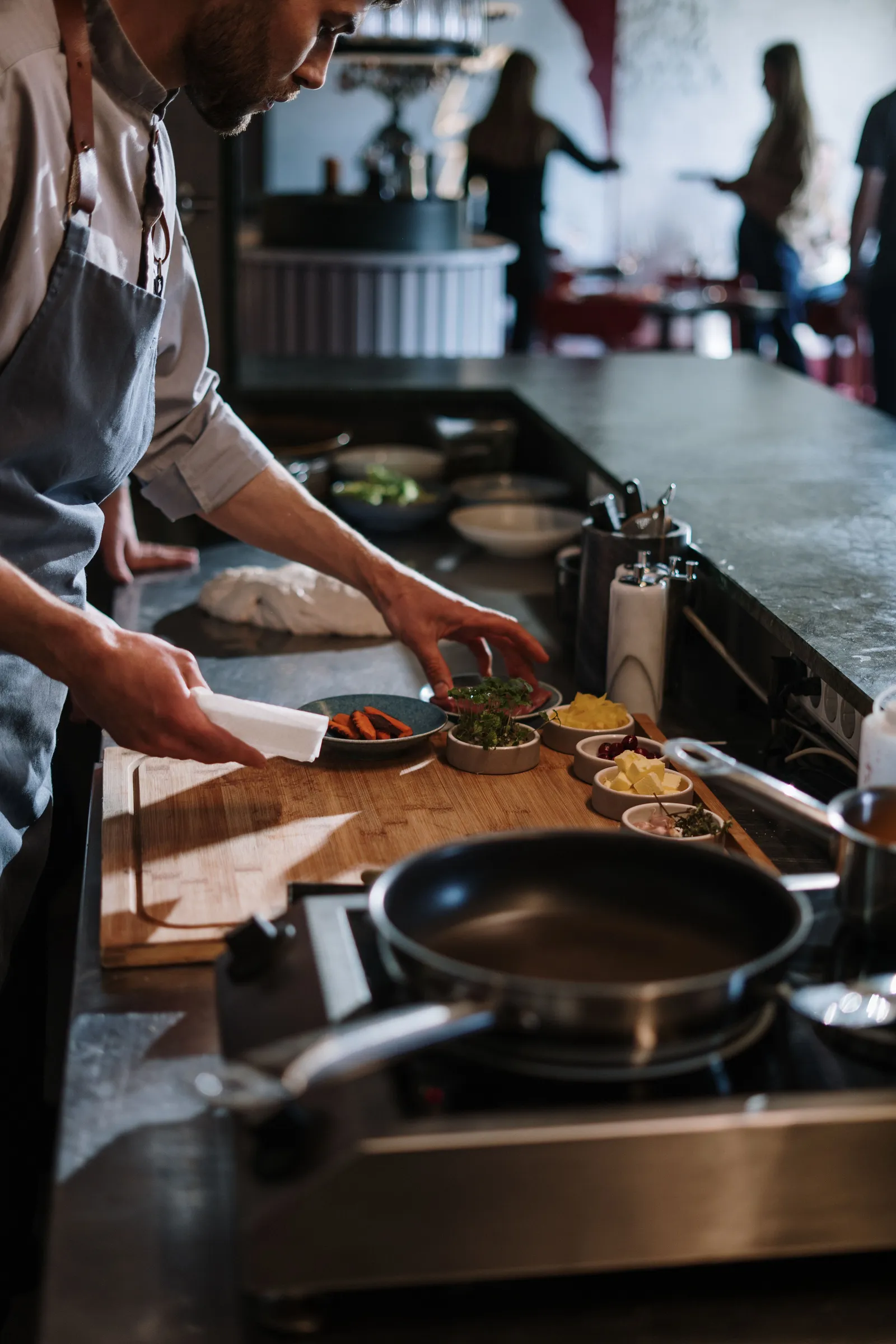
To run cooking classes at your restaurant, pick one thing your kitchen already does well, teach it on a day the dining room is quiet, cap the seats at what your stations can hold, and take payment when people book. Do those four things and a class becomes a paid, full room on a day that would otherwise cost you wages, heat and light with little coming in.

Why do cooking classes fill the quiet days?
A Monday afternoon costs you the same rent and insurance as a Saturday night, and the room earns nothing. A class turns those hours into a booked event. People pay in advance, they arrive at a set time, and you know the headcount before you order a single onion.
Classes also sell something the menu cannot: the reason your dish tastes the way it does. Someone who has rolled pasta beside your chef talks about it for weeks, and comes back with friends to eat the version they could not quite manage at home.
They suit more kinds of business than you would expect. A bakery teaching sourdough, a café teaching home espresso, a bar teaching three classic cocktails and a restaurant teaching a Sunday roast all share one shape: a skill, a few hours, a small group and something to take home.
Which cooking class should you teach first?
Start with the dish people already ask about. If guests keep asking how you make the chowder, the brown bread or the ramen broth, that is your first class. It needs no new suppliers, and your team can answer every question without notes.
Keep the first one short and hands-on: a couple of hours, one main skill, and something each person makes and then eats or takes home. A class that tries to cover a whole menu leaves people watching rather than cooking, and watching is what they can do on their phone for free.
Let the year give you a calendar of classes. Brown bread and stews in the dark months, Christmas baking in November, barbecue and salads when the evenings stretch out. A seasonal class sells itself because people want to cook that dish now, and a run of them gives regulars a reason to book again. The seasonal planning guide maps the Irish trading year.
Write the title as the result, not the subject. "Make fresh pasta and two sauces" sells; "Italian cookery" does not. Say who it suits, what is included and what to bring, and leave nothing for the learner to guess.
How many people fit in a class in a working kitchen?
Count stations, not chairs. Each learner needs a board, a knife, a share of a hob and a clear view of whoever is teaching. In a small kitchen that means a group that fits around the pass or one long prep bench, with nobody working behind someone else's back.
If your kitchen is tight, teach in the dining room instead. Push tables together into a long bench, cook on portable induction hobs, and the kitchen stays clean and ready for dinner. It also lets the group sit down and eat together at the end, which is half of what they came for.
Set the seats at the number you can teach well, not the number you can squeeze in. A class with room to move earns better reviews, and a full class with a waitlist is the clearest sign you can add a second date.
Put a helper beside the teacher, even for a small group. Someone has to fetch, wash up and watch the person about to cut towards their thumb. Before you bring the public into your kitchen, ask your insurer whether your cover includes classes, and check the current food safety rule with the FSAI.
How do you plan a class from arrival to washing up?
A class runs like a service: the work is in the preparation. A running order for a two-hour hands-on class looks like this.
- Before anyone arrives: aprons out, stations laid, ingredients weighed into bowls for each person, recipe cards printed.
- Arrival: check people in, offer a drink, show them where to wash their hands and where the fire exit is.
- The first skill: demonstrate it once, slowly, then everyone does it while you walk the bench.
- Each following step: the same rhythm of show, do and check. Keep each demonstration short.
- Sit down and eat: the best part, and the moment people decide whether to come back.
- Leave with something: the recipe card, a jar of the sauce or a portion of dough, and a reason to return.
Ask about allergies when people book and again at the door. Your own allergen records for the dishes you teach are the place to start: the allergen guide sets out what to declare.
How do bookings, waitlists and attendance work?
A class run by message thread, bank transfer and paper sign-in sheet is a second job. Mosey Courses does that part. Switch on Courses in your dashboard, choose an in-person class, and add a session with its date (or several dates for a series), the address, the number of seats and a note on what to bring. Set a price, or leave it free.
Learners find the class on the Mosey Jobs website, pay by card and book their seat. The same seat is never sold twice. When the class is full, people join a waitlist, and if someone cancels inside your refund rules, the seat is freed and the next person on the waitlist is told.
On the day, show the check-in code from your class list and learners scan it as they arrive, or you mark them present by hand. When someone has attended every date, they receive a certificate with a number anyone can check online, and a PDF to keep. The courses page shows the whole flow.
Two things to know before you publish. Dates cannot be moved once a session exists: cancel it and create a new one. And each learner books their own seat with their own account, so if you mostly sell a class as a gift or a night out for two, an event ticket fits better, because one buyer can buy several tickets.
What should a cooking class cost, and who keeps the money?
Cost one seat before you price it. Add the ingredients per head, the teacher's paid hours for setting up, teaching and cleaning down, a helper's hours, anything people take home and the card and booking fees. Then add the margin you want for giving up the room. The pricing guide in this series walks through it line by line, and the ticketed event sums work the same way.
There is no monthly fee for Courses. A paid class carries Mosey's published buyer fee and business commission, and the learner sees a flat booking fee at checkout; the pricing page has every figure. The money goes to your own Stripe account, and a free class costs you nothing on Mosey.
How do you turn a class into regulars?
The class is the start of the relationship, not the end. End with a meal in the room, hand out the recipe card with your opening hours on it, and invite people back to eat the dish cooked properly.
Ask learners to review the class: you can reply to every review, and a warm reply is read by the next person deciding whether to book. Offer a follow-on class with a harder dish, or a series over several weeks for those who want more. For learners who live too far away to come back often, an online cooking course keeps them cooking your food at home. Then let your loyalty programme do the rest when they come back for dinner.
Once the public classes run well, groups will ask for one of their own: a birthday, a hen party, a team from a local office. Those are a different sale, because one person pays for everyone. Take them as a private booking with a deposit, or sell the seats as event tickets the organiser buys in one go. The guide to team-building cooking classes covers how to run and price them.
How do you put your first class on sale this month?
Pick the dish, pick a quiet afternoon, cost the seat and write the page. Publish one class, tell your regulars and your followers, and see how fast it fills before you plan the next.
Your next job is the class page itself. Host your business on Mosey, free to list, switch on Courses and put your first class on sale: Host on Mosey.
More in the guides for food businesses.
This guide is general information, not legal, tax or financial advice. Rules change and depend on your business and where it is, so check the current rule with the official body named in the guide and take advice from a solicitor or accountant in your area before you act.
Questions
Common questions
How many people should a cooking class have?
As many as you can teach well, which comes down to stations, not chairs. Each learner needs a board, a knife, a share of a hob and a clear view of the teacher. Start small, and add a second date when the waitlist grows.
Do learners need the Mosey app to book a class?
No. Learners find courses and classes on the Mosey Jobs website, pay by card there and see their dates there. There is no course screen in the Mosey app yet.
What happens when a class sells out?
Learners can join a waitlist. If someone cancels inside your refund rules, the seat is freed and the next person on the waitlist is told, so a cancellation does not leave an empty station.
Can a class run over several weeks?
Yes. A session can have several dates, and a learner books the session and attends every date. They receive their certificate once every date is marked as attended.
Can I change the date of a class after people have booked?
No. Dates are fixed once a session exists, so the people already booked are never moved without a choice. Cancel the session and create a new one with the new date.
What does Mosey charge on a cooking class?
There is no monthly fee. A paid class carries Mosey's published buyer fee and business commission, and the learner pays a flat booking fee at checkout. A free class has no fee. The pricing page shows every figure.
More like this
Read next
A hotel restaurant that locals use too
A hotel dining room earns local trade when it acts like a restaurant of its own. Here is why locals stay away, how to set the dining room up on Mosey beside your hotel, and which offers fill it.
An alcohol-free drinks menu that still makes margin
More guests are drinking less, in January and the rest of the year. Here is how to cost, price, name and sell an alcohol-free menu so it earns as well as the wine list, with the Irish VAT and offer rules checked.
A pub that does food: making the kitchen pay
A pub kitchen pays when its gross profit covers its own wages and running costs. Here is how to count it, which services to fill, what the alcohol rules say and how Mosey fits.
Auto-enrolment pension for Irish restaurants and cafés: what you pay and do
Since 1 January 2026 an Irish employer matches the pension contribution of each eligible employee. Here is who counts, what it costs on a wage bill, the payroll steps and what staff can opt out of.
Get started
Host your business on Mosey. It is free to claim.
Free to list, no set-up fee, and Order Ahead is 1.5% commission when you start taking orders.