
For businesses
Cooking class team building for companies: how to run and sell it
Mosey · 15 November 2026 · 7 min read
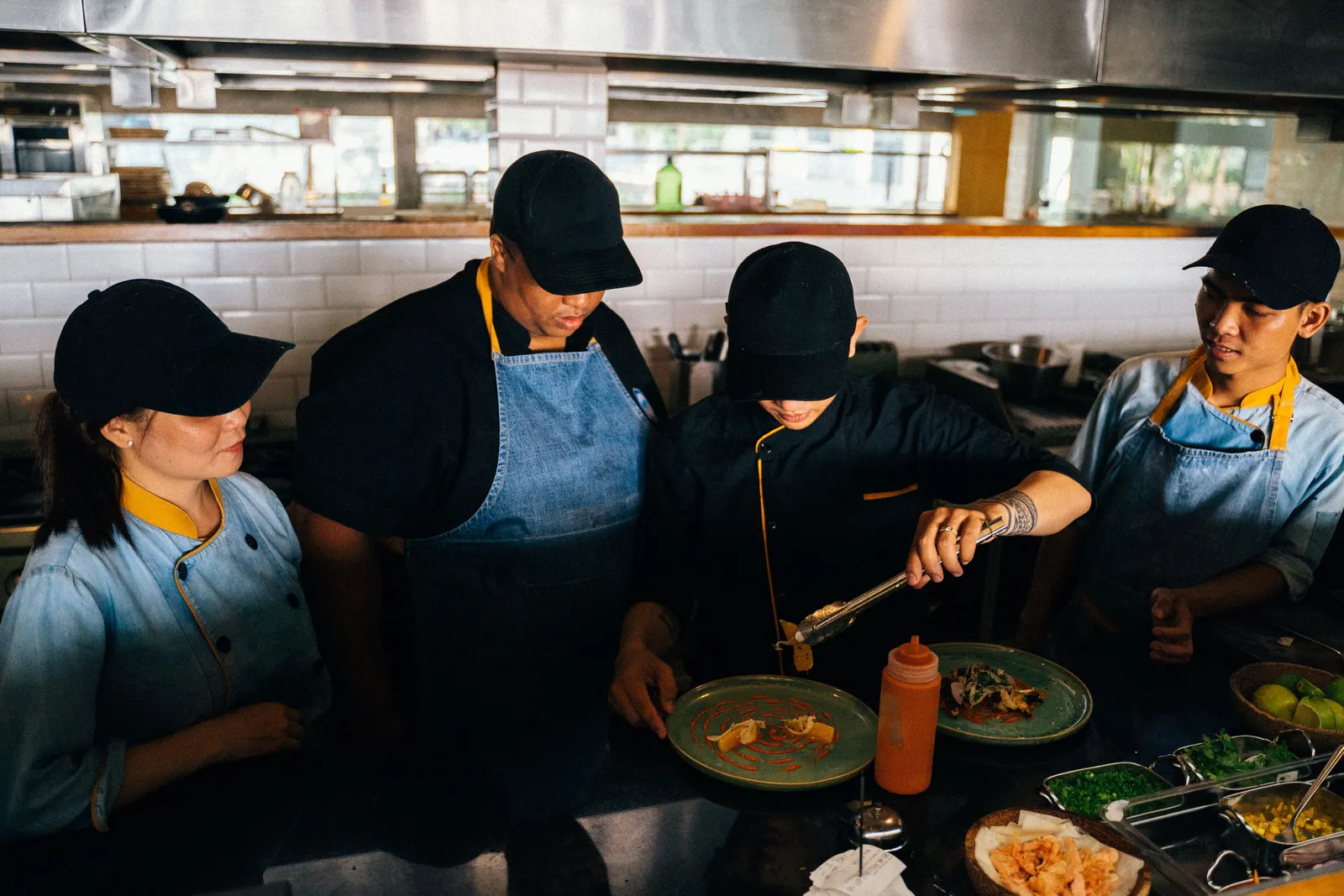
A team-building cooking class is a private class for a company's staff, and it is one of the best-paid ways to fill a quiet weekday: the company books the whole room, pays a deposit up front and often comes back for the Christmas party. Choose a format that gets everyone cooking, split the group into small teams, and take the booking as a quote with a deposit so the date is secure.

Why do companies book cooking classes for their teams?
Office managers and team leads are always looking for a team day people will not dread. A cooking class beats a meeting room with a facilitator because everyone does something with their hands, talks to people they never sit near, and ends the day eating a meal they made together.
It also suits a company's calendar. A class can run in a weekday afternoon or early evening, inside working hours or straight after, and takes a few hours rather than a whole day. For you, that is exactly the slot your dining room is quietest.
And a company pays as one buyer. One quote, one deposit, one balance, and a room filled with a single booking.
Which format works for a work group?
Three formats work, and the right one depends on the company and the mood they want.
Cook together, then eat. Teams each make one course of a shared meal, then everyone sits down to eat the whole menu. It is relaxed, it suits mixed groups, and nobody loses.
The friendly cook-off. Teams make the same dish against the clock and a judge (you or your head chef) picks a winner. It is lively and suits competitive teams, but keep it light; the point is a good afternoon, not a fallen-out sales team.
A masterclass with a meal. You demonstrate, the group follows along in pairs, and the afternoon ends with a meal from your kitchen. It suits larger groups and teams who want more eating than cooking.
Plan for the person who does not cook, does not eat certain foods or cannot stand for long. Give every team a mix of jobs (chopping, stirring, plating, tasting, keeping time) and put chairs at each station, so everyone takes part in a way that suits them.
A cocktail or a bread class works as well as a cooking class, and suits a bar or a bakery. Whatever the format, finish with everyone at one table.
How do you run a class for twenty colleagues?
Split them. Twenty people cooking one dish around one bench is chaos; five teams of four, each at its own station with its own task, is a team day.
- Set up a station per team with the ingredients weighed out, the equipment laid and a recipe card. Teach in the dining room on portable hobs if the kitchen will not take everyone.
- Name a captain for each team, and mix the teams so people work with colleagues they do not know. Ask the organiser to help with this before the day.
- Have one teacher and enough helpers to walk the stations: roughly one helper for every two teams. Helpers keep teams moving, fix problems and keep knives and hot pans safe.
- Keep the timings tight: a welcome and safety word, the cooking, plating, then the meal. Run it like a service, with the end time agreed in advance.
- Ask about allergies and dietary needs beforehand, for every person, and plan stations so nobody has to cook with something they cannot eat.
A running order for an afternoon looks like this: guests arrive to a drink and a welcome, you give a short demonstration and a safety word, teams cook their course, each team plates and presents its dish to the room, and everyone sits down to eat the whole menu. Agree the end time with the organiser and stick to it; a team day that overruns eats into people's evenings.
Ask your insurer whether your cover includes classes like this before you take the first booking.
How do you take the booking and the money?
A company booking a class for its team is one buyer paying for everyone, so take it as a private booking rather than selling individual seats.
On Mosey, the organiser sends a request from your page with the date, the number of guests and the occasion. You confirm, decline or send a quote with your price, and they can accept or come back with a different date or headcount, all on the same booking. A deposit link secures the date, and the organiser can share a link with the group so each person lists their dietary needs, which you see as totals and a prep sheet before the day. The private hire guide shows every step.
There is no subscription for requests, quotes and invoices. Mosey's commission on a gathering deposit is 4.5% plus VAT, taken from the amount sent to your Stripe account. See the reservations page for what the organiser sees.
If the company would rather each colleague pays their own way, sell the class as an event ticket with a capacity instead, and the organiser can also buy a block of tickets in one go.
How do you price a team-building class?
Price per head with a minimum, because the class costs you the same set-up whether eight or twenty arrive. Set either a minimum number of guests or a minimum spend, charge per head above it, and price drinks separately so the company can choose a package.
Cost it the way you would any class: the ingredients, the teacher and helper hours from set-up to clean-down, the room and the fees. A private group gets the room to itself and a menu built for it, so the price per head can sit above your public class. The class pricing guide works through the sum.
Agree in writing what happens if numbers drop late. A deposit that becomes non-refundable close to the date protects the food you bought and the staff you rostered.
How do you find the companies near you?
Start with the people who already know you. Many of your weekday regulars work in offices nearby, and the person who books their team's lunch is often the person who books the team day. Mention the class to them, and put a card in with every office lunch order.
Then go to them. A short note to local offices, addressed to whoever runs the office or the team events, with the formats, a sample menu and the times you can host, does more than a general post. Offer the first company a tasting visit so the organiser can see the room.
Think about the calendar too. Companies plan team days in the new year, before the summer break and in the autumn, and the Christmas party season fills early. Contact them a couple of months before each, not the week of.
Write a page for the class with clear packages, so an organiser can forward it to whoever signs off the budget. Organisers like to see a price, a time and a menu before they ask anything.
How do you turn one team day into a regular booking?
A good team day is the start of a company relationship. Before the group leaves, mention the Christmas party, the summer outing and the leaving drinks; the organiser is already planning them. The Christmas party bookings guide covers the busiest of those.
Offer the office lunch trade too. A company that enjoyed your class will order your food for meetings, and company orders with Mosey for Teams shows how that works. For bigger events away from your premises, read how to add catering to your restaurant.
How do you sell your first team-building class?
Write two or three packages with a format, a menu, a minimum and a time, and pick the weekday afternoons you can host. Then talk to the office regulars you already serve.
Your next job is getting the request in. Host your business on Mosey, free to list, so companies can send a request, accept your quote and pay a deposit: Host on Mosey.
More in the guides for food businesses.
This guide is general information, not legal, tax or financial advice. Rules change and depend on your business and where it is, so check the current rule with the official body named in the guide and take advice from a solicitor or accountant in your area before you act.
Questions
Common questions
How many people can a team-building cooking class take?
As many as you can split into small teams with their own stations and enough helpers to walk them. Five teams of four with one teacher and a few helpers is a workable shape for twenty colleagues.
Should a company pay for the class or should each person pay?
Usually the company pays as one buyer, through a quote and a deposit on a private booking. If colleagues pay their own way, sell event tickets with a capacity, and the organiser can buy a block in one go.
How do I find out about allergies for a work group?
The organiser shares a link with the group and each person answers a short form. You see the totals and a prep sheet before the day, so you can plan stations around them.
What should a team-building class cost?
Price per head with a minimum number of guests or a minimum spend, and price drinks separately. Cost the ingredients, the teacher and helper hours, the room and the fees first.
What does Mosey charge on a private class booking?
There is no subscription for requests, quotes and invoices. Mosey takes a published commission on the deposit, taken from the amount sent to your Stripe account. The pricing page shows the figure.
More like this
Read next
A hotel restaurant that locals use too
A hotel dining room earns local trade when it acts like a restaurant of its own. Here is why locals stay away, how to set the dining room up on Mosey beside your hotel, and which offers fill it.
An alcohol-free drinks menu that still makes margin
More guests are drinking less, in January and the rest of the year. Here is how to cost, price, name and sell an alcohol-free menu so it earns as well as the wine list, with the Irish VAT and offer rules checked.
A pub that does food: making the kitchen pay
A pub kitchen pays when its gross profit covers its own wages and running costs. Here is how to count it, which services to fill, what the alcohol rules say and how Mosey fits.
Auto-enrolment pension for Irish restaurants and cafés: what you pay and do
Since 1 January 2026 an Irish employer matches the pension contribution of each eligible employee. Here is who counts, what it costs on a wage bill, the payroll steps and what staff can opt out of.
Get started
Host your business on Mosey. It is free to claim.
Free to list, no set-up fee, and Order Ahead is 1.5% commission when you start taking orders.