
For businesses
Early bird menus: how to price and run one that pays
Mosey · 15 November 2026 · 12 min read
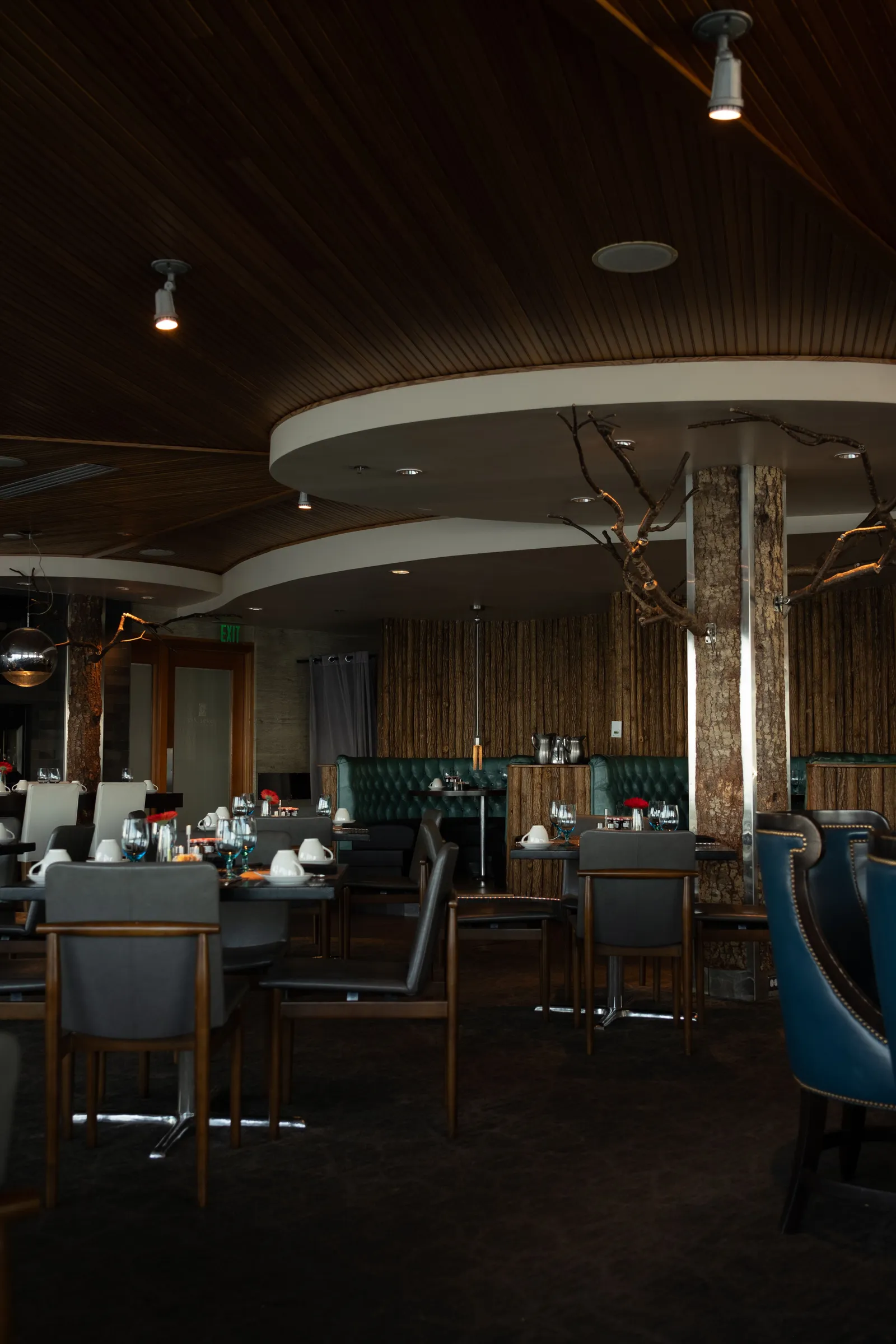
An early bird menu pays when it fills seats that would otherwise stay empty, and loses money when it only discounts diners who would have come anyway. Price it from the dearest plate on it at a food cost you can live with, limit it to the genuinely quiet sitting, and count the extra covers you need to break even before you print it.

When does an early bird menu fill the room, and when does it give margin away?
The early sitting is the hardest table in your restaurant to sell. The kitchen is ready, the staff are on, and the room is quiet until seven. An early bird gives a diner a reason to come at five.
The trouble is who takes it up. Some of your five o'clock diners are new, and every one of them is revenue you did not have. But some would have booked at six anyway and now choose the cheaper menu at five. For them the offer is a straight cut in what they spend.
So the question is "will this one bring more new covers than it costs in trading down?" That is a sum, and you can do it on one side of A4 before you change a single price.
Aim the offer at a sitting that really is quiet, not one that is merely quieter than Saturday.
How do you find the sitting that is worth discounting?
Most owners think they know their quiet time, and a good number are slightly wrong. It is often narrower than remembered, or on a different day.
Look at your own bookings. Take the last eight weeks and count covers by day and by sitting. You are looking for the slots that were under half full on most of those days. Write the three weakest down. The reservation insights and the analytics guide help you read your own trade, so you are not working from memory.
Then ask what the kitchen can carry at that hour. If it can serve fifteen at five without the seven o'clock service suffering, you have room to sell. If it cannot, the offer will cost you in service, as well as margin.
Aim for a window of ninety minutes or two hours on the two or three weakest days. A short window is easy to explain and hard to abuse. An all-week window is a lower menu price with a nicer name.
How do you price an early bird menu so every cover still pays?
Price it the way you would price any set menu, then check what a cover leaves you. The guide to pricing a set menu has the full method, and the food cost guide explains gross profit. In short:
- Cost the dearest choice in each course, plus anything that goes on every table, such as bread.
- Divide by your food cost target. An early bird can run at a slightly higher food cost than your main menu, because the covers it brings would otherwise be empty seats. Pick a figure you could live with if every guest chose the dearest plate.
- Work in prices before VAT, then add VAT at your rate and round up for the board. The menu price calculator does the arithmetic once you have the plate cost.
- Keep the choice short. Two or three options per course keeps prep, waste and pass time down, which is the point of an early service.
A worked example, with round numbers as an illustration, not a benchmark:
- Your usual cover at the early window spends €40 before VAT, at a 30% food cost. That leaves €28 per cover before labour and overheads.
- Your early bird menu is priced at €25 before VAT, with the dearest combination costing €8.75, a 35% food cost. That leaves €16.25 per cover.
Each early bird cover leaves €11.75 less than a regular one. Drinks and coffee are extra on top, so count them as a bonus, not as the plan.
How many extra covers do you need to break even?
The sum: covers that trade down, times the margin each one loses, divided by the margin on one early bird cover. That is the number of extra covers you need.
In the example, ten covers a night were already coming at that sitting:
| If this many of the ten trade down | Margin lost | Extra early bird covers needed to break even |
|---|---|---|
| 10 | €117.50 | 8 |
| 5 | €58.75 | 4 |
| 2 | €23.50 | 2 |
If everyone trades down, you need eight new diners a night to stand still. If only two do, you need two. These show the range of risk.
If eight new covers a night is more than your early window can plausibly bring, narrow the offer, shrink the menu or choose a different perk. An offer that brings fewer covers than the break-even number is a marketing cost. That can be a fair use of money, if you meant it.
What should an early bird actually offer?
You have five kinds of offer to choose from, and the best is rarely a percentage off the bill. On Mosey an Early Bird offer can be:
- A percentage off, from 1% to 100% of the bill, which suits a short menu price drop.
- An amount off, a fixed sum.
- A free item, such as a glass of something non-alcoholic, a starter or a dessert.
- A custom perk, written in your own words.
- A linked menu, where the offer points to an early bird menu you have already built.
A specific item usually beats a discount. A free dessert costs you its food cost, not its menu price. It feels like more to the diner, and it does not teach regulars to wait for a cut.
A linked menu is the closest match to the classic early bird. You build the shorter menu once, point the offer at it, and the diner sees what they are getting before they book.
Write it in one line you would read aloud at the door.
How does an Early Bird offer work on Mosey?
An Early Bird offer is a perk attached to a quiet booking slot and honoured at the table. The diner sees it on the slot while choosing a time, which is the only moment it can change their mind. An offer found after booking has cost you the discount and bought you nothing.
There is no deposit, no ticket and no code. The diner books the slot, arrives, and your team honours what was promised. Mosey charges nothing on the offer itself, because no money moves through Mosey for it. The editor sits in the Reservations area and needs the Starter bookings plan at €79.99 a month. The pricing page lists every rate.
You set it in a few fields:
- The days and the time window. Leave the days empty and it applies every day. The window must end after it starts on the same day, and the end time is not included, so a window to 18:30 stops offering from the 18:30 slot. A window cannot run past midnight.
- Dates it runs between, for a season, a launch fortnight or a Christmas run.
- A minimum party size, so a table of two can have a different offer from a table of six.
- The wording, up to eighty characters for the headline and three hundred for the detail.
If more than one offer qualifies for a slot, one wins. A percentage or amount off beats a linked menu, which beats a free item or a custom perk, and a larger value beats a smaller.
Two details matter on the night. The offer is checked again on the server when the booking is made, so a diner cannot book a perk the slot did not carry. And the wording is copied onto the booking: edit or delete the offer next month and a booking made today still shows what was promised. Your team is told when a booking arrives, with a line saying what to honour.
The full set-up is in the early bird offers guide. For deposits, waitlists and reminders, see the reservations and deposits guide.
When should you use Deal Hours instead?
An Early Bird offer is for a table. Deal Hours is for the menu price. If the quiet period you are fixing is a queue of empty tables, use an Early Bird offer. If it is a quiet counter, a slow collection window or a dead afternoon in a café, a Deal Hour does the job without anyone needing to book.
A Deal Hour is a pricing rule with a window. Inside the window the items you chose cost less. Outside it, nothing has changed. There is no code to leak and no ticket to buy. These are the settings, all checked in the code:
- Four kinds: a percentage off, a fixed amount off, buy one get one, or a set price. A percentage cut cannot go above half the price.
- Whole menu or chosen items. Buy one get one and set price work on named items only.
- Channels: collection, delivery, in your restaurant, or any mix. A delivery-only rule never reaches your counter.
- Days and hours, in your restaurant's own time zone, with no window across midnight. Split a late rule into two.
- Ten active rules at a time, which is enough to price a week and few enough that your team can still say what anything costs on a Wednesday.
The rule switches itself on and off, and you can pause it at any time. Deal Hours has no charge of its own, so the usual rate on the order applies, such as 1.5% on a collection order. A Deal Hour comes off first, then a membership benefit, a loyalty reward, a promotion ticket and a voucher, each worked out on what is left.
See the Deal Hours guide for the set-up and the promotions and Deal Hours page for the overview.
The same break-even sum applies. Say an item sells at €10 before VAT and costs €3, so it leaves €7 (an illustration):
| Discount | New price | Margin left | Extra units needed to match the old margin |
|---|---|---|---|
| 10% | €9 | €6 | about 17% more |
| 20% | €8 | €5 | 40% more |
| 30% | €7 | €4 | 75% more |
| 50% | €5 | €2 | 250% more |
A 20% cut needs two extra sales for every five you were already making. That is why a small, targeted cut on a few items you have already prepped works, and a deep cut across the menu rarely does.
How do you stop regulars trading down?
Every early bird has a leak: the diner who would have paid full price. You cannot close it, but you can narrow it.
- Keep the window tight. A ninety minute window at five is hard to stretch into a seven o'clock dinner.
- Make the early bird feel like an early bird. A shorter menu and no add-ons mean a diner who wants the full experience still books later.
- Use the party minimum with care. A minimum of two keeps a solo regular from using it as a cheap lunch. A minimum of six steers it towards groups.
- Choose a perk that costs you cost, not price. A dessert you make in bulk is cheaper to give than ten per cent off a main.
- Put an end date on it. A season or a fortnight lets you test the idea and stop if it does not pay.
- Leave drinks out of a rule unless you have checked the rules on promoting alcohol.
Tell people once. A rule nobody knows about is a discount for the customers who were coming anyway. The guide to boosting sales on slow days covers how to spread the word without discounting your busiest nights.
How do you tell whether it paid?
Run it for a fixed period, then read the numbers. For an Early Bird offer, the Performance view shows bookings and covers for each offer over the last 7, 30 or 90 days, a breakdown by day of the week and the share of your covers the offer drove.
After four weeks, ask three questions:
- Did covers in the window rise? Compare with the same weeks before. If the window holds the same covers as before, the offer has only moved margin.
- Did they come on the days you aimed at? The day breakdown tells you. A dead Tuesday that stayed dead needs a different perk, not a bigger discount.
- Did they come back at full price? An early bird is an introduction. If first-timers rebook at seven the next month, it has done the job a flyer cannot.
If the answers are no, stop and keep the money. If yes, move the window by half an hour and test again. The weekly numbers guide shows a short list of figures to read on a Monday so this does not become a project.
The opposite problem, a full Friday, is covered in the guide to managing a queue at the door, and a ticketed night can give a quiet weekday a fixed date: see turning events into a calendar that pays ahead.
What do you do this week?
- Pull the last eight weeks of covers by day and sitting. Pick the weakest window.
- Cost the dearest plate in each course of a short menu. Set a food cost target.
- Price it before VAT, then run it through the menu price calculator.
- Do the break-even sum. If the covers needed are not believable, narrow the window or change the perk.
- Choose one offer: a perk, or a linked menu. Write it in one line.
- Set the days, the window, the end date and the minimum party size.
- Brief the floor before the first booking.
- Read the numbers after four weeks and keep, change or stop it.
When you are ready to put the offer on your booking slots, Host on Mosey free, claim your page and switch on bookings. There is more in the guides for food businesses.
This guide is general information, not legal, tax or financial advice. Rules change and depend on your business and where it is, so check the current rule with the official body named in the guide and take advice from a solicitor or accountant in your area before you act.
Questions
Common questions
What is an early bird menu?
A shorter set menu at a lower price, offered to diners who sit before a set time, usually in the early evening. It exists to fill a quiet sitting. It only pays if it brings covers you would not have had.
How much should an early bird menu cost?
Cost the dearest choice in each course, divide by your food cost target, add VAT and round up. Then check what a cover leaves you in euro, not only as a percentage. The menu price calculator does the sum.
What food cost should an early bird run at?
Many kitchens run it a little higher than their main menu, because the covers it brings would otherwise be empty seats. Choose a figure you could live with if every guest picked the dearest plate.
How do I know if an early bird is worth it?
Work out the extra covers you need to cover what regulars save by trading down, then compare it with the covers you get. If the offer brings fewer than the break-even number, it is a marketing cost, not a profit.
Is a discount or a free item better?
Usually a free item. A dessert costs you its food cost, not its menu price, feels like more to the diner and does not teach regulars to wait for a cut. A discount hits everyone, including diners who would have paid full price.
How do Early Bird offers work on Mosey?
You attach a perk to quiet booking slots. The diner sees it while choosing a time, the wording is copied onto the booking, and you honour it at the table. There is no deposit, ticket or code. It needs the Starter bookings plan at €79.99 a month.
What is the difference between Early Bird and Deal Hours on Mosey?
An Early Bird offer attaches a perk to a booking slot. A Deal Hour lowers menu prices inside a weekly window, online or in your restaurant, with no booking needed. Use the first for empty tables and the second for a quiet counter.
How many Deal Hours can I run at once?
Ten active rules at a time. Each rule has a day and time window that cannot run past midnight, so split a late rule into two. You choose the items and the channels, and you can pause a rule at any time.
More like this
Read next
A hotel restaurant that locals use too
A hotel dining room earns local trade when it acts like a restaurant of its own. Here is why locals stay away, how to set the dining room up on Mosey beside your hotel, and which offers fill it.
An alcohol-free drinks menu that still makes margin
More guests are drinking less, in January and the rest of the year. Here is how to cost, price, name and sell an alcohol-free menu so it earns as well as the wine list, with the Irish VAT and offer rules checked.
A pub that does food: making the kitchen pay
A pub kitchen pays when its gross profit covers its own wages and running costs. Here is how to count it, which services to fill, what the alcohol rules say and how Mosey fits.
Auto-enrolment pension for Irish restaurants and cafés: what you pay and do
Since 1 January 2026 an Irish employer matches the pension contribution of each eligible employee. Here is who counts, what it costs on a wage bill, the payroll steps and what staff can opt out of.
Get started
Host your business on Mosey. It is free to claim.
Free to list, no set-up fee, and Order Ahead is 1.5% commission when you start taking orders.