
For businesses
Written terms of employment in Ireland: the five-day and one-month statements
Mosey · 22 November 2026 · 11 min read
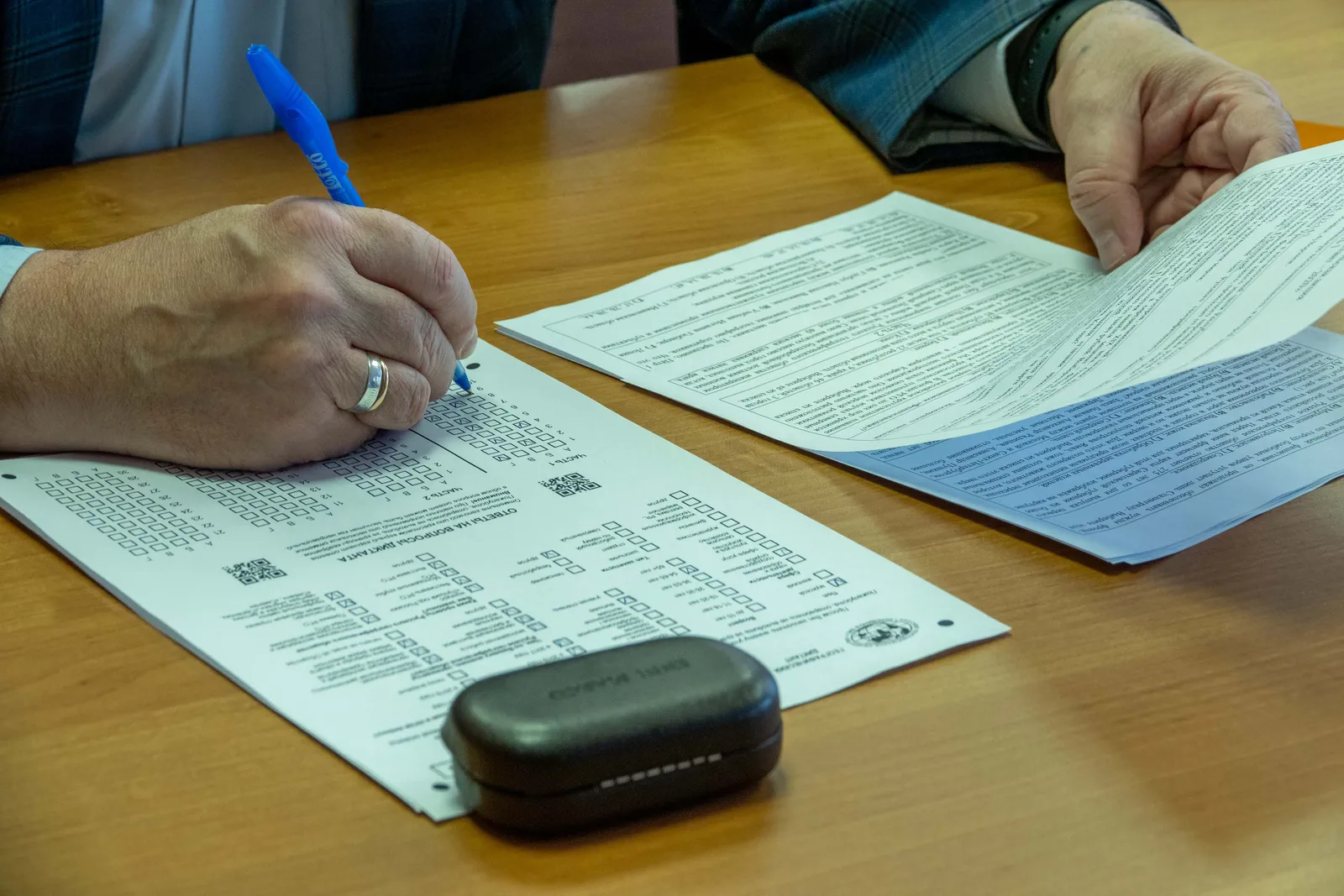
Every new employee in Ireland is owed two written statements. The "Day 5" statement of core terms is due within 5 days of the start, and a statement of every other term within one month. You sign and date both, and put any later change in writing by the day it takes effect. Check the current rule with the Workplace Relations Commission (WRC).

What are the five-day and one-month statements?
They are two lists of terms your employee is entitled to see in writing. The Terms of Employment (Information) Act 1994 sets them out, as amended in 2018, in October 2022 and again in December 2022. The first list sits in section 3(1A) of the Act. The second sits in section 3(1).
The Employment (Miscellaneous Provisions) Act 2018 introduced the five-day statement with five core terms, and the Payment of Wages (Amendment) (Tips and Gratuities) Act 2022 added your tips policy. The European Union (Transparent and Predictable Working Conditions) Regulations 2022 (S.I. No. 686 of 2022) widened it again, moving several items from the one-month list into the five-day list, and widened the meaning of "employee" to include anyone who agrees to do work or services personally for another person. A casual, a part-timer and a student on a summer rota all count. Section 2 of the Act takes a job of under 4 consecutive weeks' service outside the rest of the Act, but never outside the five-day statement, and that exclusion does not apply where no guaranteed amount of paid work is set before the job starts.
An employee is owed the statements even if the job ends before the deadline. Section 3(2) says so.
Your question as an owner is not "do I need a contract" but "have I given each person both statements, in the right form, on time". This guide takes it in that order.
What must the five-day statement say?
The Act lists eleven items. Here they are in plain words, with the Act's own order.
- The full names of you and the employee.
- Your address in the State, your principal place of business or your registered office.
- For a temporary contract, how long it is expected to last, or the end date if it is fixed term.
- The pay: the starting basic amount, any other parts shown separately, how often and by what method it is paid, and the pay reference period for the National Minimum Wage Act 2000.
- The hours you reasonably expect the person to work in a normal day and a normal week.
- Where the tips legislation applies to you, your policy on how tips, gratuities and mandatory charges are treated.
- The place of work, or a statement that the person works at various places or can choose where.
- The job title, grade, nature or category of work, or a short description of the job.
- The start date.
- The terms on hours of work, including overtime.
- If there is a probationary period, how long it lasts and its conditions.
Check each draft for an unclear start date, a missing hours term or a blank on pay. The WRC describes the same list on its terms of employment page and publishes sample statements of terms you can start from.
What goes in the one-month statement?
Everything else the Act requires, by one month after the start. In plain words:
- Pay intervals. Weekly, monthly or another interval.
- Paid leave. The terms on paid leave other than sick leave.
- Sickness and pensions. The terms on absence through sickness or injury and paid sick leave, and on pensions and pension schemes.
- Notice. The notice you must give and the employee must give, or how it is worked out.
- Collective agreements and orders. A reference to any collective agreement that directly affects the job, and to any registered employment agreement or employment regulation order that applies, with where to get a copy.
- Training. Any training entitlement you provide.
- The minimum wage statement. That the employee may ask in writing for a statement of their average hourly rate of pay under section 23 of the National Minimum Wage Act 2000.
- Unpredictable work. If the pattern is entirely or mostly unpredictable: that the schedule varies, the guaranteed paid hours, the pay for hours beyond them, the reference hours and days when they may be called in and the minimum notice before an assignment.
- Social insurance. Where it is your responsibility, the bodies that receive the social insurance contributions and any protection you provide.
- Agency work. For a temporary contract, who the user firm is, when known.
Keep the pension line honest. The auto-enrolment guide covers what you pay and do, and the statement must describe what is true on the day you sign it.
Can you point to the staff handbook instead of writing it all out?
For some terms, yes. Section 3(3) of the Act lets you give a reference instead of the full text for the pay terms in the five-day list, hours of work and probation, and for several items in the one-month list: pay intervals, paid leave, sickness and pensions, notice and training, and social insurance.
The reference can be to a statute, to another law, to an administrative provision or to a collective agreement. The employee must have reasonable opportunities to read it during the employment, or it must be reasonably accessible in some other way. The WRC's guide says the same: the documents referred to must be readily accessible.
In practice, a staff handbook on the staff room shelf is accessible. One in a drawer in your office is not. If you point to a handbook, give each person a copy and say so in the statement.
The other items, such as the names, address, job title and start date, you must write out in the statement itself.
How must you deliver it, sign it and keep it?
Four rules, from sections 3, 3A and 5 of the Act:
- In writing and signed. Sign and date it, by you or on your behalf.
- On paper or electronically. Electronic delivery works only if the information is accessible to the employee, can be stored and printed, and you keep proof that it was sent or received.
- A copy kept. Keep a copy for the period of the employment and one year after it ends.
- Changes in writing. If a particular in the statement changes, you must tell the employee in writing, with the nature and date of the change, by the day the change takes effect. A change in a statute or in a collective agreement the statement refers to does not need a fresh notice.
The WRC's list of statutory records includes the terms of employment for each employee, beside payslips and hours. An inspector can ask for them. The payroll guide covers the rest of that list.
A worked example, with round figures, to show what a change looks like. You move a part-timer from 15 hours a week to 25. The hours term in the Day 5 statement changes, so you write to them with the new hours and the date they start, and you hand it over by that date, not in a month's time.
What is the difference between a statement, an offer letter and a contract?
The statement is the minimum information the Act makes you hand over. An offer letter sets out the deal before the person starts. A contract is the agreement itself. One well-written document can do all three jobs, or you can use three.
What matters is that nothing contradicts. If the offer promised a Saturday off each month and the statement says nothing, the person will remember the promise. The job offer guide covers the offer, and the first employee guide shows where the statement fits in a first hire.
Do not use the statement to restrict a second job without a reason. The WRC says you cannot stop an employee taking other work outside the schedule you set, unless you have objective grounds, and cannot treat them badly for taking it up. A clause banning every second job is the kind to take out.
Whether you add a longer contract on top is your decision. Ask a solicitor to read your first one, because a statement is not legal advice on the rest of your terms.
What changes when hours are unpredictable, seasonal or casual?
The Act asks for more detail, not less. For work that is entirely or mostly unpredictable, the one-month statement must give the guaranteed paid hours, the reference hours and days and the minimum notice before a shift. Where it applies, the statement must also give the deadline for notification under section 17 of the Organisation of Working Time Act 1997. The rota guide covers working time.
For a fixed-term summer worker, the five-day statement must show the end date. If you renew the contract for the same functions and tasks, the Fixed-Term Work Act says the renewed contract carries no new probationary period. The seasonal staff guide puts the season on a calendar.
Under 18s carry one extra item. The WRC says you must give every worker under 18 a copy of the official summary of the Protection of Young Persons (Employment) Act within one month. The under-18 guide covers the hours and the register.
How long can a probation period last?
No longer than 6 months, as a rule. Section 6D of the Act caps a probationary period at 6 months. A longer period, up to 12 months, is allowed on an exceptional basis if it is in the employee's interest. If the employee is away on certain statutory leave, such as maternity leave or sick leave under the Sick Leave Act 2022, the period is extended by the length of the absence.
Put the length and the conditions in the five-day statement. A probation clause you did not write down at the start is hard to rely on later. The staff review guide shows how to run the review that ends it.
What happens if you miss the deadline or get it wrong?
An employee can complain to the WRC, and you can be prosecuted.
- A WRC complaint. The adjudication officer can declare the complaint well founded, confirm or correct the statement, tell you to give a written statement and award compensation of up to 4 weeks' remuneration.
- Who can complain. The WRC says the employee needs at least 4 consecutive weeks' service. For a missing five-day statement, the Act asks for more than one month's service.
- A direction. An inspector can direct you to comply within a set time. If you comply, the employee cannot go on to complain about that breach.
- An offence. Failing without reasonable cause to give the five-day statement within one month of the start is an offence, as is giving false or misleading information deliberately or recklessly. The penalty is a class A fine, up to 12 months in prison, or both. You can defend yourself by showing due diligence.
- Honest mistakes. An error or omission in the five-day statement that was a clerical mistake, or made accidentally and in good faith, does not count as a breach.
You must not penalise an employee for asking for a statement or for complaining: the WRC can award up to 4 weeks' remuneration for that too. If you have a team with no statements, issue them now and take advice from a solicitor or the WRC on what to say about the delay.
How does Mosey help with written terms?
Mosey does not write your terms, check that a statement carries every required item or count your five days and one month. It gives no legal advice, keeps no under-18 register and checks no one's age. What it gives you in Ireland is a place to keep the document and a record of the signing.
- A contract template of your own. In the staff tools you write the contract template once, with fields for the business name, the person's name, role, start date and pay, and Mosey fills them for each person. Mosey supplies no Irish starter text, so the wording and the legal content are yours.
- Signing in the app. The person signs with their typed name and a consent tick, you countersign, and Mosey stores the signed file with a record of who signed and when, and a fingerprint of the exact file. Whether that record meets the proof rule in section 3A is a question for your solicitor.
- A job offer that sets it up. When someone accepts an offer you made on Mosey Jobs, the staff record is set up and the contract template you chose goes to them to sign. See the staff tools page and the hiring guide.
- A checklist item. The staff record shows whether the contract has been sent, signed by the person and countersigned by you. It does not show a deadline.
- A tips policy to refer to. The tips tools store your written tips policy with a date and version, which you can point to in the five-day statement.
What each tool costs is on the pricing page. Put your own text in the template, then work out the dates.
What is the next step for your restaurant or café?
Make one folder for each person: the signed statement, the offer, the handbook and any change notices. Check today whether every person on your rota has a five-day and a one-month statement in it. Then Host on Mosey free, write your contract template and have the next starter sign it in the app. Every other guide for Irish food businesses is on the business guides page.
This guide is general information, not legal, tax or financial advice. Rules change and depend on your business and where it is, so check the current rule with the official body named in the guide and take advice from a solicitor or accountant in your area before you act.
Questions
Common questions
What is a Day 5 statement of terms in Ireland?
It is the written statement of core terms an employer must give within 5 days of an employee starting: names, address, pay, hours, job, place of work, start date, tips policy where it applies and probation. It must be signed and dated by you.
Do I need a written contract for a part-time or casual worker?
You must give them the same two statements as anyone else. The Act covers part-time and casual employees, and the 2022 Regulations widened it to anyone who personally agrees to do work or services for another person.
What goes in the one-month statement?
The remaining terms: pay intervals, paid leave, sick pay and pensions, notice, collective agreements and employment orders, training, the minimum wage statement right and unpredictable-work details. Social insurance details are also covered where they are your responsibility.
Can I send the written terms by email or on an app?
Yes, if the employee can access, store and print it and you keep proof it was sent or received. The statement must still be in writing and signed and dated by you or on your behalf. Check the current rule with the WRC.
What can the WRC award if I do not give a statement?
If the complaint is upheld, the adjudication officer can order you to provide a statement and award compensation of up to 4 weeks' remuneration. Failing to give the five-day statement within a month without reasonable cause is also an offence.
How long can I keep a new employee on probation in Ireland?
Up to 6 months. A longer period, to a maximum of 12 months, is allowed only on an exceptional basis in the employee's interest. Absence on listed statutory leave extends the period. The length and conditions belong in the five-day statement.
Do I have to tell staff when their terms change?
Yes. The Act says you must notify the employee in writing of the nature and date of the change by the day it takes effect. A change in a law or collective agreement the statement only refers to needs no fresh notice.
Can Mosey write my employment contracts?
No. In Ireland you write your own contract template, which Mosey fills with each person's name, role, start date and pay, and the person signs in the app. Mosey does not check the wording or the deadlines, so take legal advice on your text.
More like this
Read next
A hotel restaurant that locals use too
A hotel dining room earns local trade when it acts like a restaurant of its own. Here is why locals stay away, how to set the dining room up on Mosey beside your hotel, and which offers fill it.
An alcohol-free drinks menu that still makes margin
More guests are drinking less, in January and the rest of the year. Here is how to cost, price, name and sell an alcohol-free menu so it earns as well as the wine list, with the Irish VAT and offer rules checked.
A pub that does food: making the kitchen pay
A pub kitchen pays when its gross profit covers its own wages and running costs. Here is how to count it, which services to fill, what the alcohol rules say and how Mosey fits.
Auto-enrolment pension for Irish restaurants and cafés: what you pay and do
Since 1 January 2026 an Irish employer matches the pension contribution of each eligible employee. Here is who counts, what it costs on a wage bill, the payroll steps and what staff can opt out of.
Get started
Host your business on Mosey. It is free to claim.
Free to list, no set-up fee, and Order Ahead is 1.5% commission when you start taking orders.