For businesses
Minimum wage in Ireland for restaurants: the 2026 and 2027 rates
Mosey · 15 November 2026 · 5 min read

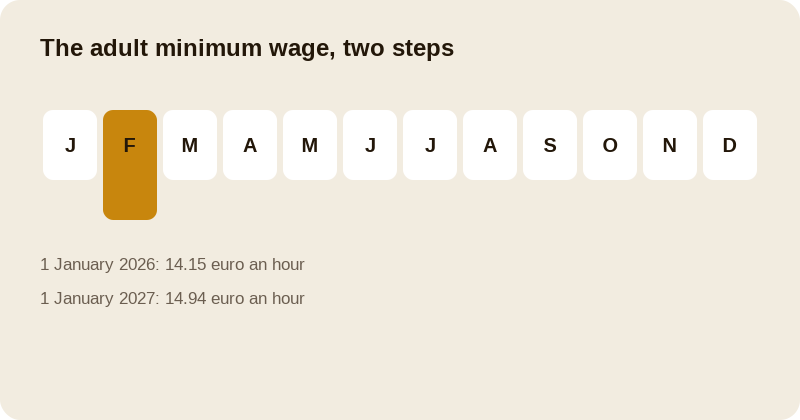
The adult national minimum wage in Ireland has been €14.15 an hour since 1 January 2026, up from €13.50. It rises by 79 cent to €14.94 an hour from 1 January 2027, under the National Minimum Wage Order 2026 (S.I. No. 533 of 2026), following the Low Pay Commission's recommendation in July 2026 and Budget 2027.
(These rates and rules change from year to year, so check the current figures on the official Workplace Relations Commission and Citizens Information websites before you rely on them.)
What is the 2026 rate?
Since 1 January 2026 the national minimum wage for adults is €14.15 an hour, an increase of 4.8% on the previous €13.50. It follows a recommendation from the Low Pay Commission, the independent body that advises the Government each year. Check the Workplace Relations Commission and the Citizens Information website for the current rate and for what counts as pay for minimum wage purposes.
What is the 2027 rate?
The Low Pay Commission recommended an increase of 79 cent for 2027 in July 2026, and the Government included it in Budget 2027. The National Minimum Wage Order 2026 (S.I. No. 533 of 2026) makes it law: the adult rate is €14.94 an hour from 1 January 2027. Plan your January payroll on that rate.
What about younger workers?
The law allows lower rates for workers under 20, set as percentages of the adult rate: 70% under 18, 80% at 18 and 90% at 19. Take the exact amount for each age band from the Workplace Relations Commission. A student working weekends is covered by the same rules on pay slips, breaks and records as any other employee.
What counts towards the minimum wage?
Basic pay for the hours worked counts. Tips and gratuities paid by customers are not wages from the employer for this purpose, and a service charge needs careful handling. The tips guide sets out how the law treats tips and service charges, and how a fair pool works. Board and lodging you provide can count towards the minimum wage, but only up to amounts set in law (for 2026, €1.27 per hour worked for board, and €33.42 a week or €4.77 a day for lodging), so check the current amounts with the Workplace Relations Commission before you count a staff meal. If you are unsure how to count something, ask your accountant or the Workplace Relations Commission.
How do you plan your rota around a rise?
Work from the facts of your week:
- List every employee at or near the minimum. They are the ones who will move first.
- Price the 2027 step now. Calculate the extra weekly cost for your current hours at the proposed rate, using your own payroll figures.
- Check the ladder above. A rise at the bottom narrows the gap to your trained staff. Decide whether to move the whole scale.
- Match hours to demand. The rota guide explains the working time rules you must follow while you adjust.
- Look at the other costs on the same payroll. Employer PRSI and pension auto-enrolment also rise, as the payroll basics guide describes.
How does it feed into your menu prices?
Labour is the largest controllable cost for many food businesses, and a Bank of Ireland sector report in 2026 put wage costs at an average of 39.5% of turnover in hospitality. When the wage floor rises, every dish carries a little more of it. Recost the menu, and decide which dishes need a price change, a smaller portion or a simpler recipe. The food cost guide shows how.
How do you keep good people when the floor rises?
Your best staff care about more than a pay rate. Predictable hours, a fair share of tips, training and a route to a senior role all keep people longer than a small raise on its own. Raise the wage of experienced staff by a margin that keeps the gap, and tell them why. Replacing a trained server or cook costs more than most owners expect.
What records must you keep?
The law requires you to keep records of hours and pay and to give employees a payslip. Keep them for the period the law requires. If an inspector asks, you should be able to show the hours worked and the rate paid for each employee. Payroll software makes this easier.
What should a pay review look like in November?
Do it before the January change, not after it. Sit down with your payroll report and list every employee, their rate and their hours. Mark those within a euro or so of the minimum and those who will be within a euro after the rise. Decide for each role whether the gap to the rate below it should stay the same. Put the decision in writing and tell the person directly. Staff who hear about a raise from you, before they see it on a payslip, remember it better.
Do you want fewer empty hours on the rota?
The best answer to a higher wage floor is a busier room. Mosey is a food discovery app where diners search by dish and mood and rate what they ate, and Host on Mosey helps a good business fill its quiet hours with people who came for a reason. Nobody can pay to outrank you there, because Mosey Gold is earned from ratings alone, and pricing lists every rate.
More guides for your business:
More in the guides for food businesses.
This guide is general information, not legal, tax or financial advice. Rules change and depend on your business and where it is, so check the current rule with the official body named in the guide and take advice from a solicitor or accountant in your area before you act.
Questions
Common questions
What is the minimum wage in Ireland in 2026?
The adult national minimum wage is €14.15 an hour from 1 January 2026, up from €13.50, following a recommendation from the Low Pay Commission.
What will the minimum wage be in 2027?
The adult rate is €14.94 an hour from 1 January 2027, a rise of 79 cent, under the National Minimum Wage Order 2026 (S.I. No. 533 of 2026).
Do tips count towards the minimum wage?
Tips paid by customers are not treated as the employer's pay for minimum wage purposes. Service charges need careful handling, so read the tips guide and ask the Workplace Relations Commission if unsure.
Are there lower rates for young workers?
Yes. The law allows lower rates for workers under 20: 70% of the adult rate under 18, 80% at 18 and 90% at 19. Check the Workplace Relations Commission for the amounts.
Who sets the minimum wage in Ireland?
The Government sets it on the recommendation of the Low Pay Commission, an independent body, and it takes effect through a ministerial order (for 2027, S.I. No. 533 of 2026).
More like this
Read next
A hotel restaurant that locals use too
A hotel dining room earns local trade when it acts like a restaurant of its own. Here is why locals stay away, how to set the dining room up on Mosey beside your hotel, and which offers fill it.
An alcohol-free drinks menu that still makes margin
More guests are drinking less, in January and the rest of the year. Here is how to cost, price, name and sell an alcohol-free menu so it earns as well as the wine list, with the Irish VAT and offer rules checked.
A pub that does food: making the kitchen pay
A pub kitchen pays when its gross profit covers its own wages and running costs. Here is how to count it, which services to fill, what the alcohol rules say and how Mosey fits.
Auto-enrolment pension for Irish restaurants and cafés: what you pay and do
Since 1 January 2026 an Irish employer matches the pension contribution of each eligible employee. Here is who counts, what it costs on a wage bill, the payroll steps and what staff can opt out of.
Get started
Host your business on Mosey. It is free to claim.
Free to list, no set-up fee, and Order Ahead is 1.5% commission when you start taking orders.