
For businesses
How to train servers to upsell without being pushy
Mosey · 15 November 2026 · 7 min read
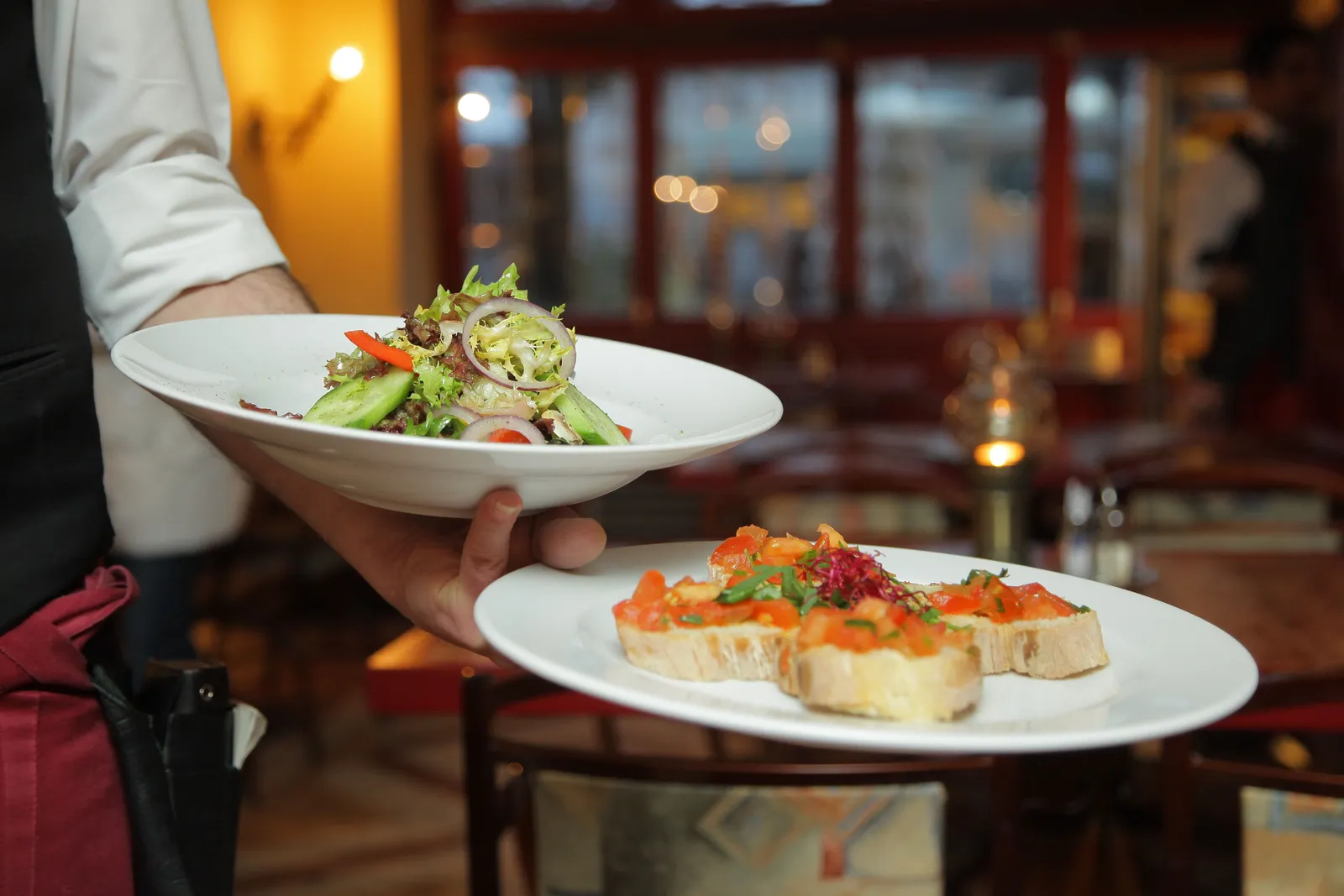
To train servers to upsell without being pushy, teach them to recommend rather than sell: one specific suggestion, at the right moment, for a dish or drink they have tasted and like. Guests say yes to a person who sounds like they know the menu, and no to a script. Train it in short sessions before service, with the food in front of the team.

Why does upselling feel pushy to guests?
Guests can hear a script. "Can I get you any sides with that?" asked at every table, in the same voice, sounds like a target, and the honest answer is no. "Would you like to make that a large?" sounds like a till prompt. Both make the guest feel managed, and both get turned down.
What works is the opposite: a server who says "The hake is lovely tonight, and the chips with seaweed salt go perfectly with it." That is a recommendation. It is specific, it is personal, and it helps a guest who was not sure what to order. It also adds to the bill.
Counter service is no different, only faster. A barista who says "The almond croissants came out of the oven ten minutes ago" sells more pastries than one who asks "Anything else?" at every order. The guest has a few seconds to decide, and a specific, true sentence gives them a reason.
The difference is knowledge and confidence, and both can be trained.
Which suggestions add the most to a bill?
In most restaurants, cafés and bars, the useful moments are the same three:
- The first drink. Offer a specific one when the guest sits down: the cider on tap, the house lemonade, the wine that goes with the special. A guest who orders a drink early has time for a second.
- A side or a starter to share. Suggest one dish for the table, not one each. Sharing feels generous, not greedy.
- Dessert or coffee. Name a dessert or bring the menu before the guest asks for the bill. Once the bill is asked for, the moment has gone.
In a bar, the same logic applies to the second round: name the next drink rather than asking "Same again?".
Pick suggestions that leave you the most margin, not only the most money. A side that costs little to make is a better suggestion than a dear main with a thin margin. The food cost guide and the menu engineering guide show how to find which dishes those are.
How do you train it in ten minutes before service?
Use the pre-service briefing. Ten minutes, every shift, one theme:
- Taste. Put out a spoonful of tonight's special, a glass of the wine you want to move, or a dessert. A server who has tasted something describes it in their own words.
- Two lines. Each server says, out loud, how they would recommend it. Keep the lines that sound natural.
- One goal, said kindly. "Let's see how many tables try the tart tonight" is a game. "We need to sell more desserts" is pressure.
- The obvious questions. What is in it, how big is it, and does it come with anything.
Rotate the theme through the week: drinks on Monday, sides on Tuesday, desserts on Wednesday. The newest server learns the whole menu in a fortnight, and the old hands stay sharp.
Hold it in the same spot at the same time each shift, standing, with the plates on the pass. A briefing that starts late gets cut, and a briefing that gets cut stops happening.
What should servers never do when they upsell?
A short list to train out, because each one costs you a returning guest:
- Never recommend what they have not tasted. Guests can tell.
- Never assume the bigger size. Ask; do not ring it in.
- Never push after a no. One suggestion, then drop it.
- Never pitch to a table that is clearly watching the bill. A family counting the children's meals wants good service, not a sales talk.
- Never let a suggestion skip the allergen question. A recommendation to a guest who has mentioned an allergy goes through the same check as any other order; see the allergen training guide.
How do you know if the training is working?
Look at your sales by item before and after, not only by total. If desserts were the theme for a fortnight, did more desserts go out? Compare the same days of the week, because a Friday is not a Tuesday.
Share the results with the team and thank the people who made a difference by name. Recognition does more than a target, and the staff recognition guide has ideas that cost little. If one server sells far more desserts than the rest, ask them to share their line at the next briefing.
Keep the count simple. A tally on the pass, or a note at the end of each shift of how many of the theme dish went out, is enough. Over a few weeks you will see which lines work, which servers have found their voice, and which dishes guests will not be talked into, however good the line. That last group is worth a conversation with the chef: the dish may need a better description, a better price or a place off the menu.
Watch the other signal too. If your ratings start to mention "pushy", you have gone too far, and the fix is fewer suggestions, better chosen.
Does the menu do half the work?
A menu that sells makes recommending easier. A dish described well, a side placed beside the mains it suits, and a drinks list with one clear pick per section all do the suggesting before the server arrives. The guide to writing a menu that sells covers the layout and the words.
Price matters as well. A suggestion that comes with a fair price sounds like a favour. If your prices need to move, the guide to raising prices without losing regulars shows how to do it.
How do you train a new server to recommend from day one?
A new server cannot recommend a menu they have never tasted. In their first week, sit them down for a tasting of your best sellers and the dishes you most want to move, with the chef explaining each one. Give them three dishes to learn properly before their first full shift: one starter, one main, one dessert. Give them the reason behind each as well as the line: the fish came in that morning, the dessert is made in-house, the cider is from a local orchard. Guests ask why, and a true answer sells better than a superlative.
Let them shadow your best recommender for a service and listen. Then let them try the lines on two or three regular tables who will be kind. The 30-day onboarding guide fits this into the first month.
How does Mosey help servers recommend with confidence?
Mosey is Irish-built and Irish-run, and on Mosey guests rate individual dishes, not only your business. Those dish ratings show your team which plates people love, so a recommendation rests on what your guests actually say. They also show you which dishes not to push: a plate guests rate poorly is not one to recommend, however good its margin. Well-rated, photographed dishes are also found on their own on the Dishes page, which brings in people who already know what they want to order.
Your menu in Menu Builder carries the descriptions, sides and allergen records your servers read from, and the same menu runs your online ordering. To make the briefing stick, build a short course on your menu, with photos and a quiz, and assign it to new servers before their first shift. See pricing for what each part costs.
Where should you start?
Pick one dessert and one drink this week. Taste them with the team before service, let each server find their own line, and count how many go out. When you want your menu, dish ratings and staff training in one login, Host on Mosey free and put your full menu in.
More in the guides for food businesses.
This guide is general information, not legal, tax or financial advice. Rules change and depend on your business and where it is, so check the current rule with the official body named in the guide and take advice from a solicitor or accountant in your area before you act.
Questions
Common questions
What is the difference between upselling and recommending?
Upselling pushes a bigger or extra item at every table from a script. Recommending names one specific dish or drink the server has tasted, at the right moment, for that guest. Guests accept the second far more readily.
What is the easiest thing for a server to upsell?
A drink when the guest sits down, one side or starter for the table to share, and a dessert or coffee named before the bill is asked for. Choose the items that leave you the most margin.
How do I train servers to upsell without a script?
Let them taste the dish, then ask each server to say out loud how they would recommend it. Keep the lines that sound natural. Ten minutes at the pre-service briefing, one theme a day, is enough.
Should servers be rewarded for upselling?
Thank people by name and share the results, and make any goal a friendly game rather than pressure. A hard sales target trains the pushy behaviour guests dislike and tends to show up in your ratings.
Can upselling hurt my ratings?
Yes, if it feels pushy. Guests notice scripts, assumed upgrades and repeated suggestions after a no. One well-chosen recommendation per moment, from a server who knows the food, adds to the bill without the complaints.
How can Mosey help my servers recommend dishes?
Guests on Mosey rate individual dishes, so your team can see which plates people love. Your menu in Menu Builder holds the descriptions and allergens, and a short course on the menu can be assigned to new servers.
More like this
Read next
A hotel restaurant that locals use too
A hotel dining room earns local trade when it acts like a restaurant of its own. Here is why locals stay away, how to set the dining room up on Mosey beside your hotel, and which offers fill it.
An alcohol-free drinks menu that still makes margin
More guests are drinking less, in January and the rest of the year. Here is how to cost, price, name and sell an alcohol-free menu so it earns as well as the wine list, with the Irish VAT and offer rules checked.
A pub that does food: making the kitchen pay
A pub kitchen pays when its gross profit covers its own wages and running costs. Here is how to count it, which services to fill, what the alcohol rules say and how Mosey fits.
Auto-enrolment pension for Irish restaurants and cafés: what you pay and do
Since 1 January 2026 an Irish employer matches the pension contribution of each eligible employee. Here is who counts, what it costs on a wage bill, the payroll steps and what staff can opt out of.
Get started
Host your business on Mosey. It is free to claim.
Free to list, no set-up fee, and Order Ahead is 1.5% commission when you start taking orders.