
For businesses
Onboard and train new restaurant staff in 30 days
Mosey · 23 October 2026 · 5 min read

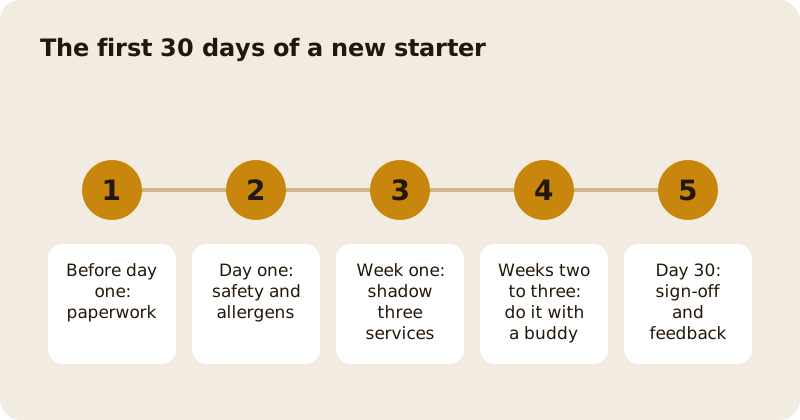
Onboard a new starter with a written 30-day plan: the paperwork done before they arrive, a food safety and allergen briefing on day one, three services shadowing a buddy in week one, supervised work in weeks two and three, and a sign-off conversation at day 30. People who know what is expected, and who is looking after them, stay longer, make fewer mistakes and answer the allergen question correctly.
What should be ready before day one?
Do the admin before the person arrives so the first day is about the work.
- A contract and written terms that match what you agreed. Irish law expects the core terms in writing within five days; do it before day one. The rota guide explains the related hours rules.
- Tax and pay details collected the way Revenue requires, so that the first payroll is clean. The payroll basics guide lists them.
- A buddy. One named person who works the same shifts for the first fortnight.
- A uniform, a locker and a place to put a bag. Small things that say "we expected you".
- A first-week rota, sent a few days ahead.
Download the new starter checklist (spreadsheet, CSV)
What happens on day one?
Day one covers the safety basics, not the whole job.
- A tour: fire exits, first aid, where the allergen sheet lives, where the staff drinks and breaks are.
- Hygiene and food safety: hand washing, cleaning, cross-contamination and the records the kitchen keeps. See the food safety guide.
- Allergens: the 14, how to take an order from a guest who says "I am allergic", and who to ask when you are unsure. See the allergen guide.
- How tips work, in writing. The tips guide covers the policy.
- The one task they will do well by the end of the day, such as laying tables or making a coffee.
Write down what was covered and have the person sign it. That record is your evidence that training happened.
What does the first week look like?
Shadowing. The new starter follows the buddy for three services, front or back, and watches how things are done, in the order they happen. Give them a small card of the five things that matter most in that role. Let them taste the menu: a person who has eaten the food sells it better. At the end of the week, sit down for ten minutes: what was clear, what was not, what they would like to learn next.
What happens in weeks two and three?
Supervised practice. The person does the job with the buddy beside them, then nearby, then within call. Pick one station or section at a time and sign it off when the buddy and the supervisor agree. Do not add a second until the first is solid.
Check understanding with questions, not lectures. "What do you do if a guest says they have a nut allergy?" is better than "Do you know the allergen policy?".
How can Mosey help?
Mosey's Staff area has an onboarding checklist for each new person: complete the profile, sign the contract, upload any documents, acknowledge the handbook and complete assigned training. Contracts are signed in-app with a typed name and a record of what was signed. Training can be set as an assignment from the Courses feature, with a due date, and a completed course is added to the person's record. Staff see all of it in their own space on the jobs site. Mosey does not replace the human parts: the buddy, the briefing and the conversation.
Which skills should you sign off, and in what order?
Keep a short list per role and tick it off together. For a front-of-house starter the order might be: greet and seat, take a drink order, take a food order with allergen questions, carry and clear, use the till, handle a complaint, close the section. For a kitchen starter: wash and prep, one cold station, one hot station, plating to the spec, cleaning and closing records. Each item has a date and two initials, the starter's and the supervisor's. A short list that is actually ticked beats a long one that is not.
Common mistakes to avoid: throwing a new person into a Saturday night alone, assuming experience means they know your way, skipping the allergen briefing because "they have done it before", and forgetting to tell them who to ask. People remember the first week for years.
What happens at day 30?
A conversation, not a test. Review what went well, what needs work and what happens next. Ask for feedback on the process: what was missing from the first week? Sign off the stations they can do alone, and set the next goal and date. If it is not working, say so kindly and early, and keep a written note; the probation and notice rules in the person's contract and Irish law apply, so check them before any difficult conversation.
For the wider hiring picture, read staff hiring and training, plan the rota with the rota guide, and see how to keep people with fair tip sharing.
Questions
Common questions
What should a new restaurant starter learn on day one?
Fire exits and first aid, hygiene and food safety basics, the allergens and how to take an allergy order, how tips work, and one task they can do well by the end of the day.
How long should a buddy system last?
About two weeks of shared shifts is a good start, with shadowing in week one and supervised practice in weeks two and three. Extend it for complicated roles such as a sous chef.
Do I have to give a new employee a written contract?
Irish law expects the core terms in writing within five days of starting. Giving them before day one is better, and it is the document you will refer to if there is any dispute.
How do I record that training happened?
Write down what was covered, the date and who delivered it, and have the person sign. Keep the record with their file. It is your evidence if an inspector asks.
Does Mosey replace a manager in onboarding?
No. Mosey provides the onboarding checklist, in-app contract signing and training assignments, but a buddy, a briefing and a day-30 conversation need a person.
More like this
Read next
How to run a supper club or tasting night that sells out
A supper club is a fixed menu, a fixed number of seats and a fixed night, sold as tickets paid in advance. Here is how to cost it, sell it and make it a habit.
How to add catering to your restaurant or café
Office lunches, platters and parties, quoted properly, with a deposit up front, the balance before the day and a prep sheet for the kitchen.
How to make a quiet Monday or Tuesday pay
First decide whether the quiet day should open at all. If it should, shrink it to the hours that trade and give it a reason to come that only exists on that day.
How to get more ratings and reviews for your restaurant, honestly
Ask, at the right moment, every customer, and make it easy. Never offer anything in return. A steady stream of honest ratings is worth more than any burst you could buy.
Get started
Claim your business free
Free to list, no set-up fee, and Order Ahead is 1.5% commission when you start taking orders.