
For businesses
Should you run your own restaurant delivery?
Mosey · 15 November 2026 · 12 min read
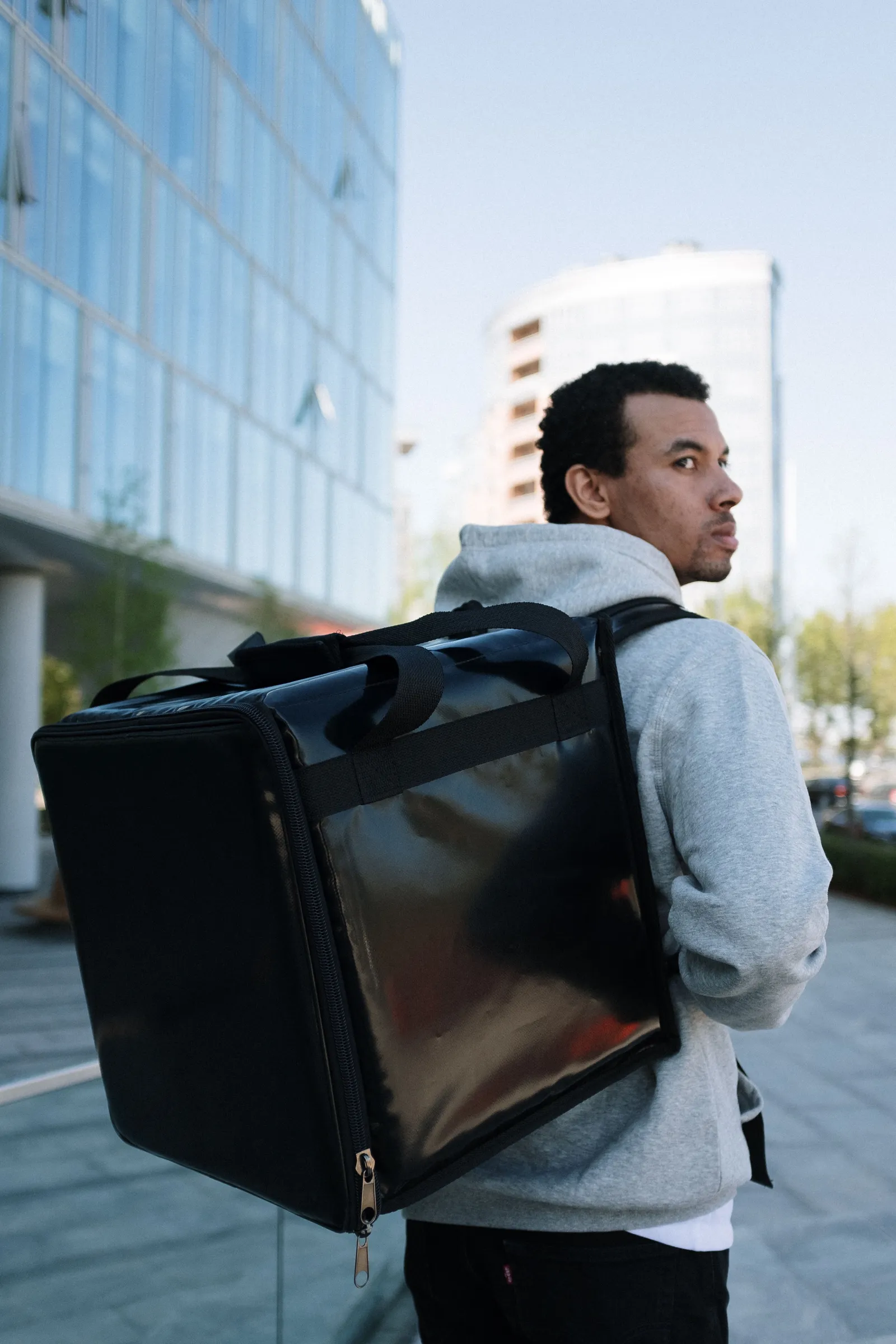
Run your own delivery only when enough orders land close together to keep a driver busy, and when the food you send out earns more than the driver, the packaging and the time cost you. If it does not yet, start with collection, or share a neighbouring business's drivers and pay per drop. Here is how to test it, price it and set it up.

Is your own delivery worth running?
Delivery apps commonly charge around 30% of an order, and the customer ends up theirs, not yours. So it is natural to ask whether you could do it yourself. You can, but you are then running a second business inside the first: dispatch, a person on the road, a vehicle, cold-chips complaints and a rota for hours when nobody orders.
Delivery tends to suit you when:
- Your food travels well for twenty minutes or more.
- Your kitchen has spare capacity at the hours delivery orders arrive, not only when the room is also full.
- Your customers sit in a tight area, such as a few estates, an office park or a main street.
- Orders cluster, say the lunch trade or Friday evening, so a driver is busy while they are on.
- Your average order is big enough to carry a delivery.
It tends not to suit you yet when your kitchen is already at its limit on a Friday, when your customers are spread across a county, or when your best dishes do not survive a car boot.
If your worry is the third you hand to the apps, the guide on moving your regulars off delivery apps covers how to bring those customers to your own link first. This guide answers the next question: once they order direct, who carries the bag?
What does each delivery really cost you?
The cost that surprises owners is the empty hour. A driver costs the same on a quiet Tuesday as on a busy Friday, so your cost per drop swings with how many orders arrive.
Here is the sum, with round numbers that are an example only. They are not an industry figure and not Mosey data. Swap in your own.
- All-in cost of a driver for an hour: €18 (pay, and anything else you pay to have them on the road; your accountant has the true figure)
- Packaging per order: €0.50
| Time of week | Drops an hour | Driver cost per drop |
|---|---|---|
| Quiet Tuesday | 1 | €18.00 |
| Ordinary evening | 2 | €9.00 |
| Busy Friday | 4 | €4.50 |
| Busy Friday, two orders batched per trip | 6 | €3.00 |
The same driver costs you six times as much per drop on the quiet night as on the busy one. That single fact decides most delivery businesses.
Your margin on a drop is then:
- The margin on the food in the bag.
- Plus the delivery fee your customer pays.
- Minus the driver cost per drop at the hours you actually run.
- Minus packaging and any fuel or vehicle cost you carry.
- Minus the commission on the food. On Mosey that is 6% of the food, shown on the pricing page. The VAT on Mosey's fee is added to the customer's total, not taken from yours.
The delivery app commission calculator shows what the same orders cost at a higher rate, and adding up the whole software stack shows where the rest of your money goes.
Own driver, a neighbour's drivers or collection only: which fits?
You have three real choices, and a fourth if you have drivers to lend.
| Model | You pay | Best when | Watch |
|---|---|---|---|
| Collection only | Nothing for a driver | Your customers will walk or drive in | You lose people who will not collect |
| Your own driver | Their hours, whether busy or not | Steady orders most nights | The empty hour |
| A neighbour's drivers (a pool) | A flat fee per delivery, set by the neighbour | Orders are patchy or you have no driver | Fee per drop against your own cost per drop |
| Lending your drivers | Nothing; you are paid per delivery | Your driver has quiet hours | Insurance and rules for other businesses' orders |
Most small kitchens do best by staging it. Start with collection and click and collect, which needs no driver. Add delivery through a pool for the busiest two evenings. Hire or assign your own driver only when your cost per drop at a normal hour comes in below the pool's flat fee. That comparison is the whole decision: your hourly cost divided by your drops an hour, against the fee the neighbour asks per drop.
How do you set zones, fees and a minimum that protect your margin?
Fix the cost of a drop before you fix the fee for it. On Mosey you add a delivery zone by typing the names of the areas you cover, and Mosey maps them. Each zone carries its own fee, minimum order and estimated time, so a far street can cost more than a near one.
A few rules keep the margin safe:
- Start tight. A small zone with a fast time beats a wide one with late orders. You can widen it later.
- Set a minimum that covers a drop. If a drop costs you €9 at an ordinary hour, a €10 basket with a €3 fee loses money.
- Use the levers. You can waive the fee above a basket total, add a small-order fee, charge by the kilometre beyond an included distance, or set distance bands for addresses outside your zones.
- Add your kitchen time. A prep time on delivery is added to every estimate the customer sees.
- Shorten your delivery hours if needed. They are often shorter than your opening hours.
The server prices the delivery, not the customer's phone. A customer enters an address and sees whether it is inside a zone, the fee and the minimum before they build a basket, and an address outside your area is refused before any payment is taken. Delivery tips are open to the customer for 24 hours after delivery, and the commission is on the food, not the tip. The restaurant delivery feature page and the delivery set-up guide walk through the screens.
How do you share drivers with a neighbour, and who pays whom?
A driver pool works like borrowing a ladder. A business that already has drivers opens a pool and sets a flat fee for each delivery. A nearby business that has none asks to join, and the pool's owner approves it. When you have an order to send out, you request a driver and a free one is assigned. Two businesses cannot be given the same driver at the same moment.
The facts that matter in practice:
- The lender sets the terms. They choose the flat fee, the hours they will lend, how far their drivers go, how many deliveries a driver can hold at once and what share of the fee is owed if an order is cancelled after pickup. Before pickup, nothing is owed.
- You see the fee before you join. Searching for pools shows each flat fee and the distance, so you can compare it with your own cost per drop. The fee is set by the provider and is on no rate card.
- Mosey takes no cut of the pool fee. You pay the driver directly, and your normal commission on the food still applies.
- Mosey moves none of that money. A weekly statement shows what each hiring business owes each driver, and the hiring business marks a line paid once it has paid.
- You keep your own customer fee. What your customer pays for delivery is your zone fee, which can sit above the pool fee.
- The lender makes a declaration. To open a pool, they confirm every driver is insured to deliver for other businesses and has the right to work. Mosey records that confirmation. It does not check licences or insurance itself.
If you are the lender, a pool turns an idle driver-hour into income. The guide to driver pools covers set-up for both sides. If you lend drivers, read the next two sections before you do.
Is a delivery driver an employee or self-employed?
You cannot decide this by calling someone self-employed. Revenue says the Supreme Court's decision in the Karshan case sets out a five-question framework, and that the joint Code of Practice on determining employment status, from the Department of Social Protection, Revenue and the Workplace Relations Commission, was reviewed and updated in November 2024 to match.
The five questions, in Revenue's words in short form:
- Is there an exchange of a wage or other remuneration for work?
- Has the worker agreed to provide their services personally, with very limited or no option to delegate?
- Do you control what, how, when or where the work is done?
- What do the facts and circumstances say about the true nature of the relationship?
- Does any legislation change the answers?
Revenue says that if the answer to any of the first three is no, the worker would be considered self-employed, subject to the fifth. If all three are yes, you go on to the fourth and fifth. If a driver is an employee, you have PAYE obligations.
A driver on your rota who covers your shifts and cannot send a substitute looks different from someone who sets their own hours and may send another person. Those are facts to test, not a verdict. Mosey does not decide status, run payroll or give legal advice, so ask your accountant or Revenue before you take someone on.
What insurance and road-safety checks do you need?
Your duty of care does not depend on whose vehicle it is. The Health and Safety Authority's grey fleet information sheet defines a grey fleet as a vehicle not owned, leased or rented by the employer and driven by an employee or a contractor on a work journey, and says an employer's duty of care applies regardless of vehicle ownership.
As a minimum, the HSA says you must make sure employees who drive their own vehicle for work are:
- Formally permitted to drive for work in their own vehicle.
- Legally entitled to drive the vehicle they are using.
- Using a vehicle in a safe and roadworthy condition.
- Using a vehicle that is motor tax compliant.
- Using a vehicle that is suitably insured for occasional business use.
- Medically fit to drive.
- Instructed, trained and informed on your requirements, and following the Rules of the Road.
The HSA also warns of the financial risk where a driver in a serious collision has incorrect insurance, for example a policy that does not include business use, or an invalid licence. The driver may be prosecuted, but claimants may also look to the business.
Delivering food for payment is more than the occasional business journey, so do not assume business use covers it. Ask the driver's insurer, in writing, whether the policy covers this person, in this vehicle, carrying food for payment. Keep a copy. Check the licence covers the vehicle. Put your rules in a one-page written policy, have every driver sign it and check again at each renewal. Your own insurer's wording is what counts.
How do you keep food hot and deliveries on time?
Most delivery complaints come from the gap between ready and delivered. These controls close it:
- Prep time. Add your kitchen time so the customer's estimate is true.
- Kitchen busy. One tap adds minutes to every delivery estimate for a set time, and it lapses on its own, so you do not quote slow times all week.
- Pause delivery on its own. If your only driver is out, pause delivery and keep taking collection orders.
- Batch orders. Send two to five orders to one driver in one trip.
- Auto-reassign. If a driver sits on an order, you can have it sent to the next driver. It is off until you switch it on.
The driver gets each order by email and has a page of today's jobs. They accept, mark it collected, then delivered. Proof of hand-over, a customer PIN or a photo, is optional, so a customer without a phone still gets their food. If a delivery fails, the driver records why, and nothing is cancelled or refunded automatically. It waits for you to decide.
How do you know if delivery is paying?
Delivery analytics shows orders placed, delivered and cancelled, failed hand-over reports, the average minutes from order to delivery and the share delivered within five minutes of the time promised. It splits those by driver and by zone, and shows the delivery fees you took.
Use a simple four-week test:
- Week one: place a test order to your own address and follow it through.
- Week two: open one zone for your two busiest evenings.
- Week three: read the figures. Is your cost per drop below the fee plus the margin you want?
- Week four: raise the minimum, shrink the zone or add a batch before you add hours. Widen only if on-time delivery holds.
If a zone loses money at a normal hour, change the zone. Collection alone is a fine answer.
How do you start delivery this week?
- Work out your own cost per drop at a quiet, ordinary and busy hour.
- Decide: own driver, a pool or collection first.
- Connect Stripe, build your menu and switch on delivery.
- Draw one tight zone with a fee, a minimum and a time.
- Invite your own drivers, or search for a pool near you.
- Settle status, insurance and licence checks before the first drop.
When you want delivery with a published rate, your own zones, your own drivers or a neighbour's, and a customer who belongs to you, Host on Mosey and set up your first zone. More in the guides for food businesses.
This guide is general information, not legal, tax or financial advice. Rules change and depend on your business and where it is, so check the current rule with the official body named in the guide and take advice from a solicitor or accountant in your area before you act.
Questions
Common questions
Is it cheaper to run my own delivery than to use a delivery app?
It can be, but only when your driver is busy. Divide the driver's hourly cost by the drops an hour: a quiet Tuesday costs far more per drop than a busy Friday. Add packaging and the commission, subtract the fee your customer pays, and compare with the around 30% delivery apps commonly charge.
How many drivers does a small restaurant or café need?
Usually one, for your busiest two hours, or none if you use a shared pool. Start with a single driver on your busiest evening, count the drops, and add hours only when on-time delivery holds. A driver pool lets you pay per drop instead.
What is a delivery driver pool, and does Mosey take a cut of the fee?
A pool lets a business with drivers lend them to nearby businesses for a flat fee per delivery, set by the lender. Mosey takes no cut of that fee. The hiring business pays the driver directly, and your usual commission on the food still applies.
Do I need special insurance for delivery drivers in Ireland?
The Health and Safety Authority says an employer must make sure a driver using their own vehicle for work has it suitably insured for business use, and that a policy without business use is a financial risk to the business. Do not assume business use covers delivering food for payment: ask the insurer in writing.
Is a delivery driver an employee or self-employed in Ireland?
Revenue uses a five-question framework from the Karshan Supreme Court decision, set out in the Code of Practice updated in November 2024. It asks about pay, personal service, control, the true nature of the relationship and legislation. Apply it to your facts and check with your accountant or Revenue.
Can customers tip a delivery driver on Mosey?
Yes. A customer can add a tip for 24 hours after delivery, and you can switch delivery tips on or off for your business. Mosey's commission is on the food, not on the tip.
What happens if a driver cannot deliver the order?
The driver records why: not home, wrong address, cannot find the address or refused. Nothing is cancelled or refunded automatically. The order waits for you to decide whether to send it again, refund it or close it, and the customer is told.
How do I offer delivery on Mosey?
Host your business, connect Stripe and build your menu. Switch on delivery, type the areas you cover with a fee, minimum and time for each, then invite your own drivers or join a pool. The commission is 6% of the food. Test one order before you open.
More like this
Read next
A hotel restaurant that locals use too
A hotel dining room earns local trade when it acts like a restaurant of its own. Here is why locals stay away, how to set the dining room up on Mosey beside your hotel, and which offers fill it.
An alcohol-free drinks menu that still makes margin
More guests are drinking less, in January and the rest of the year. Here is how to cost, price, name and sell an alcohol-free menu so it earns as well as the wine list, with the Irish VAT and offer rules checked.
A pub that does food: making the kitchen pay
A pub kitchen pays when its gross profit covers its own wages and running costs. Here is how to count it, which services to fill, what the alcohol rules say and how Mosey fits.
Auto-enrolment pension for Irish restaurants and cafés: what you pay and do
Since 1 January 2026 an Irish employer matches the pension contribution of each eligible employee. Here is who counts, what it costs on a wage bill, the payroll steps and what staff can opt out of.
Get started
Host your business on Mosey. It is free to claim.
Free to list, no set-up fee, and Order Ahead is 1.5% commission when you start taking orders.