
For businesses
How to open a restaurant or cafe in Ireland: the order to do it in
Mosey · 23 October 2026 · 5 min read
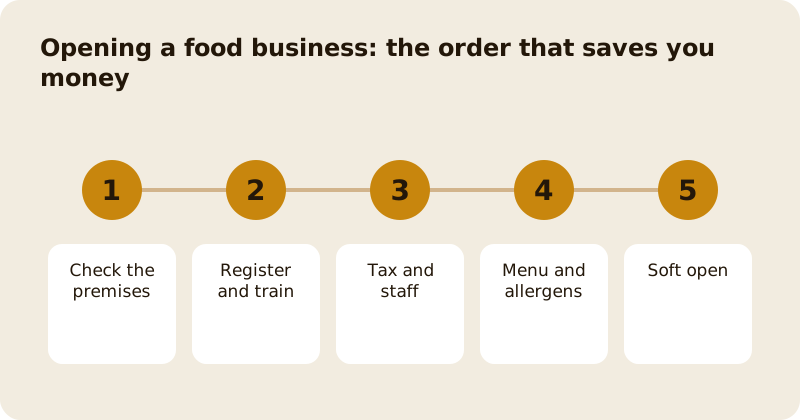
To open a food business in Ireland you register the business with the food authority that covers your premises, put a food safety system in place, register with Revenue for tax and as an employer, and check planning, fire safety and any alcohol licence before you sign the lease. The order matters more than the paperwork: a lease signed before anyone has checked the use of the premises is the most expensive mistake in the trade.
What should you check before you sign a lease?
Check the three things a landlord's agent will not raise. First, planning: a shop turning into a cafe, or a cafe adding hot food and a kitchen extract, can count as a change of use, and that is a question for your local authority's planning section. Second, fire safety and building control: the layout, the number of covers and the kitchen all affect what is needed, and a fire safety certificate is a matter for the building control authority. Third, the licence you need: if you plan to sell alcohol, find out how an on-licence is obtained for that address before you commit, because it is a legal process that goes through the District Court and a solicitor should guide it.
Ask a solicitor to read the lease for the rent review, the break clause, who pays for repairs to the extraction and drains, and whether the lease allows the opening hours you need. Then ask your local authority about commercial rates, which are a running cost and not a one-off.
Who do you register a food business with?
Every food business must be registered with the competent authority before it starts trading. For most restaurants, cafes and takeaways that is the environmental health service of the HSE; the Food Safety Authority of Ireland (FSAI) publishes which body covers which type of business, and the registration is a form, not an exam. Registration is how an inspector knows you exist, and an unregistered kitchen is an easy first finding.
Registration does not replace a food safety system. You need a written food safety management system based on HACCP principles: what can go wrong with the food you make, where you control it, what you record and what you do when a reading is out. The food safety guide walks through it, and the fridge log in the downloads below is a good first record to start keeping.
Which taxes and registrations come next?
Register the business with Revenue, and decide with an accountant whether and when you must register for VAT, because the thresholds and the rate on food served in a restaurant have changed more than once in recent years and the right answer today is on Revenue's site. If you will employ anyone, register as an employer and set up payroll before the first shift, because Revenue expects the payroll to be reported in real time. The payroll basics guide covers what that means in practice.
Open a business bank account early. Opening one can take weeks, and your card payments, your Stripe payouts and your supplier accounts all need a place to land.
What insurance do you need?
Public liability cover is not a legal requirement for a restaurant in Ireland, but no landlord, event organiser or sensible owner goes without it. Employers liability is the cover that matters once you have staff. Ask a broker who insures food businesses for contents, stock, business interruption and product liability too. Ask what happens to the policy if the fridges fail and the stock is lost, because that is the claim you are most likely to make.
What do staff and the menu need before day one?
Staff need contracts and a written statement of their terms, a rota that respects rest-break rules, and a clear written tips policy. The rota guide and the tips guide cover the two that owners most often get wrong.
The menu needs a cost for every dish and the allergen information for every dish, in writing, before you open. Costing is how you find out the dish you love loses money, and the food cost guide shows how. If you already have a menu on paper, scan it into Mosey and the costing and allergens are the only things left to add.
What else catches new owners out?
A few small things cost real money if missed:
- Music. Playing recorded music in a public place needs the right licences, which in Ireland come from the collecting societies. The music licence guide explains who to ask.
- Waste. Commercial waste must go to an authorised collector, and your cooking oil usually has its own collection.
- Signage. Hoardings and fascia signs can need planning permission too.
- The first inspection. Plan for it from day one; the hygiene records an inspector asks to see are the ones you should already be keeping.
How do you open without losing the first month?
Soft open for a week to friends, family and neighbours at a reduced menu. Use the week to find the three things that break under real orders: usually the printer, the pass and a dish that takes twice as long as you tested. Fix them before you take a booking from a stranger.
The same week is the time to claim your listing so the people searching for somewhere to eat can find you. Claim your business free on Mosey, add your hours, photographs and menu, and switch on the tools you want: ordering, bookings or both. Each is optional, and the reservations guide and the Order Ahead guide show what each one needs from you.
Download the opening checklist for Ireland (spreadsheet, CSV)
The checklist lists the tasks in the order above, with a column for who does each and when. Use it as a project plan and tick it off as you go. It is not legal advice, and every legal item in it says who to confirm it with.
Questions
Common questions
How long does it take to open a restaurant in Ireland?
It depends on the premises, but plan for months rather than weeks. Planning, fire safety and any alcohol licence set the pace, while food business registration and tax registration are quick once you have a premises and a plan.
Do I need a licence to serve food in Ireland?
You do not need a licence to serve food, but you must register the food business with the competent authority before you start. You need a separate licence to sell alcohol, and other permissions can apply, such as planning permission.
Do I have to register for VAT before I open?
Not always. VAT registration depends on your expected turnover and what you supply, and the thresholds and rates change. Ask an accountant before you open and check the current figures on the Revenue website.
Is public liability insurance compulsory for a cafe in Ireland?
It is not a legal requirement, but landlords, event organisers and most councils expect it, and one claim from a customer would be larger than years of premiums. Employers liability is the cover to take seriously once you have staff.
Can I use Mosey before I open?
Yes. You can claim your listing, add your menu and set up bookings or ordering while you fit out, so your first customers can find you. Everything is optional and you choose what to switch on.
More like this
Read next
How to run a supper club or tasting night that sells out
A supper club is a fixed menu, a fixed number of seats and a fixed night, sold as tickets paid in advance. Here is how to cost it, sell it and make it a habit.
How to add catering to your restaurant or café
Office lunches, platters and parties, quoted properly, with a deposit up front, the balance before the day and a prep sheet for the kitchen.
How to make a quiet Monday or Tuesday pay
First decide whether the quiet day should open at all. If it should, shrink it to the hours that trade and give it a reason to come that only exists on that day.
How to get more ratings and reviews for your restaurant, honestly
Ask, at the right moment, every customer, and make it easy. Never offer anything in return. A steady stream of honest ratings is worth more than any burst you could buy.
Get started
Claim your business free
Free to list, no set-up fee, and Order Ahead is 1.5% commission when you start taking orders.