
Dish guide
Mince pies, Christmas cake and pudding: Irish Christmas sweets
Mosey · 22 November 2026 · 10 min read
Last updated 22 November 2026
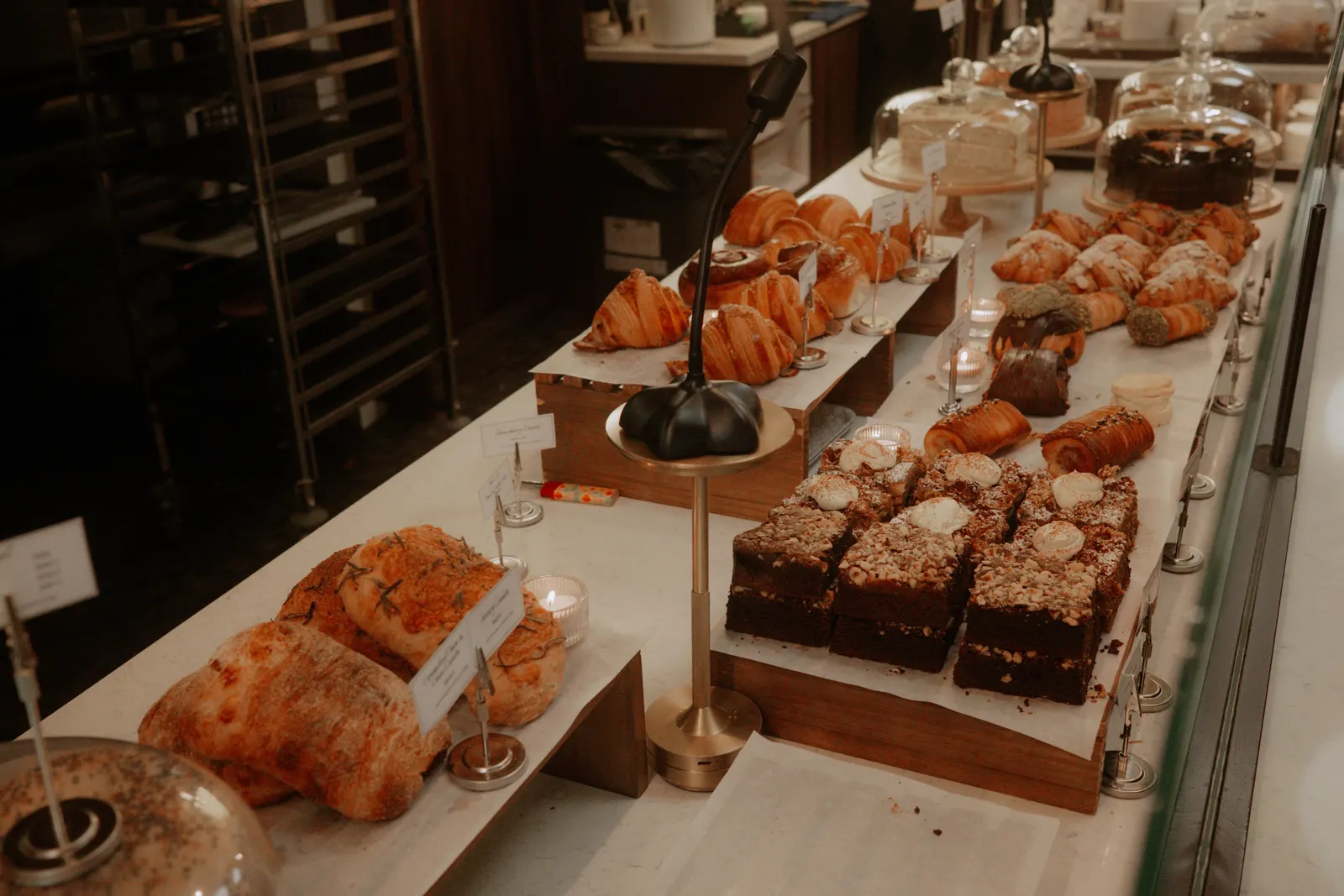
Mince pies, Christmas cake and Christmas pudding are the three sweet things of an Irish Christmas, and they are easy to mix up because all three are dark, spiced and full of dried fruit. A mince pie is a small pastry. A Christmas cake is a rich fruit cake, often iced. A Christmas pudding is a steamed pudding, served hot with sauce.
Below is what each one is, how they differ, why they are made weeks ahead, and how to choose a good one when you buy, order or eat out. It also covers the questions people ask in December: does mincemeat contain meat, why is the pudding set alight, and what can you eat if you avoid alcohol or nuts.
What is a mince pie, and does it contain meat?
A mince pie is a small sweet pie with a pastry lid, filled with mincemeat. Today mincemeat is a spiced mixture of dried fruit, nuts, apples, spices and a spirit, usually brandy. The pie once held real meat, including beef and mutton, and the name stayed after the recipe turned sweet. A fat such as suet is traditional in the mixture, though vegetable alternatives exist.
So the honest answer is: not usually meat in the sense of a joint, but often suet, which is beef fat. If you are vegetarian, that matters, and it is worth asking.
- The pastry. Usually shortcrust, thin and crisp, with a lid that may be a plain disc or a star.
- The filling. Sticky, sweet and spiced, with a hint of citrus and spirit.
- The way it is served. Warm, with cream, brandy butter or custard, or cold with a cup of tea.
A good mince pie has a thin, short pastry that breaks cleanly and a filling that is rich without being cloying. A poor one has a thick, doughy lid and a filling that tastes only of sugar.
Mince pies are the easiest of the three to try. They are small, they are often sold singly, and they sit happily beside a cup of tea in a cafe, so they make a low-risk way to find out which bakery or kitchen in your town takes Christmas baking seriously. If a pie is served warm, give it a minute, because the filling holds its heat much longer than the pastry.
Mince pies also have a place in the Irish Christmas Eve ritual. Children traditionally leave a mince pie and a drink for Santa, along with a carrot for Rudolph.
What is Irish Christmas cake?
An Irish Christmas cake is a dense fruit cake, packed with dried fruit that has been soaked in brandy, whiskey or sherry, then baked slowly and left to mature. It is often covered with a layer of marzipan and then icing, and decorated for the table. Along with the pudding and mince pies, it is one of the desserts of an Irish Christmas.
What sets a good cake apart is the texture. It should be moist, dark and sliceable without crumbling, with fruit that is plump, not hard. Some people like a plain cake with only a dusting of icing sugar, and some like a thick marzipan layer under hard white icing. Both are fine.
It also matters how the cake is cut. A cake that has matured for weeks is firm enough to slice thin, and a thin slice is the right size, because the cake is rich and a little goes a long way. In some homes it is the cake that appears when visitors call over Christmas, with a pot of tea and a plate of mince pies, so a good one earns its keep for days after the dinner is done.
Irish Central's Christmas cake recipe describes the habit of "feeding the cake": pouring a small amount of brandy, sherry or whiskey over it every week until Christmas, turning the cake each time. That is why a good Christmas cake is baked long before the day, and why it keeps so well.
What is Christmas pudding, and why is it set alight?
A Christmas pudding is a sweet boiled or steamed pudding made with dried fruit, suet, breadcrumbs, spices, dark sugar and treacle. It is almost black, very rich, and cooked for many hours. It has its origins in medieval England, and the recipes of the time used dried fruit, suet, breadcrumbs, flour, eggs and spice, moistened with milk or fortified wine. Modern recipes often use brandy or a dark beer such as stout or porter.
To serve, the pudding is steamed again until hot and may be dressed with warm brandy which is set alight. In Ireland, too, the pudding is sometimes served with brandy poured over it and set alight. The flame is theatre, not necessity, and decorating the top with a sprig of holly was a Victorian fashion. If you are eating out, ask whether the pudding is flamed.
Leftover pudding is not wasted. Cold slices keep well, and many people reheat a slice the next day. A pudding that tastes good the day after is usually one that was made well in the first place, so it is worth noticing when you eat one out.
The classic accompaniments are brandy butter, rum butter, cream, custard or ice cream. A spoonful of any of them makes a hot pudding easier to eat.
There is also a tradition of hiding silver coins in the mixture. It was once common to include small silver coins, kept by whoever found one in their serving, and believed to bring wealth in the coming year. Other tokens, such as a tiny wishbone or a thimble, were also used. If you find something hard in a homemade one, do not bite down.
What is the difference between Christmas pudding and Christmas cake?
The two are cousins, and people ask this every year. Here is the difference in plain terms.
- Christmas pudding is steamed, so it is soft and dense, and it is served hot with sauce at the end of Christmas dinner.
- Christmas cake is baked, so it has a firmer crumb, and it is served in slices, cold, with tea, over the Christmas days. It is often iced.
- Mince pies are small pies, eaten warm or cold through December, with tea or alongside a drink.
All three use dried fruit and spice, and all three keep for weeks. If you want one after a meal, choose the pudding. If you want one with tea in the afternoon, choose the cake or a mince pie.
When do Irish households make them?
Weeks before Christmas. The sweet things are made early so that the flavours can deepen, and in a lot of homes the making is a family event.
- Stir-up Sunday. It is the last Sunday before Advent, a name from a prayer that begins "Stir up", which became associated with making the Christmas pudding. Families took turns stirring the mixture and making a wish.
- Earlier. Recipes differ on timing, so follow the one you use and give the pudding the rest it asks for.
- Feeding the cake. The cake is fed with a little spirit each week, which is why it is made early.
- Mincemeat. One food writer's view is that mincemeat improves if stored for at least two weeks. The pies themselves are baked closer to the day.
There is also an Irish belief that it is unlucky to cut the Christmas pudding before Christmas Day. If you hear that at a family table, now you know it is a real tradition and not a joke.
How do you tell a good one when you buy or eat out?
You cannot taste before you buy, so use your eyes and your questions.
- Look at the colour. A pudding or cake should be dark and glossy. A pale, dry one has often been rushed.
- Ask who made it. A bakery that makes its own will usually say so with pride.
- Check the label for alcohol, nuts and suet if any of those matter to you.
- Ask when it was made. A cake or pudding made weeks ago is usually a better one.
- For mince pies, look at the pastry. It should be golden and thin, not pale or thick.
- Ask how to keep and reheat it. A cake keeps well wrapped in a tin, and a pudding is usually steamed again before serving, so ask how long it needs and whether it can go in a microwave.
In a restaurant, the Christmas pudding is often on the set menu as the final course, and a good kitchen will bring it hot, with a sauce on the side. Ask what comes with it.
Can you eat them if you avoid alcohol, gluten or nuts?
Sometimes, but not by assumption. Traditional recipes use alcohol, suet, wheat flour or breadcrumbs, dairy and often nuts, so each of these needs a question.
- Alcohol. Fruit is soaked in brandy, whiskey or sherry, and a pudding may be flamed. Cooking does not always remove it, so if you avoid alcohol for any reason, ask.
- Meat-free. Suet is beef fat. Vegetarian versions use vegetable suet, so ask.
- Gluten. Flour and breadcrumbs are normal. Gluten-free versions exist, but ask rather than assume.
- Nuts. Mincemeat and Christmas cake often contain nuts, and marzipan is made from almonds.
On Mosey, the "Hide dishes that list" filter narrows dishes by the allergens a place has declared. A dish with nothing listed means its allergens are not listed, not that it is free of them, so always ask the place. For drink-free tables, the Non-Alcoholic Options tag also helps with the drinks side of a Christmas meal.
How does the Christmas food countdown connect to all this?
The Mosey Christmas food countdown has a new door each day with a question about Christmas food from around the world, three answers and a short fact. Door 1 opens on 12 November, the last on Christmas Day, and you can catch up on missed doors until 6 January. It is for people aged 18 and over. It is a nice way to learn that your family's pudding has cousins across the world. Our guide to the Christmas food countdown explains how it works.
How do you find a good Christmas sweet thing near you?
Christmas baking can sell out, so look in November rather than the week before. A cake or pudding that has to mature cannot be made in a hurry, so if you order late, it is fair to ask when it was made. Plan the sweet things as you plan the dinner: decide who is bringing what, and write it down.
- Rate and read by the dish. On Mosey you rate by the dish with photographs, so a picture of a mince pie or a slice of cake from someone who ordered it tells you more than a menu line. Add a tag when you rate.
- Save a list. Keep the bakeries and cafés you like in a list, and send each friend their own invite link, because one link works once, for one person.
- Order ahead where it is offered. Where a bakery or café offers ordering ahead on Mosey, you can choose a collection time. See how ordering ahead works.
- Check the ranked lists. The ranked lists are earned from ratings alone, and nobody pays to rank.
Rating tells the next person something too. When you rate a mince pie or a slice of Christmas cake, say in your note whether the pastry was crisp, whether the fruit was plump and whether it came warm, because those small details are what a stranger is trying to guess from a photograph. Tag the occasion when it fits, for example Celebration or Family Friendly, so the dish turns up for the people looking for it.
When you are eating out at Christmas rather than baking at home, our guide to the Irish Christmas dinner, course by course shows what comes before the pudding.
Where do you start?
Pick one of the three. If you want something to eat tonight, a mince pie with tea. If you want something to give, a Christmas cake. If you want the full dinner, the pudding with brandy butter. Rate it by the dish and add a tag when you do.
You will find more in the food guides, and the ranked lists are there when you want to see what people rate.
Questions
Common questions
What is the difference between Christmas pudding and Christmas cake?
Christmas pudding is steamed, soft and dense, and served hot with sauce after dinner. Christmas cake is baked, firmer, often covered with marzipan and icing, and eaten in slices with tea. Both are rich with dried fruit and spice. On Mosey you can rate either by the dish.
Do mince pies have meat in them?
Today mincemeat is a mix of dried fruit, nuts, apples, spices and a spirit, usually brandy. It traditionally includes suet, which is beef fat, though vegetable suet is common. Old recipes did contain meat. If you are vegetarian, ask whether the pie is made with vegetable suet.
When do you make Christmas cake and pudding in Ireland?
Weeks ahead. Stir-up Sunday, the last Sunday before Advent, is the traditional day for mixing the pudding, and recipes differ on how far ahead to make it. The cake is baked early and fed with a little brandy, sherry or whiskey each week until Christmas.
What is "feeding" a Christmas cake?
It means pouring a small amount of brandy, sherry or whiskey over the cake each week until Christmas, turning it as you go, so the cake stays moist and its flavour deepens. It is why a Christmas cake is baked long before the day.
Why is Christmas pudding set on fire?
To bring it to the table with a flourish. The hot pudding is dressed with warm brandy, which is set alight, and a sprig of holly is added on top. It is tradition, not necessity, so ask a restaurant whether it is flamed.
What do you serve with Christmas pudding in Ireland?
Brandy butter, rum butter, cream, custard or ice cream are the usual choices. A trifle, mince pies or a slice of Christmas cake may share the dessert table. Sauces differ by household, so in a restaurant ask what comes with the pudding.
Can I eat Christmas pudding if I avoid alcohol, gluten or nuts?
Not by assumption. Traditional pudding contains suet, flour or breadcrumbs, and often brandy or stout. Mince pies and cake may contain nuts. On Mosey, "Hide dishes that list" narrows by declared allergens, but a dish with nothing listed is not a guarantee, so ask the place.
What is the Christmas food countdown on Mosey?
A free daily quiz with one door a day of Christmas food questions from around the world. Door 1 opens on 12 November and the last on Christmas Day, with catch-up until 6 January. It is for people aged 18 and over, and each door shows a short fact after you answer.
More like this
Read next
Irish lamb and Irish beef on a menu: cuts and words
Which words on an Irish menu are protected, which are only description, the cuts of beef and lamb you will meet, and how to order a steak the way you like it.
Dublin Bay prawns and Irish shellfish: a menu guide
Dublin Bay prawns are langoustines, small pink lobsters eaten for the tail. How to read them on an Irish menu, eat one whole and ask the right questions.
Irish brown bread and the Irish scone, done properly
Irish brown bread is a dense wholemeal loaf and the Irish scone is a light, quick bake. What goes in them, how to judge them and what to eat them with.
Irish smoked salmon: how to order it and what makes it good
Irish smoked salmon is usually farmed Atlantic salmon, cured and smoked. How to order it, what to look for on the plate and what to eat it with.