
Food culture
The Irish Christmas dinner, course by course, and how to eat it out
Mosey · 22 November 2026 · 10 min read
Last updated 22 November 2026
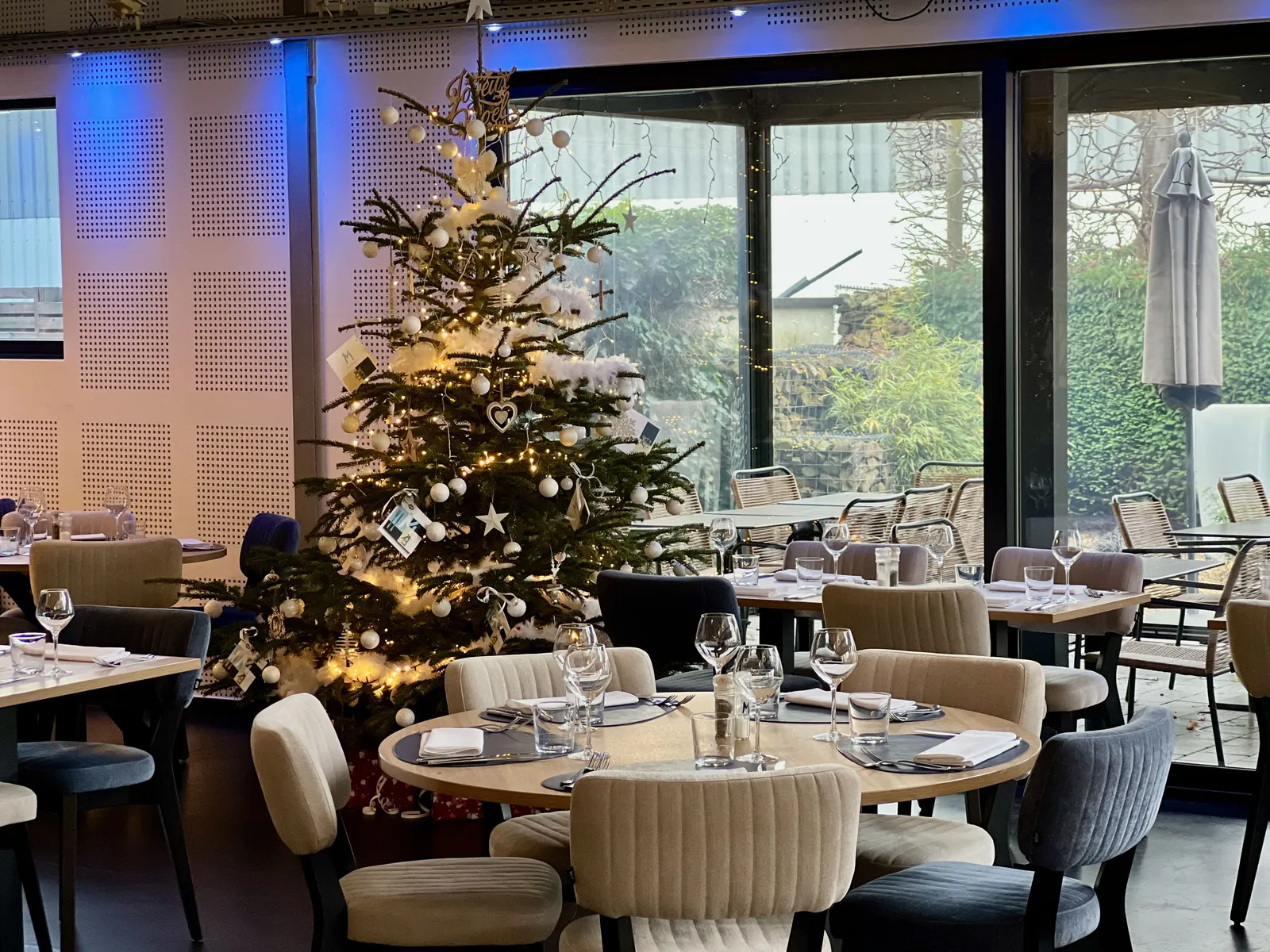
An Irish Christmas dinner is roast turkey and glazed ham with stuffing, gravy, roast and mashed potatoes and a pile of vegetables, followed by Christmas pudding. Spiced beef is often eaten cold at Christmas or the New Year, and a trifle or Christmas cake rounds things off. In a restaurant the same plate arrives as a set menu, so the skill is knowing what you are being offered.
This guide walks through the dinner course by course, explains what each part is and why it is there, and then turns to eating it out: how to read a set menu, what to ask, how to cope with allergies and meat-free diets, and what to do with the leftovers. It is about the food. For booking, deposits and timing, see our guide to eating out at Christmas in Ireland.
What is on a traditional Irish Christmas dinner?
The plate has a fixed shape that almost everyone in Ireland would recognise, even though every family argues about the details.
- Turkey. The centrepiece. Cooking a turkey is a more modern, imported tradition in Ireland.
- Ham. Glazed and sliced, sitting beside the turkey rather than instead of it. Older Irish Christmas dinners were built around roast goose and ham, and beef was the most popular Christmas meat in Ulster until into the 20th century.
- Stuffing. Often sage and onion, or one with sausagemeat or chestnut.
- Potatoes, twice. A Christmas plate with only one kind of potato looks unfinished. Roast and mashed usually share it.
- Vegetables. Sprouts, carrots and parsnips are the usual cast, cooked until sweet and often finished with butter.
- Gravy, cranberry and sometimes bread sauce. Bread sauce is a warm sauce of milk thickened with breadcrumbs, normally served with roast turkey or chicken. An Irish guide to the traditional feast pairs it with hot turkey, but not every table has it, so do not be surprised if a restaurant leaves it off.
Spiced beef sits just outside the plate. It remains a traditional Christmas or New Year dish in Ireland, a salt beef cured with spices, then boiled or braised, often in stout, and served cold in thin slices.
What comes before the turkey?
In many homes, nothing formal: the dinner is the dinner. In a restaurant, a starter or soup comes first, and a few dishes from the Irish table tend to appear.
- Spiced beef. Thin cold slices, often with a salad, chutney or brown bread. An Irish guide to a traditional Christmas feast lists it as a starter or as bites, so a restaurant serving it first is following the table.
- A soup. Often a vegetable or root vegetable soup with bread. It is a gentle opening to a heavy meal.
- Smoked fish or prawn cocktail. Common on set menus, and a sensible choice when you know the main course will be rich.
- A pâté or terrine with chutney and toast.
If you want to finish the whole meal, treat the starter as a warm-up, not a first main course. Christmas portions are generous, and the pudding is still to come.
How is the turkey served, and what goes with it?
The turkey is the part a kitchen can get most wrong and most right. A good one is moist, carved thick enough to hold its shape, and served with enough gravy that you do not need to ask.
Some things to look for on the plate:
- A mix of white and dark meat. Breast is the safe slice, thigh is the flavour. A carvery plate often offers both.
- Gravy made from the bird. Gravy that tastes of roast turkey is a sign someone cooked it from the juices, not from a packet.
- Stuffing that is moist, not dry. Traditionally it was prepared the night before, though the Ireland Guide notes that health advice now says the stuffing should go into the bird on the morning itself. A restaurant may bake it separately for that reason, and that is fine.
- Ham with a glaze. A thin sweet crust over salty meat is the point.
A glossy, tender ham next to a dry turkey is a familiar kitchen problem, because a bird that size cooks slowly and a ham does not. If the turkey is dry, ask for more gravy and cranberry, and move on without fuss.
It also helps to know the two ways a Christmas dinner reaches the table. At a plated dinner the kitchen decides the portions and everything arrives together. At a carvery or a family-style table the meat is carved in front of you or brought out to share, and you take what you like. Neither is better, but the second suits a mixed group where appetites differ, and it is worth asking which one a set menu is before you book.
What are the trimmings, and which ones matter?
People talk about "all the trimmings" as a single idea. In practice a few matter more than the rest.
- Roast potatoes. Crisp outside, soft in the middle. A kitchen that gets these right usually gets the rest right.
- Mashed potato or sometimes a creamed or champ-style mash.
- Sprouts. Polarising, and cooked well they are sweet and a little nutty. Some places add bacon or chestnuts.
- Carrots and parsnips, often roasted or glazed.
- Cranberry sauce. Tart and sweet, and the right foil for turkey and ham.
Our guide to bacon and cabbage covers the everyday cousin of the Christmas ham, which is worth reading if you want to see the same salty-and-sweet idea on an ordinary Sunday.
What comes after the main course?
Dessert at an Irish Christmas often arrives as a spread of several dishes rather than a single plate. Christmas pudding is a traditional choice, sometimes served with brandy poured over it and set alight. Alongside it you may find a trifle, a Christmas cake in slices, a yule log or a tray of mince pies.
In a restaurant you usually get one or two of these, often with brandy butter, cream or custard. Choose the pudding if you want the full Irish plate, and a lighter dessert if the main course has already filled you. Our guide to Irish mince pies, Christmas cake and pudding explains each of these sweet things, how to tell a good one and when people make them.
How do you read a Christmas set menu?
Many restaurants in December replace the everyday menu with a set menu: a fixed run of courses with a small choice at each. That is good for the kitchen and often good for you, but it asks for a slightly different kind of reading.
- Look at the choices in each course, not just the headline. A set menu with one rich main and one vegetarian option is thinner than it sounds.
- Check what is on the plate. "Turkey with all the trimmings" should list the ham, the stuffing and the potatoes, and it is fair to ask.
- Ask about the pudding. Some kitchens make it, some buy it in, and a few serve a different dessert altogether. That is not wrong, but know before you order.
- Check what the price includes. A glass of something, tea and coffee and a mince pie can all be part of it, or all extra. Ask when you book, not when the bill arrives.
- Ask for a children's option if you have small guests. A smaller plate of the same dinner is often easy to arrange.
Set menus can run for the whole of December, so the same plate may be on offer on a quiet Tuesday and on the busiest Friday. If you have a choice, a weekday is calmer and the kitchen has more time for each plate.
How do you eat a Christmas dinner out with an allergy or a meat-free diet?
A Christmas menu is built around turkey, ham, suet and butter, so it needs a little planning if you cannot or do not eat them.
- Tell the place when you book, and again when you sit down. A kitchen with notice does a better job than one that learns at the table.
- Ask what is in the gravy, the stuffing and the pudding. Gravy and stuffing can contain gluten, and a traditional pudding is made with suet, so it is not vegetarian unless the place says it is.
- Ask about the alternative. A vegetarian main is often a nut roast, a tart or a risotto. Ask what it is rather than guessing, and whether it comes with the same trimmings.
- Remember the mince pies and the pudding. Both may carry nuts, gluten, dairy and alcohol. If that matters, ask.
On Mosey, "Hide dishes that list" filters dishes by the allergens a place has declared for them. A dish with nothing listed means its allergens are not listed, not that it is safe, so ask the place. Treat the filter as a way to narrow the choice, and the conversation as the safety check.
What do you do with the leftovers?
This is where the Irish Christmas dinner really lives on. Turkey and ham do not get finished on the day, and the second day, St Stephen's Day, is a public holiday when many people eat cold meat, potatoes and the last of the trimmings. The classic result is a turkey and ham sandwich with stuffing, cranberry and a smear of gravy or mayonnaise, on soft white bread or a crusty roll.
If you are eating out on or around St Stephen's Day, you may find a sandwich or a toasted version on a menu, or a bowl of soup. It is a good day to try a place that does simple food well, and a good day to be glad you did not cook.
The cold plate has its own logic. Cold turkey and ham are at their best with something sharp beside them, which is why pickles, chutney and mustard suit the second day. If a menu offers a cold platter, or a hot sandwich with the trimmings inside, that is the Irish second-day dinner in another form.
Mosey runs a Christmas sandwich vote in Ireland and the UK. In the app you name up to three places for your favourite Christmas sandwich, ranked, and there are boards for your town, your province and Ireland. Voting closes at the end of 23 December, and the results appear on 24 and 25 December. It is a pleasant way to compare notes with friends before the leftovers begin.
How do you pick a place that does Christmas dinner well?
A restaurant's Christmas menu is often not on its usual menu, so the usual cues are less reliable. A few habits help.
- Look at the dishes people have rated. On Mosey you rate by the dish, with photographs. A photograph of a plate of turkey and ham tells you more than a description.
- Use the tags. People add tags when they rate, and Family Friendly, Celebration and Group Dining are among them. They are a person's own opinion, so read them as a pointer and then check the menu.
- Follow people whose taste you trust. Their picks show on your map as Friends' picks, which is quicker than asking in a group chat.
- Save the shortlist. Put the places you like in a list and send each friend their own invite link, because one link works once, for one person. Our guide to making and sharing a list of places shows how.
- Book early. Where a place takes bookings on Mosey you can book a table, and where it offers a waitlist you can join it if your date is full. Some places ask for a deposit on larger tables, so read the terms.
For a work meal, our guide to organising a work Christmas meal for a group covers the group side. For the food at a market stall rather than a table, see Christmas markets in Ireland.
Where do you start?
Open Mosey, look at the photographs of Christmas plates near you, narrow them with a tag or the allergen filter if you need to, and save the places you like to a list. Rate the dinner when you have eaten it, dish by dish, so the next person at the next table has something to go on.
You will find more in the food guides, and the ranked lists show what people rate across the country. If you want to play with Christmas food before the day, the Christmas food countdown has a new question every day.
Questions
Common questions
What is a traditional Irish Christmas dinner?
Roast turkey and glazed ham with stuffing, gravy, roast and mashed potatoes, sprouts, carrots and parsnips, followed by Christmas pudding. Spiced beef is a traditional Christmas or New Year dish, and older tables were built around goose and ham. On Mosey you can look at photographs of Christmas plates before you choose.
What do the Irish eat for Christmas dinner?
Mostly turkey and ham with all the trimmings: stuffing, two kinds of potato, vegetables, gravy and cranberry sauce. Dessert is often pudding with brandy butter or cream, sometimes beside a trifle or Christmas cake. Spiced beef is often eaten cold at Christmas.
What is spiced beef, and when is it eaten?
Spiced beef is salt beef cured with spices, then boiled or braised, often in stout, and served cold in thin slices. It remains a traditional Christmas or New Year dish in Ireland, and it is often a cold starter. Some restaurants offer it as a starter in December.
Is turkey a traditional Irish Christmas meat?
Turkey is a more modern, imported tradition in Ireland. Older Christmas dinners centred on roast goose and ham, and beef was long popular in parts of Ulster. Today turkey and ham are the usual pair, and many set menus in December are built around them.
Can I eat a Christmas dinner out if I am vegetarian or have an allergy?
Usually, with notice. Tell the place when you book and ask what is in the gravy, stuffing and pudding, as traditional pudding contains suet. On Mosey, "Hide dishes that list" filters by declared allergens, but a dish with nothing listed is not a guarantee, so always ask the place.
What should I look for on a Christmas set menu?
Look at the choice in each course, what the turkey plate includes, what the price covers and whether there is a proper vegetarian main. Ask whether the pudding is made in house. Book early, because set menus run through December and the busy days go first.
What do you eat on St Stephen's Day in Ireland?
Leftovers, mostly: cold turkey and ham, potatoes and a sandwich with stuffing and cranberry. St Stephen's Day is a public holiday, and some places serve simpler food that day, so check the hours. Mosey's Christmas sandwich vote lets you rank up to three places for a Christmas sandwich in Ireland.
How do I find a good Christmas dinner near me?
Look at ratings and photographs of the dish on Mosey, use tags such as Family Friendly or Celebration, follow friends to see their picks on your map, and save a shortlist to a list. Where a place takes bookings on Mosey you can book a table and join the waitlist if it is full.
More like this
Read next
Where to eat near the Cliffs of Moher and the Burren
Eating near the Cliffs of Moher and the Burren: which villages to look in, what local Burren food is, pub meals in Doolin and how to plan a meal around the cliffs.
Aran Islands food: what to eat on Inis Mór, Inis Meáin and Inis Oírr
Aran Islands food is simple and local: shellfish, seaweed, brown bread and baking. What to eat on Inis Mór, Inis Meáin and Inis Oírr, and how to plan a meal on a day trip.
Glendalough and the Wicklow Mountains: food before and after a walk
Food near Glendalough is found in Laragh, Roundwood and Rathdrum. What to eat before and after a walk in the Wicklow Mountains, and how to plan it.
Limerick and Royal Canal greenways: food stops for cyclists
Food on the Limerick Greenway and the Royal Canal Greenway is found in the towns along the way. Which towns to stop in, what to order and how to plan the stop.