
For businesses
How to keep good staff through the quiet season
Mosey · 15 November 2026 · 7 min read

To keep good staff through the quiet season, plan it before it arrives: know which weeks will be slow, tell your team early what their hours will look like, protect the hours of the people you most want to keep, and use offers and events to bring trade into the quietest shifts. The staff you lose in January are rarely the ones you would choose to lose. They are the ones with the most options.
What happens to your team when hours drop?
The rota shrinks, and everyone feels it. People on hourly pay lose income at the time of year when bills are high. Some pick up a second job, and once they have one, your shifts come second. Others start looking for something steadier, and a good cook or barista finds it quickly.
The damage outlasts the quiet weeks. By the time trade comes back, you are hiring and training new people in the busiest part of the year, and the regulars notice the new faces and the slower service.
It does not have to go that way. Most of what makes people leave in the quiet season is uncertainty, not the dip itself. People can plan around fewer hours. They cannot plan around not knowing.
When do you start planning for the quiet season?
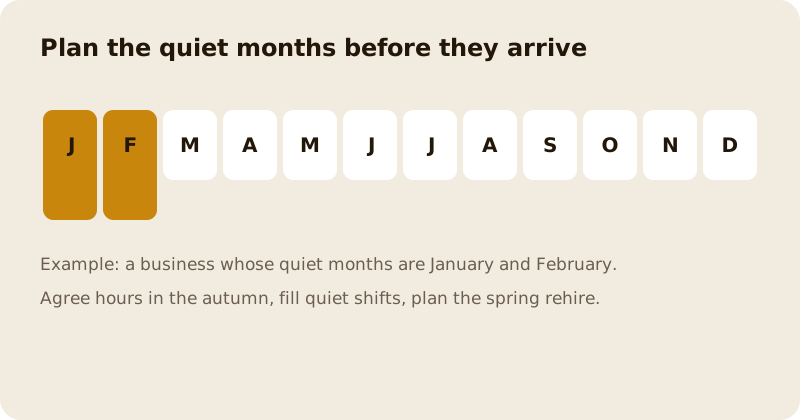
In the autumn. Look at last year's sales and bookings week by week and mark the weeks that were quiet. Your own figures are a better guide than any general rule, because a seaside café, a city-centre lunch spot and a neighbourhood restaurant have different quiet months. The seasons guide walks through the Irish year for a food business.
Then work out the staff hours you can afford in those weeks, and compare them with what your team need. That gap is the problem you are solving.
How do you keep hours steady when trade dips?
Share the reduction fairly, and say so, and decide first whose hours you must protect: the people whose skills you cannot replace quickly, and the people who rely on the job for their rent. If hours must drop, it is usually better for everyone to lose a little than for two people to lose everything. Some will prefer fewer days and some will want a few weeks off; ask before you decide.
Use the quiet weeks for work that the busy weeks never allow: deep cleaning, a menu change, recipe testing, re-costing, stock rotation, maintenance, training. Those hours are worth paying for, and they keep people on the rota.
Book holidays into the quiet weeks. Encourage staff to take their annual leave then, and plan it with them in the autumn, so the busy months are fully staffed.
Look at your opening hours too. Closing one quiet day a week, or shortening the hours on the slowest evenings, can protect more hours on the days that pay than staying open to an empty room. Tell your regulars clearly and early, so nobody arrives to a locked door.
If you are thinking about shorter hours or a temporary lay-off, there are rules on notice and on what staff are owed. Check the current rule with the Workplace Relations Commission before you decide.
How do you fill the quietest shifts?
The best way to protect hours is to protect trade. Find the windows that are quietest, often a weekday afternoon or the early evening, and give people a reason to come in then. A discount on chosen dishes in that window brings in people who would not otherwise come, without discounting the busy nights.
Events help too. A tasting night, a supper club or a class on a quiet Tuesday puts a sure number of people in the room and gives the team something to look forward to. Ask your team to run one: a chef's tasting menu or a barista's coffee morning is a chance for them to shine as well as a night of trade. The slow days guide has more ways to fill them.
How do you tell staff about reduced hours?
Early, plainly and in person. Tell the whole team in the autumn what the quiet weeks will look like and what you are doing about it. Then talk to each person about their own hours, what they need and what they would prefer.
Be honest about what you do not know. "Bookings for January are lighter than last year, so I can promise these hours and will add more if they pick up" is better than a vague reassurance that turns out wrong.
Explain the plan as well as the hours: the offers you are running, the events on the calendar, the menu change for February. People are more willing to ride out a quiet month when they can see you working to fill it, and some of your team will have ideas of their own.
Put the hours on the rota as early as you can, and keep to them once they are up. Uncertainty is what makes people start looking, and a promise kept in January is remembered in July.
How do you keep the people who want to come back in spring?
Some people will leave for the winter whatever you do: students, seasonal workers, people who travel. Treat them as people you want back. Before they go, ask if they would like to return, agree a rough date, and keep their details.
Keep in touch through the winter with a short message: the new menu, the opening date for the terrace, a staff night. Then offer the spring shifts to them first, before you advertise. Someone who knows your kitchen is worth far more than a new hire in the first busy week.
Invite them to the staff meal or a training day before the season opens. A returner who has tasted the new menu and seen the changes to the kitchen walks into the first busy Saturday ready, rather than catching up on the job. And ask them who else they know: good seasonal staff tend to know other good seasonal staff.
How do you use the quiet weeks to train the team?
The quiet season is the best time of year to teach. In a busy month nobody has time to learn the grill, the wine list or a new coffee. In a slow week, they do, and the hours are paid for something that makes the next busy season easier.
Pick one skill for each person and plan it with them: a commis learns a new section, a server learns the wine list, a barista learns to train the next new starter. Put the training shifts on the rota so they count as real hours.
Training in the quiet weeks is also a reason to stay. Someone who knows they will spend January learning something new is less likely to spend January looking for a new job. The career paths guide shows how those skills add up to a next role.
How does Mosey help you through the quiet season?
Mosey Deal Hours puts a lower price on the dishes you choose, in the windows you choose, on the days you choose, and switches itself on and off. Point it at your quietest shifts and you bring in trade without discounting the busy nights; the Deal Hours guide explains how to set one up. Tickets for an event on a quiet night go through Mosey too, so the money is in before the night.
Your rota, leave and timesheets sit in the same login, so you can plan the quiet weeks, book holidays into them and see each person's hours as you go. When someone leaves for the winter, the record of their role and dates stays on your account. When you need to hire for spring, posting a role on Mosey Jobs is free. See pricing for the rest.
Where should you start?
This week, mark last year's quiet weeks and work out the hours you can offer. Then talk to your team before the season turns. When you want Deal Hours, events, the rota and your staff records in one login, Host on Mosey free. The guide to keeping staff covers what keeps people with you the rest of the year.
More in the guides for food businesses.
This guide is general information, not legal, tax or financial advice. Rules change and depend on your business and where it is, so check the current rule with the official body named in the guide and take advice from a solicitor or accountant in your area before you act.
Questions
Common questions
How do restaurants keep staff in the off season?
Plan the quiet weeks in the autumn, tell staff early what their hours will be, share any reduction fairly, use the quiet weeks for training and deep work, and bring in trade with offers and events on the quietest shifts.
Should I cut everyone's hours or let some staff go in winter?
Ask your team first. Some prefer fewer days, some want weeks off. Sharing a smaller cut fairly often keeps more good people than cutting two people completely. Check the current rule with the Workplace Relations Commission first.
What can staff do in a quiet week?
Deep cleaning, recipe testing, a menu change, re-costing dishes, stock rotation, maintenance and training. Those jobs never fit into a busy week, and paying for them keeps people on the rota.
How do I get seasonal staff to come back next year?
Ask before they leave whether they want to return, agree a rough date, keep in touch through the winter and offer them the spring shifts before you advertise. Someone who knows your kitchen saves weeks of training.
How can Mosey help fill quiet shifts?
Deal Hours puts a lower price on the dishes you choose in the windows you choose and switches itself on and off, and you can sell tickets for an event on a quiet night, so trade comes in when you need it.
More like this
Read next
A hotel restaurant that locals use too
A hotel dining room earns local trade when it acts like a restaurant of its own. Here is why locals stay away, how to set the dining room up on Mosey beside your hotel, and which offers fill it.
An alcohol-free drinks menu that still makes margin
More guests are drinking less, in January and the rest of the year. Here is how to cost, price, name and sell an alcohol-free menu so it earns as well as the wine list, with the Irish VAT and offer rules checked.
A pub that does food: making the kitchen pay
A pub kitchen pays when its gross profit covers its own wages and running costs. Here is how to count it, which services to fill, what the alcohol rules say and how Mosey fits.
Auto-enrolment pension for Irish restaurants and cafés: what you pay and do
Since 1 January 2026 an Irish employer matches the pension contribution of each eligible employee. Here is who counts, what it costs on a wage bill, the payroll steps and what staff can opt out of.
Get started
Host your business on Mosey. It is free to claim.
Free to list, no set-up fee, and Order Ahead is 1.5% commission when you start taking orders.