
Food culture
How to choose a restaurant that suits everyone in a group
Mosey · 23 October 2026 · 5 min read
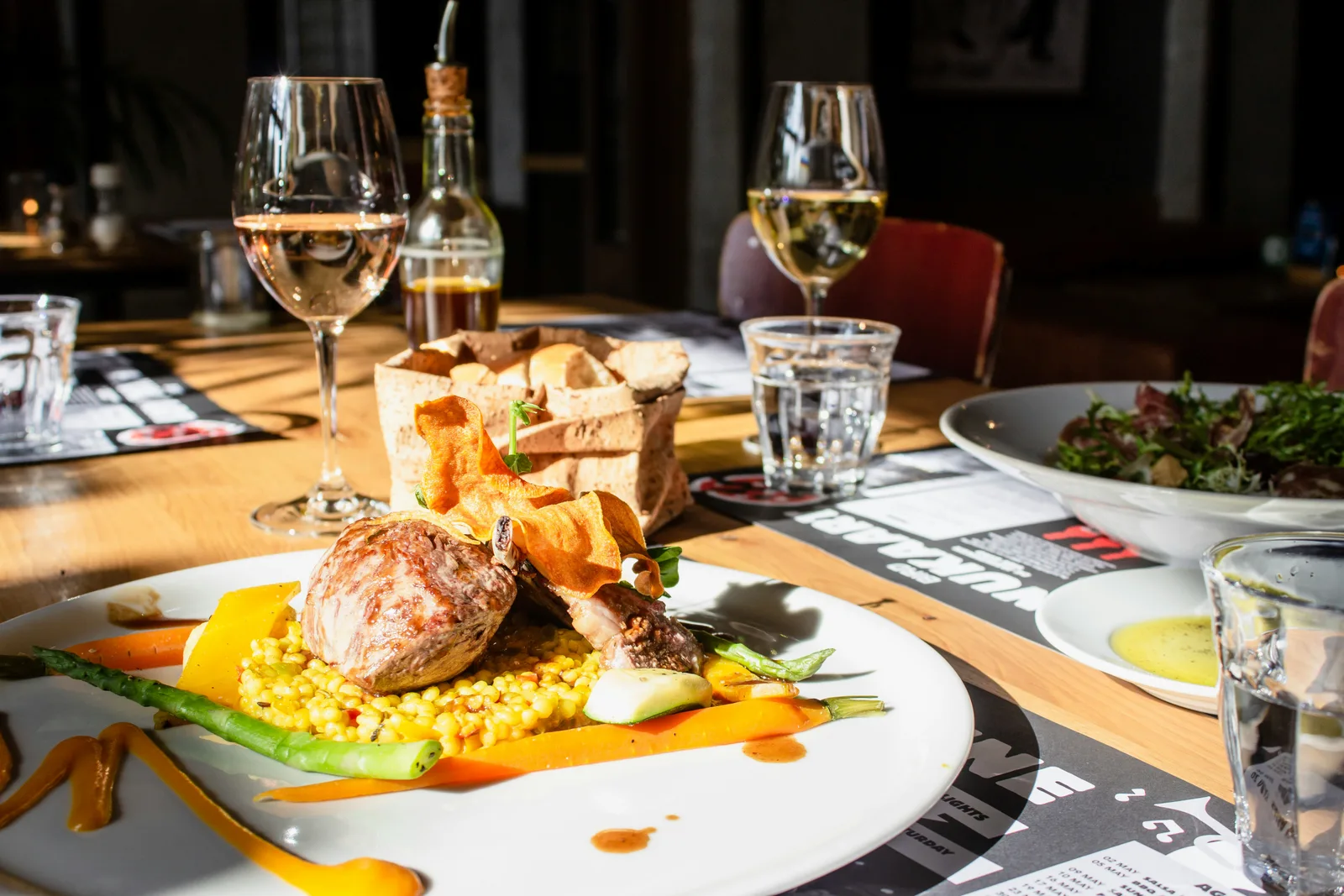
To choose a place that suits a whole group, collect the things nobody can bend on first (allergies, dietary needs, budget, access and children), then shortlist two or three places that pass all of them, and only then let people argue about taste. A place with a broad menu usually beats a specialist, a clear price range beats a surprise, and a shared shortlist that everybody can add to settles it far faster than a group chat.
Most group dinners go wrong not because the place was bad but because it was wrong for one person: the coeliac friend with nothing to eat, the person quietly worried about the bill, the parent with a buggy and three steps at the door. Get those right and the rest takes care of itself.
Step one: ask the questions nobody volunteers
People rarely announce their constraints in a group. Ask, ideally privately, before you suggest anywhere.
- Allergies and intolerances. Ask specifically. "Any allergies?" gets a different answer from "Anyone coeliac, or allergic to nuts or shellfish?"
- Dietary choices. Vegetarian, vegan, halal, no pork, no alcohol.
- Budget. The single most awkward question and the most important. Ask privately, or set a rough figure yourself and let people say if it is too much.
- Access. Step-free entry, an accessible toilet, a chair rather than a stool, space for a wheelchair or a buggy.
- Children. Ages, high chairs, whether they will need to eat early.
- Time and place. Who is coming from where, and who has to leave by when.
Write the answers down. They are your shortlist filter.
Step two: choose range over a specialist
The more people there are, the more a broad menu matters. A specialist (a sushi counter, a steakhouse, a tasting menu) can be the best meal in town and still leave one person with nothing they want.
What suits a mixed group:
- A menu with several naturally vegetarian dishes, not a single token one.
- Dishes that can be adapted. A kitchen that is used to leaving off a sauce or swapping a side handles a group easily.
- A clear price range on the menu. People relax when they can see what things cost.
- Some sharing plates. They let a group try a lot and take the pressure off individual choices.
- A room that can actually take your number without splitting you across two tables.
If the group really is divided, a food market, a food hall or a food trail can solve it outright: several kitchens, everybody gets something they wanted, and nobody has to compromise on one menu.
How to find places that suit a mixed group
The fastest shortcut is to start from places other people have already judged on the same thing. On Mosey, people tag their ratings with what a place is good for, and pages gather the places most often tagged that way. In Dublin, the group dining page is the natural starting point, alongside pages for family-friendly, vegetarian and great-value places.
Then check each candidate properly:
- Look at the photographs of the food. You can see portion sizes, whether vegetarian dishes look like an afterthought, and roughly what the room is like.
- Read the menu with your list in hand. Does every person have at least two things they would genuinely order?
- Check the prices. Does a typical starter and main fit the budget you set?
- Ask the place about anything you cannot see. Step-free access, high chairs, how they handle allergies for a large table.
Settle it with a shared list, not a group chat
The group-chat method (somebody suggests a place, three people react, one person goes quiet, nothing is booked) is how a dinner for eight takes a fortnight to organise.
A shared list works better. On Mosey you can make a list and invite people to add to it: everybody adds one or two places that pass the constraints, and you choose from the shortlist. A shared list opens for anybody with the link, without an account, so the friend who never downloads anything can still look. The lists page explains how it works.
Give it a deadline. "Add anything by Wednesday and I will book Thursday" turns a discussion into a decision.
Booking for a group
Book as early as you can, and give the place everything you collected in step one.
- Give honest numbers. "Probably eight, no more than ten" helps a place far more than a number that changes three times.
- Add allergies to the booking. On Mosey you can mark any of the 14 declared allergens when you book, so the kitchen knows before you arrive.
- Expect a deposit for a large table. It comes off the bill. Agree in advance who is paying it, or split it.
- Ask about set menus. For bigger groups, many places offer one. It speeds up service, fixes the price per head and makes budgets easy, but check it covers everybody's needs.
For a birthday, a party or anything needing a room to itself, a group request lets the place plan with you; planning a group celebration covers it, including a single link where every guest enters their own allergies.
Sorting out the bill before it arrives
Money is where good group dinners turn sour. Settle the approach before anybody orders:
- Split evenly suits groups who order similarly and drink similarly.
- Pay for what you had suits mixed budgets, non-drinkers and anybody who came for one course.
- Tell the server at the start if you will want separate bills, rather than at the end.
Where money changes hands before the meal, for a group order or a group deposit, splitting the bill on Mosey explains how each person pays their own share from their own card, so nobody is left fronting it.
When it is mostly children
A family table has its own rules: eat early, pick somewhere that is relaxed about noise and mess, check for high chairs and a children's menu or smaller portions, and sit near the door or the toilets rather than in the middle of the room. The best family places are often the ones with plenty of room between tables rather than the ones with crayons.
Start a shared list for the next group dinner, send the link, and give everybody until the end of the week.
Questions
Common questions
How do I choose a restaurant when everyone wants something different?
Filter out places that fail anybody's allergies, diet, budget or access needs first, then choose somewhere with a broad menu or several kitchens, such as a food market, rather than a specialist.
How do I ask about budget without it being awkward?
Ask privately, or suggest a rough figure yourself and let people say if it is too much. Most people are relieved to be asked.
What kind of restaurant suits a group with vegetarians and meat eaters?
One with several naturally vegetarian dishes rather than a single token option, and ideally some sharing plates so everybody tries a range.
Should a group book a set menu?
For a large group it often helps: service is faster and the price per head is fixed. Check that it covers everybody's dietary needs before agreeing.
How can a group decide quickly where to eat?
Make a shared list, let everybody add one or two places that fit the constraints, and set a deadline for booking.
Do restaurants ask for deposits for groups?
Many do for large tables, especially on busy nights. A deposit comes off the bill, and on Mosey a group can split it so one person is not left covering everyone.
How do I make sure the kitchen knows about allergies in a group?
Add them to the booking. On Mosey you can mark any of the 14 declared allergens, and for a larger celebration each guest can enter their own through one shared link.
More like this
Read next
Autumn eating in Ireland: what to look for on a menu
An autumn menu shows when a kitchen is paying attention. Here is what to look for, what to ask and which dishes suit the cooler months.
Barmbrack and Halloween food in Ireland
Barmbrack is a fruit loaf often eaten around Halloween. Here is what is in it, how to judge a loaf and what else turns up on the table.
Early bird menus explained
An early bird menu is a set offer for early diners. Here is what it usually means, how to check the terms and when it makes sense.
Eating in an Irish pub: a practical guide
Pub food works a little differently from a restaurant. Here is how ordering, seating and paying usually work, and how to choose a good one.
