
For businesses
Using app notifications to fill slow seats: what to send and when
Mosey · 27 August 2026 · 7 min read
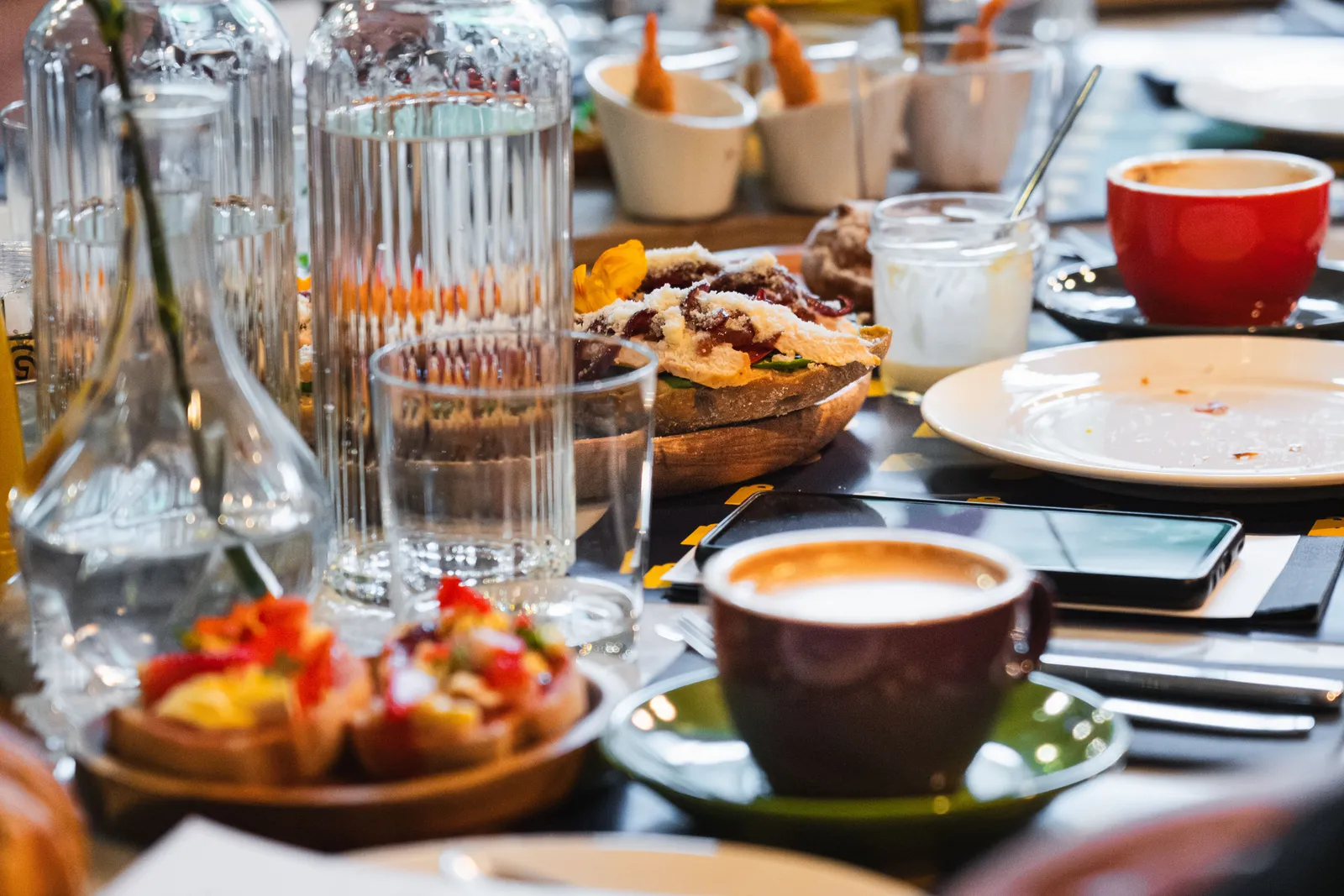
App notifications fill slow seats because they reach people who already chose to hear from you, on their phone, on the day you have the space. Send them sparingly, close to the service you need to fill, with one specific reason to come in, and automate the routine ones (a regular who has gone quiet, a follow-up after an order) so they go out without anyone remembering. Done that way, a quiet Tuesday is something you can act on at eleven in the morning rather than something you notice at nine at night.
What an empty seat actually costs you
A seat is perishable. A table empty at Tuesday lunch cannot be sold on Wednesday. Meanwhile the rent, the staff on shift, the heat and the lights cost the same whether five tables are full or twenty-five.
Work out your own number rather than borrowing one. Take your fixed costs for a month (rent, insurance, base wages, utilities, finance) and divide by the hours you are open. That is what every open hour costs before anyone orders. Then look at what a typical table spends and what it costs you to cook. The gap between the two is what a filled table is worth, and it is usually more than owners expect for a quiet slot, because the staff and the heating were paid for anyway.
That figure tells you how much you can sensibly spend, or give away, to fill a seat.
Why posting and advertising struggle to fill a quiet service
The usual tools are built for something else:
- A social post about tonight's availability competes with everything else in a ranked feed and reaches a small share of your followers, often at a moment they cannot act on it.
- Paid social ads take time to set up and tend to produce interest for "some time", not a table for tomorrow lunch.
- Email is good for planned news (a new menu, Christmas bookings) but slow to put together, and a weekly "we have tables" email trains people to ignore you.
- Print and radio need booking ahead and reach people who have never heard of you.
A notification is different on three counts: it reaches people who opted in to hear from you, it lands on the lock screen rather than in a feed, and you choose when it goes.
The tools on Mosey, and what each is for
There are two kinds of message, and they suit different jobs.
Boost: a notification you send when you need it. Boost sends a push notification to your followers and to nearby customers who opted in to hear about new places. It is priced per person notified, you see the exact audience and price before you pay, you only pay for notifications that actually send, and your first boost of a given type is half price. Use it for something worth announcing: a quiet evening with a reason to come, a new menu, a returning dish, the day you start delivering.
Automations: messages that send themselves. Automations are eight ready-made rules that watch for a moment and send a message to your own customers:
- win back customers who have not been back for a number of days you set
- a thank-you a couple of days after an order
- a nudge to a loyalty member one visit short of a reward
- a welcome to a new follower
- a reminder about a basket left without an order
- a heads-up to followers the day before a promotion ends
- a first-order incentive for followers who have never ordered
- a custom message of your own
There is no charge per message, because these go to people who are already yours. Each rule has a cooldown (90 days on win-back, 30 on the first-order nudge) so the same person never hears the same thing twice inside it, and only customers who have marketing messages switched on receive them.
Two other tools work alongside these. Deal Hours lowers prices on chosen items in a window you set and switches itself off afterwards, so a notification has something real to point at. Specials you add surface to people nearby and take themselves down when they end.
When should you send a notification?
Close enough to the service that the urgency is real, early enough that people can still plan. These are sensible starting points to test against your own customers:
- Same-day lunch: mid-morning, before people have decided.
- Same-day dinner: early to mid-afternoon, when evening plans are being made.
- The weekend: Thursday afternoon or Friday morning.
Do not send a lunch message the night before, or a dinner message at breakfast. Change one thing at a time when you test, so you know what made the difference.
How often before people switch you off?
Less often than you think. A follower who gets three messages a week from you starts ignoring them, then turns them off, and that is very hard to win back.
- Most places: one message a week at most, and only when there is a real reason.
- Quiet seasons: an occasional second one, if the first is working.
- Busy places: special occasions only.
Automations protect you here with their cooldowns. Boosts are your call, so set yourself a rule and keep to it.
How to write a notification people act on
It appears on a lock screen beside messages from friends. Keep it short (the end gets cut off), specific and warm.
Works:
- "Quiet Tuesday lunch. Soup and a sandwich, half-price coffee till 2."
- "Rainy evening, fire's lit. Tables free from 6."
- "The lamb shoulder is back this weekend."
Does not:
- "Special offer available, check it out." (No specifics, no reason.)
- "We're open as usual today." (Nothing to act on.)
- "Support local, dine with us soon." (Guilt, no timing.)
One message, one reason, one time.
Should the notification carry an offer?
Often, but choose an offer you could run every week without damaging the business.
Sustainable: a modest discount on a genuinely quiet slot, a dessert or a side included, a glass on arrival, a lower price on items that use what you already prepped.
Unsustainable: deep discounts, a free main, buy-one-get-one on expensive dishes. They fill seats with people who will only come back for the next deal.
Do the sum before you send. If a €35 lunch carries 15% off, you take €29.75. Your food cost on that plate is the same as always, so the question is whether €29.75 minus food cost is better than an empty chair at a time you were paying staff anyway. Usually it is, for a quiet slot. It is not for a busy one, which is why the window matters more than the discount.
On Mosey, when an automation carries a discount, each person gets a real voucher with its own code and a 14-day expiry, so there is something to spend and something to count.
Start small: build the list, then let it run
Build your audience first
A notification reaches only the people who have chosen to hear from you, so start there.
- Ask regulars to follow you on Mosey, with a reason: first to hear about specials and quiet-night offers.
- Put the ask on table cards and receipts, and have staff say it once at the till.
- Run a loyalty programme. It is free, and every member is someone you can reach.
Then turn on automation, manual first
- Turn on one automation. Win-back is the one most places should run first.
- Rewrite the message in your own voice.
- Set it to manual for a fortnight. It drafts each message and waits for you to approve or reject it.
- Read what it wanted to send, then switch it to automatic, or to capped with a monthly limit, once you trust it.
- Try one Boost on a genuinely quiet service with a clear reason to come in.
What to measure
For each automation, Mosey reports how many messages were sent, how many vouchers went out, and how many of those people then ordered. That last number is the one that decides whether a rule earns its place. For a Boost, compare the cost with the bookings and orders that followed on the day. Stop anything that does not pay its way, and do more of what does.
Claim your business free and turn on your first automation.
Questions
Common questions
How much do app notifications cost compared with social ads?
Automations to your own customers have no per-message charge. A Boost is priced per person notified, shown before you pay, and you only pay for notifications that actually send, so there is no minimum daily spend.
How many followers do I need before notifications are worth it?
There is no magic number. Even a small list of regulars can fill a quiet table, and automations to your own customers cost nothing to send, so start now and grow the list as you go.
Will customers get annoyed by notifications?
Only if you send too many or send nothing worth acting on. Keep to about one a week at most, give a specific reason each time, and let automation cooldowns stop repeat messages to the same person.
Can I automate notifications when bookings are low?
Mosey automations are triggered by what a customer did, such as going quiet, leaving a basket or nearing a reward, not by your booking levels. For a quiet service you choose to fill, send a Boost.
Who receives a Boost?
Your followers and nearby customers who opted in to hear about new places. Everyone has chosen to receive them, and you see the exact audience before you pay.
Can I check messages before they go out?
Yes. Set an automation to manual and every message waits in pending approvals until you send or reject it. Switch to automatic once you trust it.
What happens when a message includes a discount?
Each person receives a real voucher with its own code and a 14-day expiry, so you can count how many were used.
More like this
Read next
How to run a supper club or tasting night that sells out
A supper club is a fixed menu, a fixed number of seats and a fixed night, sold as tickets paid in advance. Here is how to cost it, sell it and make it a habit.
How to add catering to your restaurant or café
Office lunches, platters and parties, quoted properly, with a deposit up front, the balance before the day and a prep sheet for the kitchen.
How to make a quiet Monday or Tuesday pay
First decide whether the quiet day should open at all. If it should, shrink it to the hours that trade and give it a reason to come that only exists on that day.
How to get more ratings and reviews for your restaurant, honestly
Ask, at the right moment, every customer, and make it easy. Never offer anything in return. A steady stream of honest ratings is worth more than any burst you could buy.
Get started
Claim your business free
Free to list, no set-up fee, and Order Ahead is 1.5% commission when you start taking orders.