What Is "Pay Now, Redeem Later," an Alternative to Bank Loans For Irish Restaurants, Cafes & Food Trucks
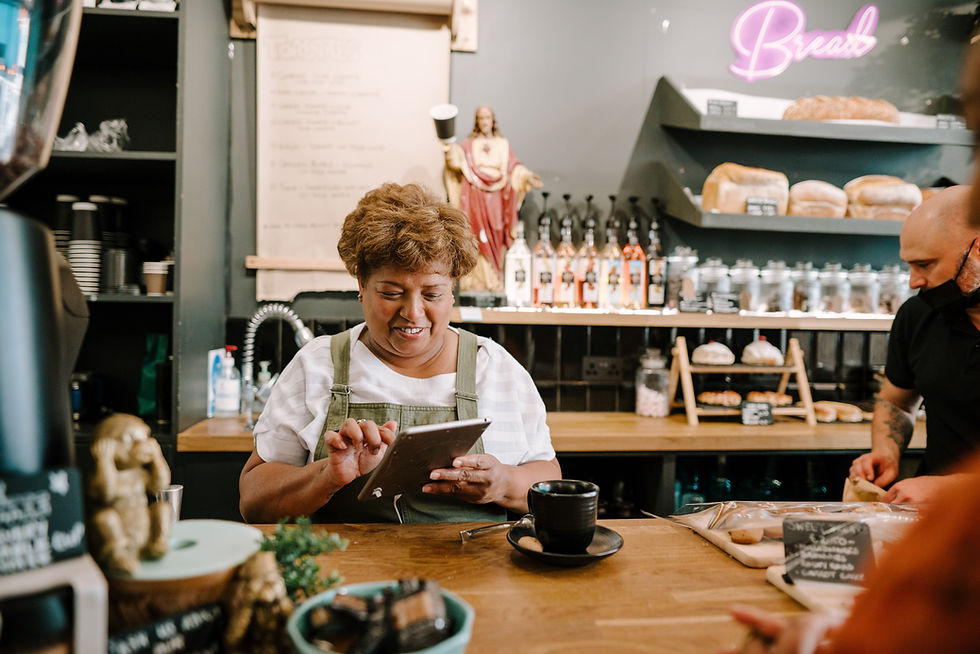
A Cork restaurant facing a quiet January receives €840 in December from customers buying vouchers they'll redeem in January. That €840 pays the January 3rd rent. The customers haven't walked through the door yet, haven't ordered meals yet, haven't consumed any resources yet. The restaurant already has the money, two weeks before those customers actually visit.
This is "Pay Now, Redeem Later": customers pay for goods or services before receiving them, and businesses receive revenue before delivering anything. The timing reversal transforms cash flow by generating advance revenue that funds operations before costs occur.
Every Irish restaurant understands delayed payment problems. Suppliers demand payment within 7-14 days. Staff expect wages every week. Rent comes due monthly regardless of revenue. Yet customer revenue arrives only after you've already paid for ingredients, cooked the food, and served the meal.
Pay Now, Redeem Later flips this timing problem. You receive payment immediately while delivering service weeks or months later. The revenue arrives when you need it most, before you've incurred costs to deliver the goods or services.
The model isn't theoretical; it's proven economics transforming Irish business cash flow.
Understanding the Pay Now, Redeem Later Model
The concept is straightforward, but the implications transform business operations fundamentally.
Core Mechanics
A customer pays full price today for goods or services they'll receive later. The business receives immediate payment, the customer receives a digital voucher, ticket, or confirmation, and redemption happens at a future date agreed upon at purchase.
Restaurant voucher example:
Customer purchases €50 voucher in December
Restaurant receives €47.75 after 4.5% commission within 1-2 business days
Customer redeems voucher in January for €50 worth of food and drinks
Restaurant delivers €50 in goods and services using money received in December
The timing separation is key. December revenue funds January operations before January costs occur. Traditional models require funding January operations from past months' revenue (which might not exist if November and December were also slow) or from borrowing.
Event ticket example:
Customer purchases €65 Valentine's dinner ticket in January
Restaurant receives €61.29 after 5.7% commission within 1-2 business days
Event happens February 14th
Restaurant delivers Valentine's dinner using money received three weeks earlier
The advance revenue allows planning exact food purchases and staffing for confirmed attendance rather than estimating and risking over or under preparation.
Promotion example:
Customer purchases €25 "buy one get one main course" promotion in March
Restaurant receives €23.27 after 6.9% commission within 1-2 business days
Customer redeems in April
Restaurant delivers two main courses using advance payment received in March
Why Timing Matters in Restaurant Operations
Restaurant costs arrive on predictable, rigid schedules. Rent is due the 1st of every month. Supplier invoices require payment within 7-14 days. Staff wages are due weekly or biweekly. Utilities bill monthly.
Revenue arrives only after service delivery. A customer dining Tuesday evening generates revenue Tuesday evening, after you've already paid rent for the month, paid suppliers for ingredients, and committed to staff wages.
This creates perpetual funding gaps. You need money today to pay obligations, but you'll only earn that money after delivering service using resources you need to pay for today.
Traditional solutions all have problems:
Bank loans: Cost interest, require good credit, add monthly repayments to existing obligations
Overdrafts: Charge high fees, must be repaid, reduce available credit
Delayed supplier payments: Damage crucial relationships with vendors
Owner capital injection: Not always available, essentially a loan to your own business
Pay Now, Redeem Later generates revenue before costs occur, eliminating the funding gap completely. January rent gets paid using December voucher revenue. Valentine's dinner ingredients get purchased using January ticket revenue received three weeks before the event.
The Contrast With Traditional Payment Models
Traditional restaurant revenue models operate on "deliver now, pay now" or worse, "deliver now, pay later" basis.
Dine-in service:
Customer arrives (no payment yet)
Restaurant serves food using already-purchased ingredients
Staff serve using wages you'll pay this week
Customer pays at meal end
Revenue arrives after all costs incurred
Delivery through platforms:
Customer orders (no payment to restaurant yet)
Restaurant prepares food using already-purchased ingredients
Platform takes 25-35% commission
Restaurant receives payment days or weeks later
Revenue arrives after costs incurred, minus huge commission
Invoice-based catering:
Customer books event
Restaurant purchases ingredients and allocates staff
Restaurant delivers event
Restaurant invoices after event
Customer pays 30 days after invoice
Revenue arrives 30+ days after costs incurred
Every model requires the restaurant to fund operations from past revenue or borrowing, creating cash flow challenges when past revenue is insufficient (common in seasonal businesses) or when borrowing is expensive or unavailable.
Pay Now, Redeem Later completely inverts this. Revenue arrives first, costs occur later, and operations get funded from customers rather than loans or past profits.
Common Pay Now, Redeem Later Implementations
Several business models use Pay Now, Redeem Later principles, each appropriate for different business situations and customer behaviors.
Digital Vouchers
Digital vouchers are the most straightforward Pay Now, Redeem Later implementation. A customer purchases a voucher for a specific value (€25, €50, €100) redeemable at your restaurant anytime within the validity period (typically 6-12 months).
Why customers buy vouchers:
Gifts: Restaurant vouchers make excellent gifts for birthdays, Christmas, holidays, anniversaries
Budget management: Customers buy vouchers when they have money (December) to use when budgets are tighter (January-February)
Special occasions: Purchasing advance vouchers for planned celebrations ensures budget allocation
Bonus value: Many restaurants offer bonus value (€45 purchase for €50 voucher) making advance purchase attractive
Supporting local business: Customers consciously support Irish restaurants during slow periods
Restaurant benefits:
Immediate revenue (within 1-2 business days of purchase)
Predictable future customer visits from redeemed vouchers
Customer data ownership for future marketing
No followers or existing customer base required to start selling
Flexible pricing and bonus structures to incentivize purchases
Irish restaurants report strongest voucher sales November-December (Christmas gifting) and April-May (communion and confirmation celebrations). However, vouchers sell year-round for birthdays, anniversaries, and general gift-giving.
Event Tickets
Event tickets use Pay Now, Redeem Later for specific date-bound experiences. Customers purchase tickets for Valentine's dinners, wine tastings, cooking classes, special multi-course menus, or themed dining events weeks or months before the event.
Why customers buy event tickets:
Guaranteed attendance: Popular events sell out; tickets secure spots
Planning certainty: Buying tickets weeks ahead ensures plans happen
Special experiences: Themed events, special menus, or exclusive experiences justify advance purchase
Gift experiences: Event tickets make thoughtful gifts for experiences rather than physical items
Restaurant benefits:
Confirmed attendance numbers for accurate planning
Revenue weeks before event costs (ingredients, additional staff)
Ability to plan ambitious events without financial risk
Higher average ticket prices for premium experiences
Customer excitement and anticipation building to event
Irish restaurants use event tickets successfully for Valentine's dinners, Mother's Day brunches, New Year's Eve dinners, wine pairing events, and seasonal tasting menus. The confirmed attendance eliminates the financial risk of preparing elaborate events that might have low turnout.
Purchased Promotions
Purchased promotions sell specific offers customers redeem later: "Buy one get one main course," "€10 off any order," "Free dessert with main," or percentage discounts. The customer pays for the promotion upfront, receiving a digital code or QR to redeem within the validity period.
Why customers buy promotions:
Guaranteed savings: Locked-in discounts for future visits
Trying new restaurants: Promotions reduce risk of trying unfamiliar restaurants
Regular customer rewards: Loyal customers buy promotions for continued savings
Combination with other occasions: Using promotions during family gatherings or group dinners multiplies value
Restaurant benefits:
Advance revenue before delivering discounted service
Attracting new customers with controlled discount costs
Encouraging visits during specific periods (sell weekday lunch promotions)
Customer commitment to visiting (they've already paid)
Data on promotion effectiveness before running widely
Purchased promotions differ from traditional Groupon-style deals because the customer pays the restaurant directly at fair commission rates (6.9% versus 25-50%) and the restaurant owns the customer relationship immediately.
Combination Approaches
Smart Irish restaurants combine vouchers, event tickets, and purchased promotions to maximize Pay Now, Redeem Later revenue throughout the year.
Seasonal strategy example:
November-December: Heavy voucher sales for Christmas gifts and January cash flow
January: Valentine's event ticket sales for February 14th
March: Communion season voucher promotion for April-May celebrations
May-June: Summer event series ticket sales
September: Autumn tasting menu ticket sales
October-November: Christmas event planning and ticket sales
This year-round approach generates consistent advance revenue rather than relying on a single seasonal push.

The Business Case for Pay Now, Redeem Later
Understanding the specific financial benefits helps Irish businesses decide whether to implement Pay Now, Redeem Later models.
Cash Flow Transformation
The most immediate benefit is dramatically improved cash flow during traditionally difficult periods.
Example: Small restaurant facing January gap
Traditional model:
December revenue: €32,000
January revenue: €18,000 (44% drop)
Fixed costs: €16,000 monthly (rent, utilities, base wages)
January deficit: Must fund €16,000 costs from €18,000 revenue, leaving only €2,000 for variable costs and profit
Pay Now, Redeem Later model:
December revenue: €32,000 base plus €3,200 in voucher sales
December total: €35,200
January revenue: €18,000 (same)
Voucher redemptions: €2,800 (some customers haven't redeemed yet, redemption spreads across months)
January effective revenue: €18,000 (actual) + portion already funded by December voucher sales
Fixed costs: €16,000 (same)
January position: Comfortably funded, €3,200 advance revenue cushions entire slow period
The advance revenue doesn't eliminate January revenue challenges, but it provides crucial buffer that makes the slow period manageable rather than crisis-inducing.
Predictable Future Business
Pay Now, Redeem Later creates confirmed future business rather than hopeful projections.
When you have €8,000 in unredeemed vouchers, you know customers will visit to redeem them. You can plan staffing levels, ingredient purchases, and marketing focus based on confirmed upcoming demand rather than guessing.
Event tickets provide even more precision. Selling 40 tickets to a Valentine's dinner means you know exactly how many customers to prepare for, what ingredients to purchase, and how many staff to schedule. Zero guesswork, zero waste from over-preparation, zero lost revenue from under-preparation.
This predictability reduces waste (over-preparing for customers who don't arrive) and lost opportunity (under-preparing and turning away customers). Both directly improve profitability.
Customer Acquisition and Retention
Pay Now, Redeem Later models provide customer acquisition benefits beyond just advance revenue.
Voucher gift recipients become new customers:
When someone buys a restaurant voucher as a gift, the recipient visits your restaurant, often for the first time. They didn't choose your restaurant (the gift-giver did), but they're trying it because of the voucher. If you provide excellent experience, they become regular customers.
Irish restaurants report that 20-30% of voucher gift recipients become repeat customers, visiting without vouchers after positive initial experience. You effectively gained new customers at cost of 4.5% commission rather than €15-€45 typical customer acquisition costs.
Event tickets attract experience-seekers:
Customers who purchase Valentine's dinner tickets or wine tasting tickets are experience-seekers willing to pay premium prices for memorable dining. These high-value customers often become regular patrons when they discover your restaurant through special events.
Purchased promotions convert curious customers:
Customers hesitant to try new restaurants often purchase promotions to reduce financial risk of disappointing meals. The promotion brings them through the door the first time. Excellent service converts them into regular full-price customers.
Each Pay Now, Redeem Later transaction represents potential customer relationship that extends far beyond the single transaction.
Reduced Dependence on Credit and Loans
Restaurants with strong Pay Now, Redeem Later revenue reduce or eliminate dependence on bank loans, overdrafts, and lines of credit.
Rather than borrowing €5,000 in January to cover cash flow gaps at 8-12% interest, you generate €5,000 in December voucher sales at 4.5% commission cost. The voucher commission is far cheaper than loan interest, doesn't require repayment (it's revenue, not borrowing), and doesn't appear as debt on your business finances.
This independence from credit improves business financial health, reduces interest costs, and provides more operational flexibility. You're not constrained by credit limits or repayment schedules.
Marketing Database Growth
Every Pay Now, Redeem Later transaction provides customer contact information. Unlike third-party platform sales where platforms keep customer data, direct voucher, ticket, and promotion sales give you email addresses, phone numbers, and purchase history.
This growing database enables direct marketing for future promotions, events, and special offers. A restaurant with 800 customers in their database from a year of voucher and ticket sales can send promotional emails costing €0 that generate 8-12% conversion rates.
The database value compounds over time. Each month of Pay Now, Redeem Later sales adds 40-120 new customer profiles. After two years, you might have 1,200-2,000 customers you can market to directly without expensive advertising.
Implementing Pay Now, Redeem Later with Mosey
Mosey provides complete Pay Now, Redeem Later infrastructure specifically designed for Irish food businesses, making implementation straightforward and cost-effective.
Integrated Voucher System
Create digital vouchers in minutes with complete customization. Set voucher values (€25, €50, €75, €100, or custom amounts), validity periods (6-12 months typical), terms and conditions, and bonus value offers (€40 purchase for €50 value).
The system handles everything technical:
Secure payment processing through Stripe
Instant digital voucher delivery via email
QR code generation for fraud-proof redemption
Automated expiry tracking
Customer notification reminders before expiry
Payout processing within 1-2 business days
You receive 95.5% of voucher sales (4.5% commission) within 1-2 business days. The customer pays a €0.89 service fee, not the restaurant, keeping your costs to just the 4.5% commission.
Event Ticketing Infrastructure
Create events with detailed descriptions, custom pricing tiers, capacity limits, special menu information, and terms. Mosey handles ticket sales, payment processing, confirmation emails, QR ticket generation, and attendance tracking.
The system supports:
Multiple ticket tiers (€45 early bird, €55 standard, €75 VIP)
Capacity management (automatically stop sales at capacity)
Time-specific events (sell tickets for specific seating times)
Add-on options (wine pairing addition, gift voucher add-on)
Dietary preference collection
Special request notes from customers
You receive 94.3% of ticket sales (5.7% commission) within 1-2 business days, with customers paying the €0.89 service fee.
Purchased Promotion Tools
Create purchased promotions with specific offers customers buy in advance and redeem later. Set discount amounts, redemption terms, validity periods, and usage limits.
Examples:
€10 off any order over €40 (sell for €9, customer saves €1 versus paying full price at redemption)
Buy one main course, get one free (sell for €15-€20 depending on your average main price)
20% off total bill (sell for €8-€10, customer determines final value based on their order)
The system manages redemption validation, prevents double-use fraud, tracks remaining redemption value, and processes all payments securely.
You receive 93.1% of promotion sales (6.9% commission) within 1-2 business days, with customers paying the €0.89 service fee.
Complete Customer Data Ownership
Every voucher, ticket, and promotion purchase provides customer details that belong to you permanently. Email addresses, phone numbers, purchase history, redemption patterns, and preferences all stay in your database.
Export customer data anytime in standard formats. Use it for email marketing campaigns, targeted promotions, loyalty programs, or integration with other business systems. The data is yours, not locked into Mosey platform.
This ownership is fundamentally different from traditional platforms that deliberately withhold customer information to maintain control. Mosey's model depends on you succeeding independently, which requires owning customer relationships.
Transparent, Fair Pricing
Mosey charges the lowest commission rates in Ireland for vouchers (4.5%), events (5.7%), and promotions (6.9%). No hidden fees, no monthly minimums for these features, no surprise deductions.
Compare to traditional voucher platforms:
Groupon: 25-50% commission
Eventbrite: 8-12% commission plus processing fees
Traditional ticketing: 10-15% commission
On €5,000 in voucher sales:
Groupon would take €1,250-€2,500
Mosey takes €225
You keep €1,025-€2,275 more
The pricing difference alone justifies using Mosey, before considering customer data ownership, integration with other restaurant tools, and Ireland-specific features.
Integration With Other Restaurant Tools
Pay Now, Redeem Later works best when integrated with reservations, ordering, and customer management. Mosey combines all these functions in one platform.
Customers can purchase vouchers, then use the same platform to make reservations for redemption. Buy event tickets, then get automatic reminders about the event. Purchase promotions, then place collection or delivery orders applying the promotion.
This integration creates seamless customer experience and provides complete business data in one system. You see voucher sales, redemption rates, customer visit frequency, average spending, and lifetime value all connected rather than fragmented across separate systems.
Frequently Asked Questions About Pay Now, Redeem Later for Irish Businesses
Q: How quickly do businesses receive money from Pay Now, Redeem Later sales?
A: Mosey processes payouts within 1-2 business days after voucher, ticket, or promotion purchase. A voucher sold Monday arrives in your bank account Wednesday or Thursday. This rapid payout is specifically designed for cash flow management, ensuring advance revenue actually funds the periods it's meant to address. Traditional platforms sometimes hold payouts for weeks, defeating the cash flow purpose. The 1-2 business day standard makes Pay Now, Redeem Later genuinely useful for managing immediate cash flow needs.
Q: What commission does Mosey charge for Pay Now, Redeem Later transactions?
A: Mosey charges 4.5% commission on vouchers, 5.7% commission on event tickets, and 6.9% commission on purchased promotions. The €0.89 transaction fee is paid by customers, not businesses. These rates are 60-90% lower than traditional platforms like Groupon (25-50% commission) or Eventbrite (8-12% plus fees). On €5,000 in voucher sales, Mosey takes €225 while Groupon takes €1,250-€2,500. You keep €1,025-€2,275 more from identical sales simply by using a platform with fair pricing rather than exploitative rates.
Q: Will customers actually buy vouchers, tickets, and promotions in advance?
A: Yes, Irish consumers regularly purchase Pay Now, Redeem Later products for gifts, budget management, special occasions, and supporting local businesses. Restaurant vouchers are among Ireland's most popular gifts for Christmas, birthdays, communions, confirmations, and anniversaries. Event tickets sell consistently for Valentine's dinners, Mother's Day brunches, and seasonal tasting menus. Over 450 Irish businesses generate combined advance revenue exceeding €2.4 million monthly through Pay Now, Redeem Later models. The key is making purchase easy, providing clear value, and promoting actively rather than hoping customers discover the option themselves.
Q: What if customers don't redeem their vouchers or tickets?
A: Redemption rates average 76-84% for digital vouchers and 90-96% for event tickets. Some non-redemption actually benefits cash flow (you received revenue without incurring service costs), though relying on this ethically questionable and potentially violates consumer protection regulations. Focus on encouraging redemption through reminders, excellent service, and appropriate validity periods (6-12 months for vouchers). Event tickets have very high redemption because they're date-specific and customers purchased for specific occasions. Even with 100% redemption, Pay Now, Redeem Later works perfectly for cash flow because advance revenue funds costs that occur when customers redeem.
Q: Can Pay Now, Redeem Later replace traditional revenue entirely?
A: No, Pay Now, Redeem Later supplements traditional revenue rather than replacing it. Think of it as advance revenue that funds slow periods and provides cash flow buffers, not as your primary business model. Irish restaurants typically generate 8-18% of annual revenue through Pay Now, Redeem Later channels, with this percentage concentrated during slow seasons. The model works best for bridging cash flow gaps, funding specific events, and providing advance certainty for planning. Your core business remains serving walk-in customers, reservations, and regular service. Pay Now, Redeem Later makes that core business more financially stable.
Adopt Pay Now, Redeem Later for Your Irish Business
Irish businesses face predictable cash flow challenges: slow January-February after Christmas peaks, quiet weeks between bank holidays, seasonal tourism fluctuations, and rigid cost schedules that don't align with variable revenue. Traditional solutions (loans, overdrafts, delayed supplier payments) all carry significant costs and problems.
Pay Now, Redeem Later flips the timing equation. Customers pay before receiving service, you receive revenue before incurring costs, and operations get funded from customers rather than borrowing. The advance revenue arrives precisely when needed most: before slow periods begin, before event costs hit, before you must pay suppliers and staff.
The model isn't theoretical. Small restaurants can generate €3,000-€8,000 in advance revenue during slow seasons. Medium restaurants can generate €5,000-€15,000. Large restaurants and pubs can generate €10,000-€25,000 or more.
Mosey makes Pay Now, Redeem Later implementation straightforward with complete infrastructure specifically designed for Irish food businesses. Create vouchers in minutes, set up events with capacity management, offer purchased promotions with automated redemption, all at Ireland's lowest commission rates (4.5-6.9% versus 25-50% on traditional platforms).
The business benefits extend beyond just advance revenue. You gain customer data ownership for direct marketing, predictable future business for accurate planning, reduced dependence on loans and credit, and customer acquisition at minimal cost compared to traditional advertising.
Stop struggling with cash flow gaps, expensive borrowing, and unpredictable revenue. Start generating advance revenue through Pay Now, Redeem Later models that fund your business before costs occur. Create your free Mosey account today and implement vouchers, event tickets, or purchased promotions that transform your cash flow from reactive scrambling to proactive planning.
Create your free Mosey account and start taking Pay Now, Redeem Later payments today.


Comments