
Dish guide
Poutine Across Canada: Quebec, Acadian, Ontario and West
Mosey · November 11, 2026 · 5 min read
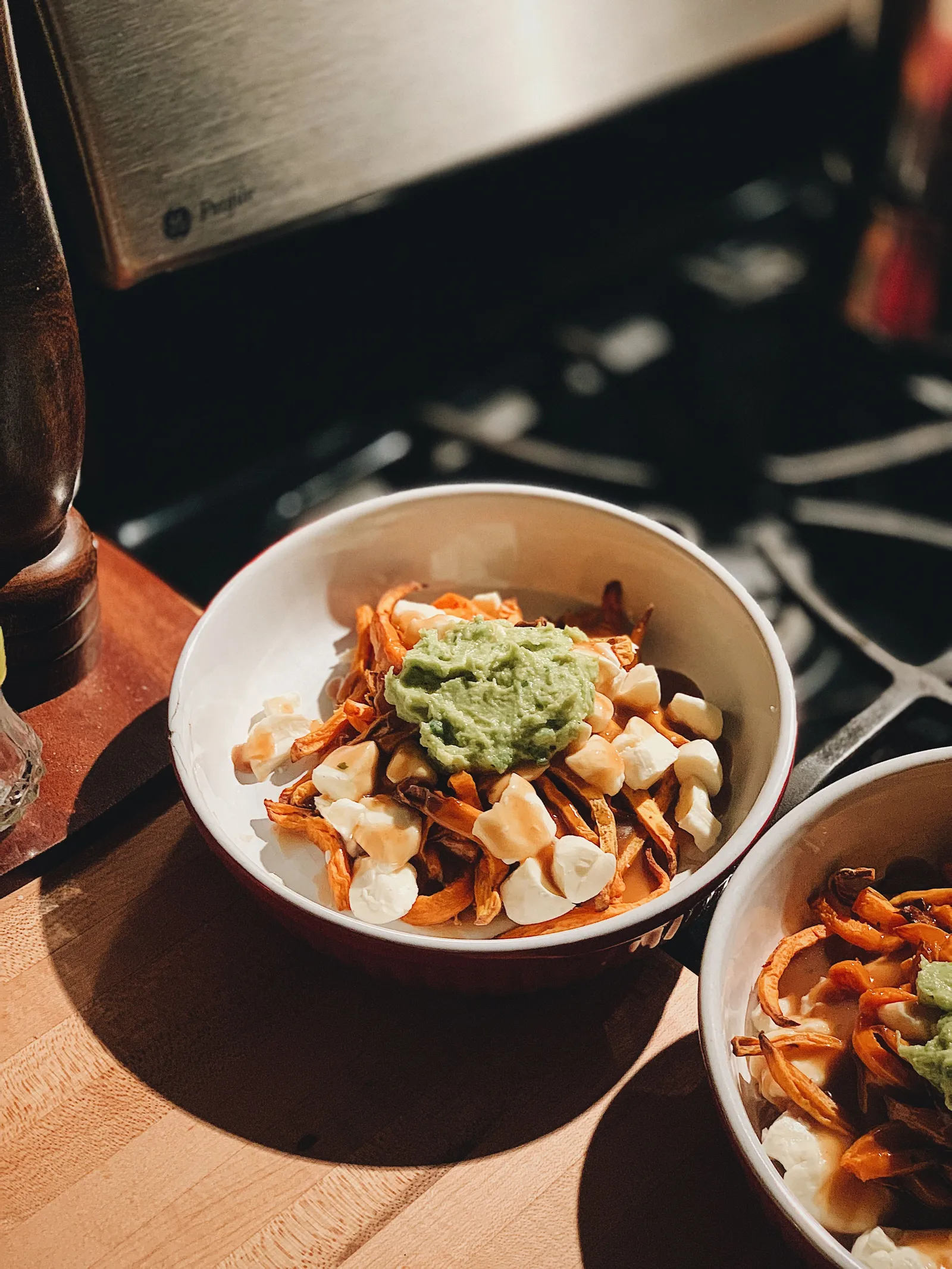
Poutine across Canada is a different dish in different places. In Quebec it is fries, squeaky cheese curds and brown gravy, with local variations such as galvaude. In Acadian New Brunswick poutine râpée is a boiled potato dumpling, in Ontario butter chicken tops it and in Nova Scotia it can be lobster.
Where does poutine across Canada come from?
Poutine began in rural Quebec, and the Farmers' Almanac dates it to the 1950s. A restaurateur in Warwick is often credited with creating it in 1957, though other Quebec towns make similar claims, and the name comes from a Quebecois slang word for a mess. The base is French fries, fresh cheese curds and hot brown gravy, and diced mozzarella is a common substitute when curds are hard to find.
Origins are disputed and this page does not try to settle them. For how a poutine connoisseur judges the dish, see our poutine connoisseur guide. The rest of this guide is a map: what poutine becomes as it travels.
What are Quebec poutine variations?
Quebec poutine variations show how local the dish is. The Farmers' Almanac lists several. Poutine italienne uses spaghetti or meat sauce instead of gravy and is widespread in the province. Galvaude is made with shredded chicken and green peas and comes from the Gaspésie. In Montreal there is a version with Montreal smoked meat.
Dulton poutine uses ground beef, onions and sausage in parts of Quebec, and patate-sauce-choux replaces the curds with shredded raw cabbage and is found around Shawinigan. If you see an unfamiliar name on a menu in Quebec, ask what is on it, because the word may point to a regional dish.
What is poutine râpée in Acadian New Brunswick?
Poutine râpée is not the fries-and-gravy dish. It is an Acadian boiled dumpling of potato with pork in the centre, about the size of a large orange, according to CooksInfo. The dough mixes grated raw potato with mashed cooked potato, and it is wrapped around diced salt pork and simmered for hours. In Nova Scotia a version without meat in the middle is simmered in a stew.
It can be eaten savoury, or sweet with brown sugar, maple syrup or molasses, and CooksInfo ties it to Acadian areas where it is traditional at Christmas. The word râpée means grated. Read about it in our Moncton Acadian food guide, and for another Christmas dish see our Canadian Christmas food traditions.
How do Ontario and Nova Scotia treat poutine?
Poutine moved across the country in the 1980s, when it gained national recognition and started to appear in fast-food chains, according to The Takeout. It then picked up local spins. Butter chicken poutine is a regional variation in Ontario, and lobster poutine is one in Nova Scotia, particularly. Some cooks use tater tots or sweet potatoes in place of fries.
Those versions show the point of the dish: it is a base that cooks load with what they have. The Farmers' Almanac says poutine, once sold mainly from food trucks and diners, now appears in Toronto and Montreal and in hockey arenas from Halifax to Vancouver.
Does poutine in the West follow Quebec rules?
Out west, poutine is usually a Quebec dish served by a local cook. A 2009 Smithsonian piece found poutine on menus in Calgary, with skinny fries, dark beef gravy and cheese curds in the traditional version, and add-ons such as gruyere or pulled pork on others. The cooks it spoke to sourced their curds from Quebec.
Curds are the key. Real ones squeak when you bite them, and the author's curds did not, since freshness matters and frozen or packaged curds may lose it. Substitutes are viewed skeptically, much as pizza purists view substitutes for mozzarella.
How can you tell a good poutine on the road?
Look for gravy that is hot enough to melt the curds a little but not so heavy that the fries collapse. Ask whether the curds are fresh and, in Quebec, ask whether the menu uses a regional name. Eat it quickly, because fries soften. A small order shared by two people is a good way to test a new place, since you can compare it with the last one you rated and decide whether the gravy, the curds or the fries are doing the work. If a menu offers a regional name you do not know, ask the person at the counter what it means, and write it down so you can tell friends.
If anyone at your table has a dairy allergy, ask the place directly. Mosey can hide dishes that a place lists an allergen for, but a dish with no listing says "Allergens not listed, ask the place," so do not assume.
How can Mosey help you remember your poutine?
Mosey is a place to remember what you ate. Rate the dish, not just the place, since the fries, curds and gravy can each earn a view in your note. Add the tag Poutine, and rate five different places with that tag to reach the Sampler level of the Poutine food badge.
Keep a list called Poutine to try with a note for each stop, share it with friends by link even if they are not on Mosey yet and follow friends to see where they rate and save. Mosey is free to list, with no hidden fees, so a rating for a small counter costs the diner nothing. See the Canadian food guides for more.
What should you remember before you go?
Check hours with a place, because small counters close early, and some are closed on a Sunday. Bring a fork, and napkins, because this is a messy dish.
Download the Mosey app, rate the next poutine you try by the dish and start a list called Poutine to try, so a trip across the country leaves a record.
Questions
Common questions
Is poutine only from Quebec?
Poutine began in rural Quebec in the 1950s, and Quebec still has the most variations, such as galvaude with chicken and peas. It spread nationally in the 1980s, and other provinces add their own spins, like butter chicken in Ontario and lobster in Nova Scotia.
What is poutine râpée?
Poutine râpée is an Acadian boiled dumpling of grated and mashed potato with salt pork in the centre. It is eaten savoury or sweet, with salt and pepper or brown sugar or molasses, and it is traditional at Christmas in Acadian areas. It is not the fries, curds and gravy dish.
Why do cheese curds squeak?
Fresh curds squeak when you bite them, which is why the dish is linked with squeaky cheese. Freshness matters, since frozen or packaged curds may lose the squeak. When curds are unavailable, many cooks use diced mozzarella, though purists view that skeptically.
Can poutine be made differently by province?
Yes. Quebec has several named variations, Acadian New Brunswick has poutine râpée, Ontario has a butter chicken version, Nova Scotia has a lobster version and cooks in the West add toppings such as pulled pork. Ask what is on a menu item before you order.
How can I keep track of the poutine I try?
Mosey is a free food app where you rate the places you eat, keep lists and share them with friends. Rate the dish, add the tag Poutine, keep a list with notes for each stop, share it with friends by link and follow friends to see where they rate and save.
More like this
Read next
What's in season in BC: a month-by-month guide to British Columbia food
British Columbia has a long food calendar, from spring greens and spot prawns to Okanagan cherries, autumn apples and winter oysters. A month-by-month guide to what to look for.
BC spot prawn season: when it is and how to eat them in Vancouver
Spot prawns are the most anticipated seafood of the Vancouver year, fresh for only a few weeks each spring. When the season runs, where to buy them off the boat, and how to eat them.
Best Acadian Food in New Brunswick: A Guide
A guide to the best Acadian food in New Brunswick: poutine râpée, rappie pie and fricot, where to look in Shediac and Caraquet and how to order.
Best Bakeries in Montreal: Croissants, Sourdough and Babka
A guide to the best bakeries in Montreal: where to compare croissants, sourdough and babka, what to order first and how to shop for bread and pastry.
